


Ready to automate your workflow?
LINE 07 · END-OF-LINE BOTTLE INSPECTION, PACKING & PALLETIZING
Downstream bottle automation (vision inspection, leak testing, packing & robotic palletizing)
Because SanSong manufactures both one-step ISBM machines and industrial robotic automation systems under one roof in Liuzhou, your bottle outfeed conveyor connects seamlessly into inline vision inspection, leak testing, automated case-packing and robotic palletizing.
04 Modules
Vision · Leak · Packing · Palletizing
Zero-Touch
Protects optical wall & hygiene
Dual-Team
ISBM + Robotics in one Liuzhou plant
Modular
Single station or resin-to-pallet line
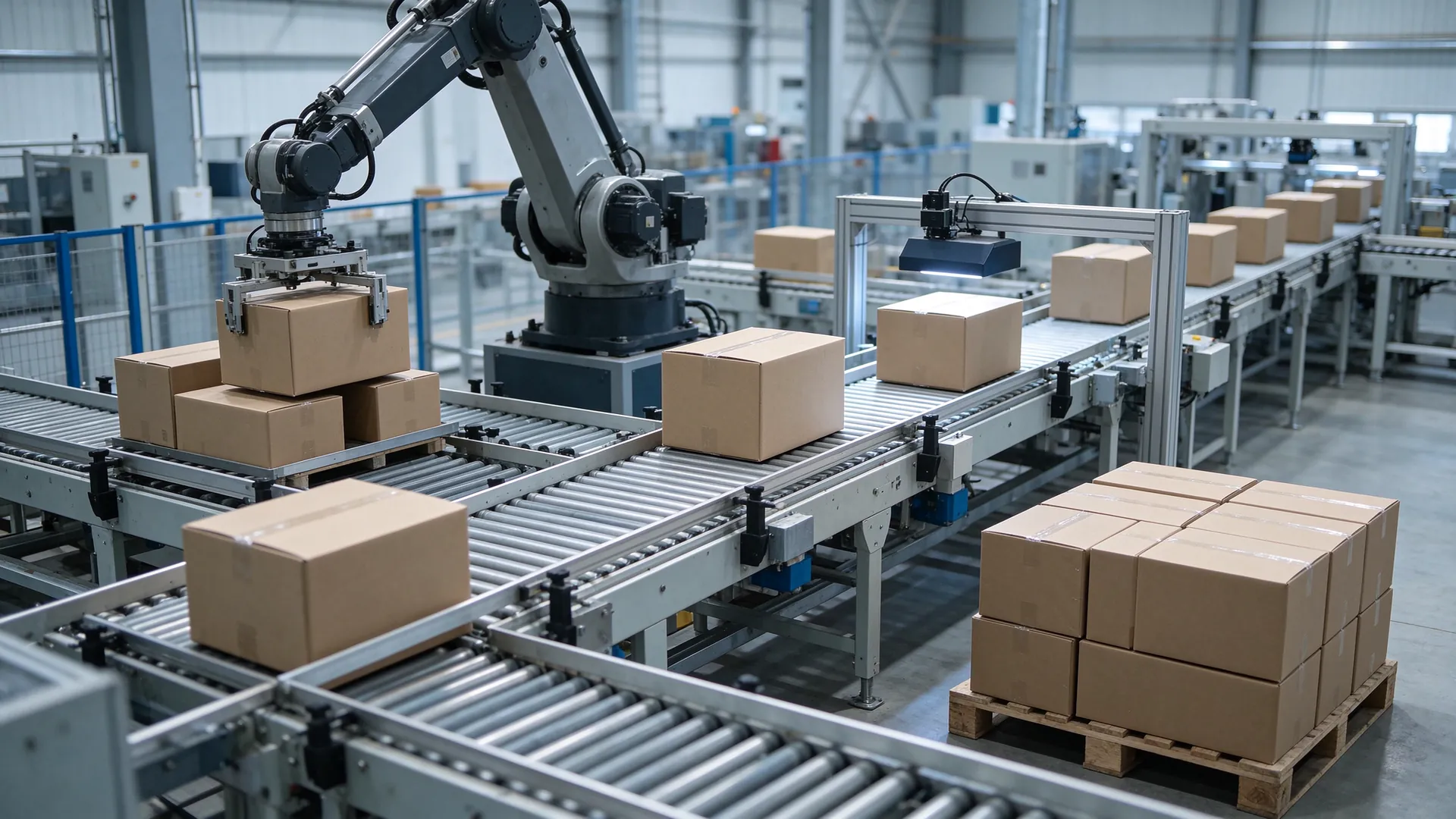
Four smart end-of-line units from bottle outfeed to finished pallet
On high-cavity PET syrup lines (up to 24 cavities) or scratch-sensitive Tritan/PETG cosmetic and baby-bottle lines, manual inspection and packing create labor bottlenecks and surface scuffing. SanSong’s Line 07 automates each post-molding (moulding) step.
| End-of-Line Unit | Inspection / Handling Mechanism | Target Container Scenarios |
|---|---|---|
| 01 Inline vision inspection system | Multi-angle industrial cameras + structured LED backlighting inspect neck finish, thread integrity, sidewall black specks, bubbles and flash, triggering pneumatic reject | Clear Tritan/PC drinkware, PPSU baby bottles, cosmetic jars & pharma syrup bottles |
| 02 Container leak & seal tester | Non-destructive inline differential-pressure decay testing seals the bottle mouth momentarily to detect micro-pinholes, gate cracks or warped neck rims | HDPE/PP chemical bottles, wide-neck food jars, pharmaceutical packers & apheresis cups |
| 03 Automated packaging line | Sanitary accumulation conveyor, row counting/collating, automatic poly-bagging or case erecting, gentle pick-and-place loading and carton sealing | Multi-shift unmanned container plants shipping bagged empty bottles or partitioned cartons |
| 04 Smart robotic palletizer | Six-axis articulated or gantry palletizing robot with vacuum/clamp end-effector, slip-sheet handling, safety fencing and recipe-based layer patterns | End-of-line pallet stacking across 1-to-N molding lines feeding a shared warehouse aisle |
Engineered on SanSong’s granted packaging & conveying patents
Unlike machinery brokers outsourcing end-of-line conveyors to unrelated third parties, SanSong holds multiple CNIPA utility-model patents specifically in modular negative-pressure collating machines, automated bag-opening/sealing units and carton-sealing conveyors (see /patents). Mechanical conveyor elevations, PLC reject signals and take-out robot cycles are tested together before shipment.
What to share to design a molding-to-palletizing layout
- Container drawing or dimensions (diameter × height, weight, resin, clear vs. opaque) and hourly bottle output.
- Quality check scope: defect types to reject (black speck size, flash, leak pressure threshold).
- Packing format (poly-bag bundle vs. corrugated carton, bottles per layer/box, pallet L × W × max stack height) and workshop floor plan.
Other products
Explore the SanSong product range
1–24 cavities
Product
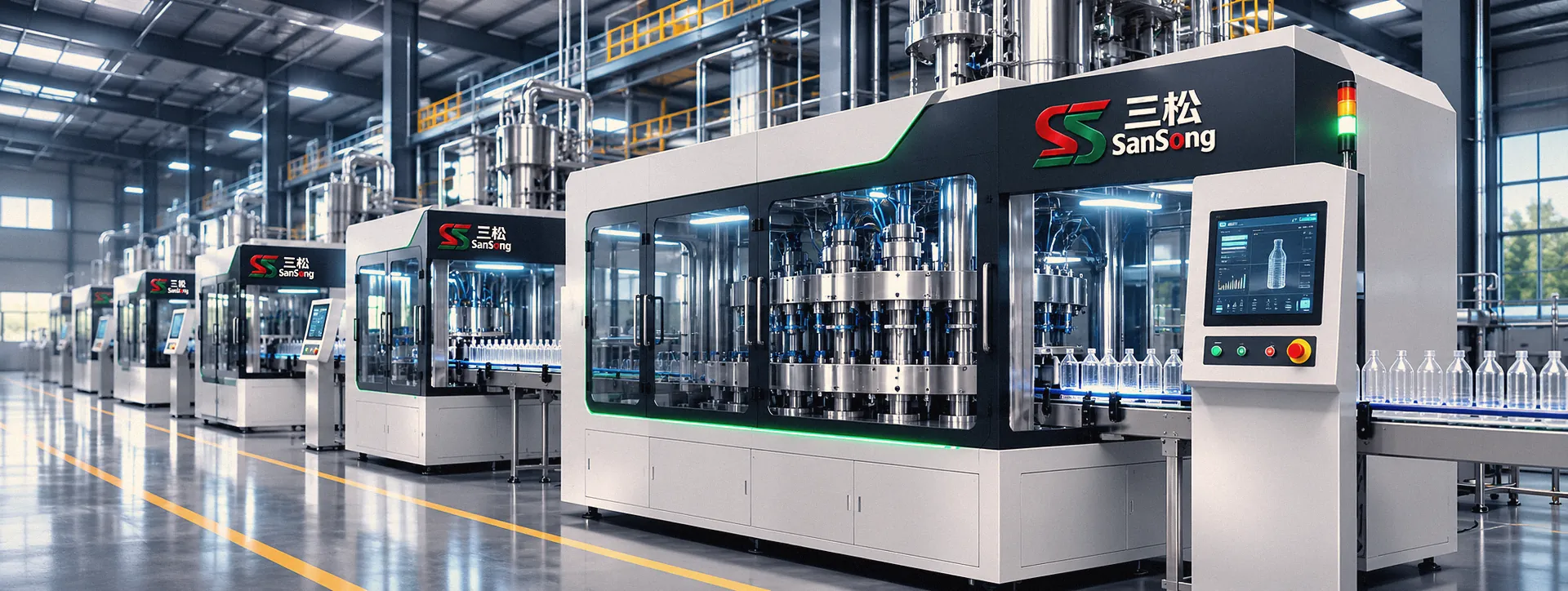
LINE 01 · 3- & 4-STATION ISBM
One-step ISBM machines (8 models)
One-step ISBM machines (8 models)
Product
Six 3-station and two 4-station one-step injection stretch blow molding platforms built in Liuzhou.
04 Units
Product
LINE 02 · ONE-STEP ISBM MOLDING AUXILIARIES
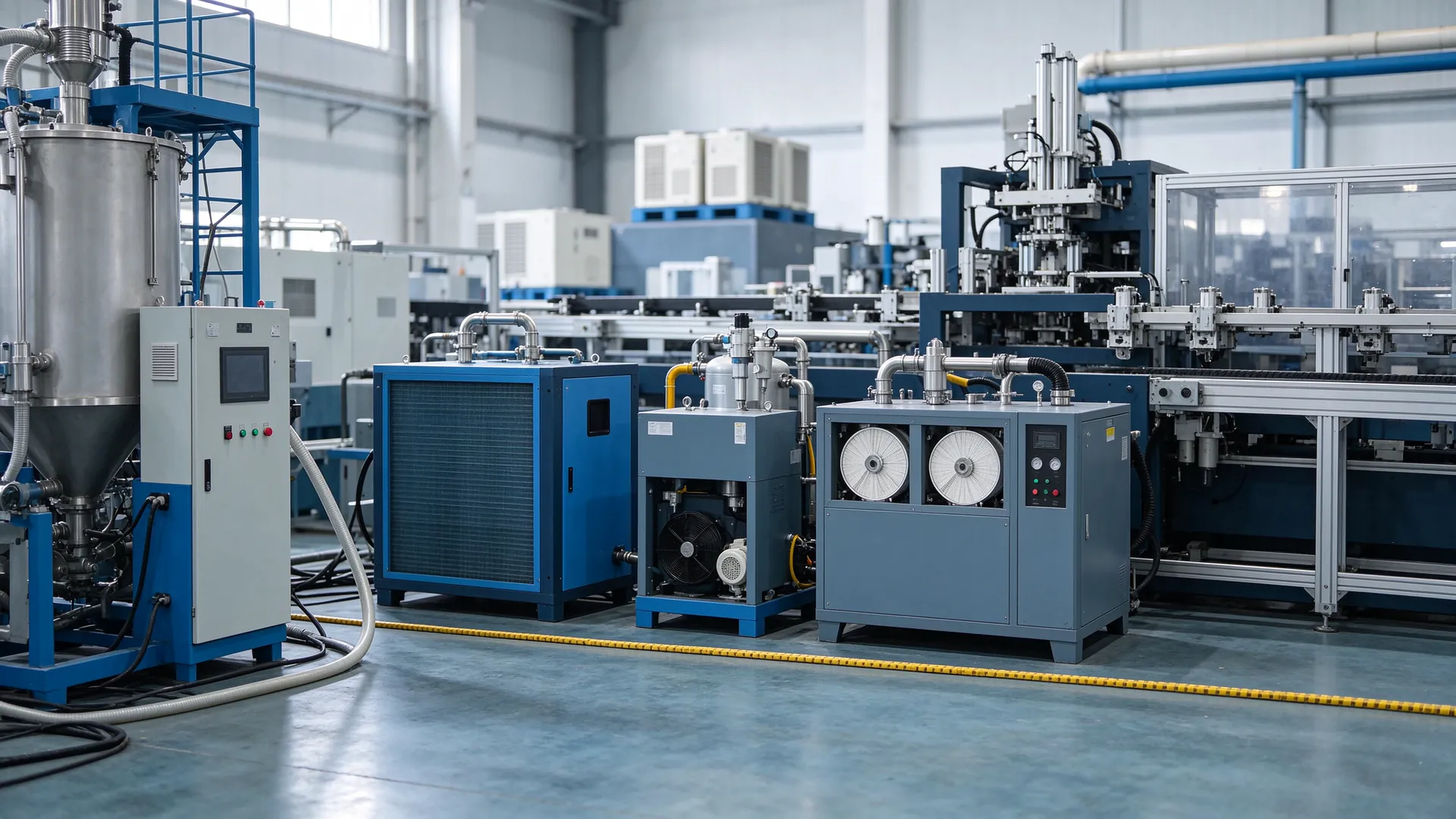
ISBM molding auxiliaries (dryer-loader, chiller, air compressor & mold dehumidifier)
ISBM molding auxiliaries (dryer-loader, chiller, air compressor & mold dehumidifier)
Product
Turnkey auxiliary equipment matched to SanSong 3-station and 4-station one-step ISBM machines: 3-in-1 dehumidifying dryer-loader, industrial chiller, air compressor system and mold dehumidifier.
Since 2014
Product
LINE 03 · TURNKEY CELLS & LINES
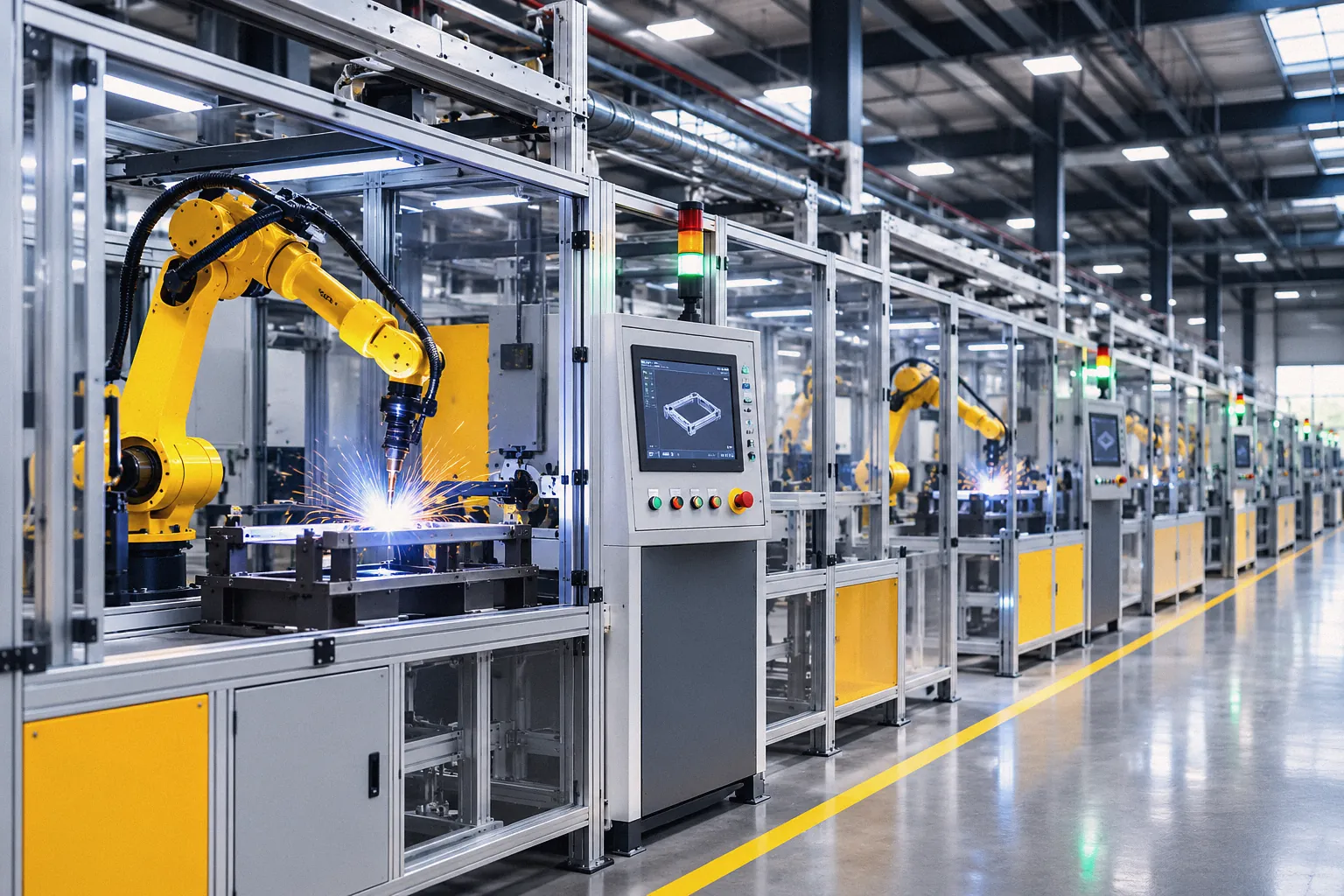
Robotic welding & automation systems
Robotic welding & automation systems
Product
Custom arc/spot welding cells, battery-frame lines, riveting stations and handling automation.
FAQ
Engineering & buyer questions
Practical answers on package scope, site utilities and customization.
Can one robotic palletizer serve several ISBM machines at once?

How are delicate transparent Tritan or PETG cosmetic bottles protected from conveyor scratches?
Can we start with take-out + leak testing now and add auto-packing later?
Does inline vision inspection require recalibration when changing bottle molds?





