


Ready to automate your workflow?
Robotic welding and workpiece positioning systems
The application
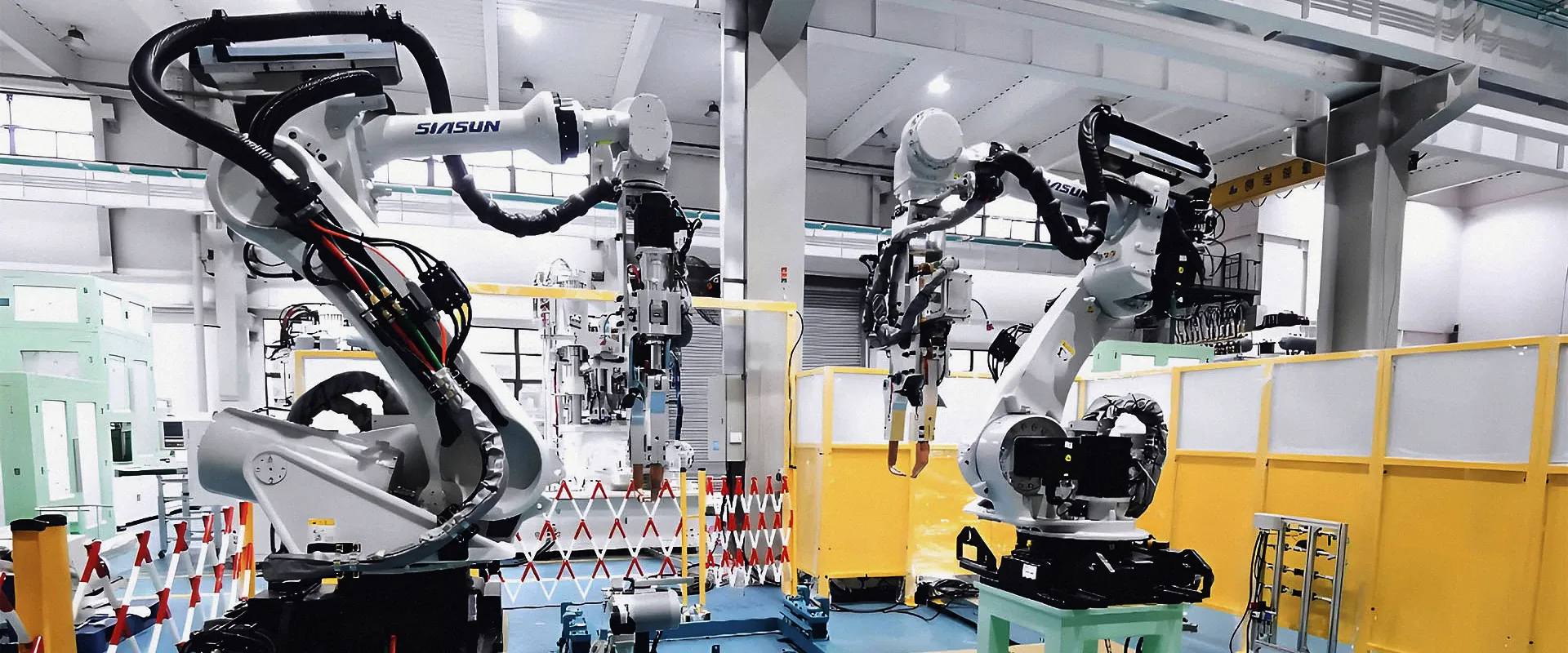
Weld access is a system question. The robot path, fixture and position of the component need to work together throughout the welding sequence.
SanSong offers welding positioners, fixtures and robot workstations. The company portfolio includes automotive components, battery frames and engineering-machinery applications.
A component drawing and a clear process brief provide the starting point for an application review.
Develop the right specification
A useful brief is the first step
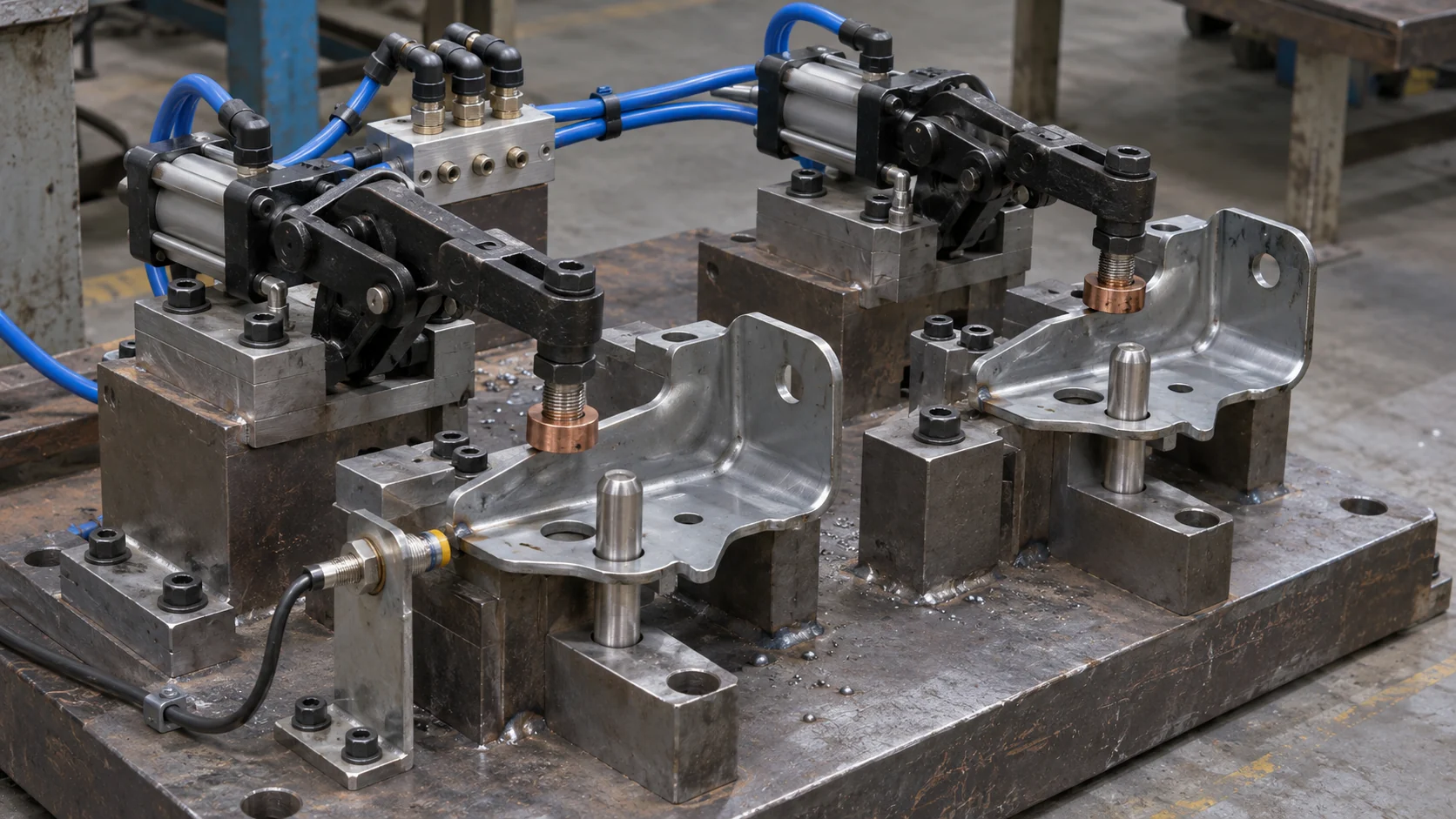
Identify the material, joint types and weld access for each component. Include workpiece and fixture weight, turning clearance and the loading method.
Review the proposed positioner alongside the robot reach and the available floor space. The selected configuration is confirmed for the application.
Agree acceptance criteria around the actual part and process, including inspection requirements and the intended production rate.
Build the project scope
Five points for the technical discussion
[01] Workpiece study
Drawings, material, weld details and fixture requirements.
[02] Positioning
Structure and model selection around the turning envelope.
[03] Robot interface
Robot model, controller and motion requirements for review.
[04] Station layout
Loading, guarding, cable routes and maintenance access.
[05] Project scope
Equipment, documentation and commissioning responsibilities.
From proposal to delivery
Agree what the project needs to demonstrate
The technical proposal should identify the selected equipment and the requirements it is intended to meet.
Tests, sample parts and inspection criteria are agreed for the specific project. Generic catalogue values do not replace this review.
Installation, commissioning, documentation and service arrangements are confirmed in the quotation.
CONNECTED ARCHITECTURE & PROCESS READING
Connect positioners, tracks, fixtures and seam sensing.
General engineering reading to support your welding and positioning review. Plate thickness limits, travel speed and weld-quality validation are always confirmed by trial on your actual workpiece.
FAQ
Frequently asked questions
Useful details for a focused engineering enquiry.
What information starts an automation enquiry?

Can existing robots be part of the project?
How is a positioner or track selected?
Are technical drawings available?
What installation services does SanSong offer?
What lead time and warranty should we expect?