


Ready to automate your workflow?
Welding and handling
Robotic welding cells and automation lines
Welding workstations, fixtures and handling lines developed around real manufacturing processes.
Custom
System type
Weld / handle
Processes
By project
Layout
Part study
Starting point
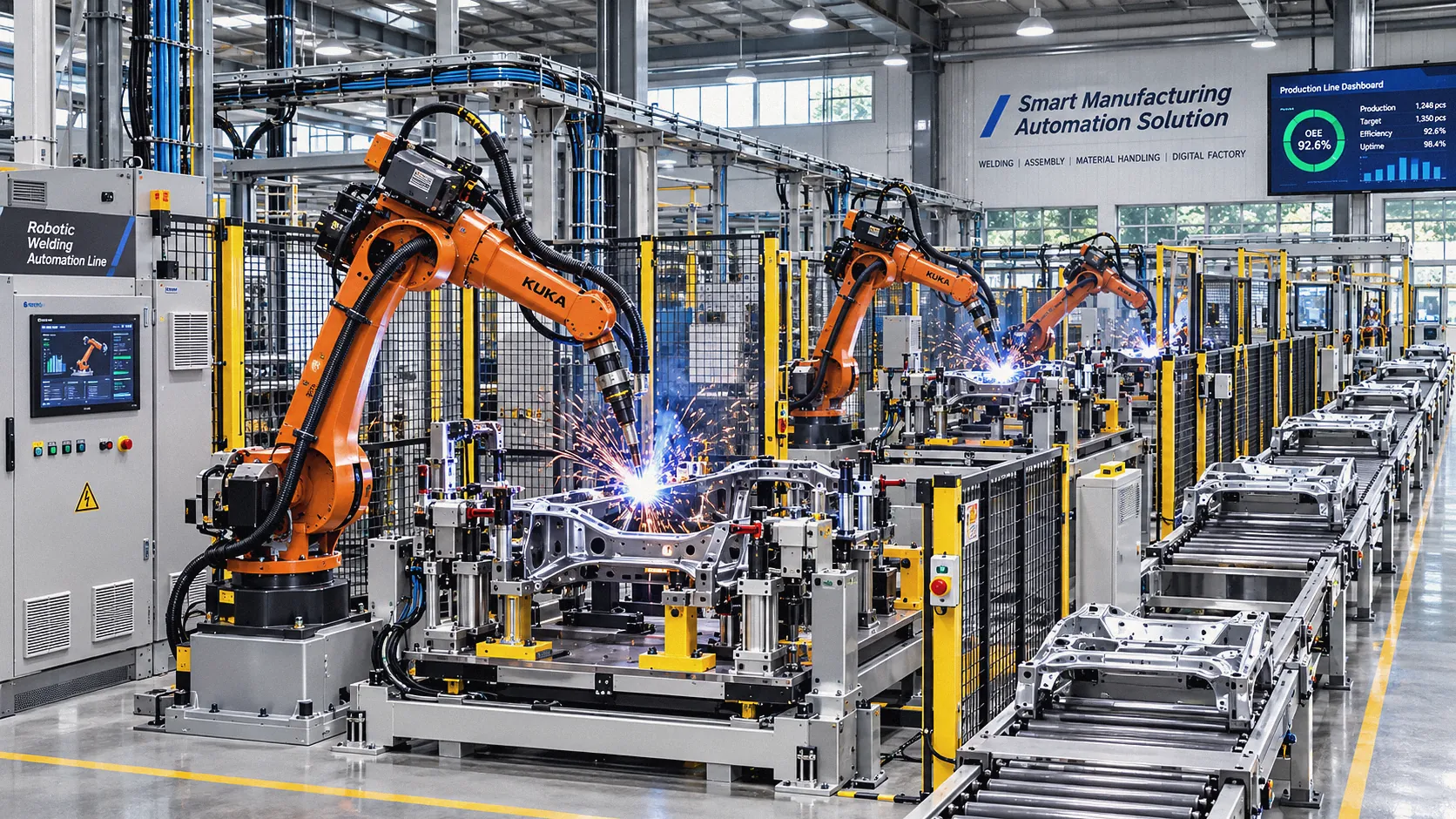
From a station to a production line
SanSong works with industrial robots and supporting equipment for welding and material handling. Its published portfolio includes welding workstations, fixtures and non-standard production lines.
Examples on the company website include exhaust-pipe welding, battery-frame welding, spot-welding lines and automated riveting stations.
A useful brief describes the component, process, output requirement and the operations that will remain manual.
Define the cell together
Robot selection, positioning equipment, fixtures and controls depend on the part and process. There is no single payload or cycle time for a custom automation system.
Send component drawings, material and joint details, the desired production rate, and a layout showing available space and services.
A specification tied to your process
Agree the acceptance criteria and sample parts before the system is specified. The final proposal defines the performance commitments and delivery scope. Requirements for changeover, traceability, inspection and connections to other equipment should be included in the initial discussion.
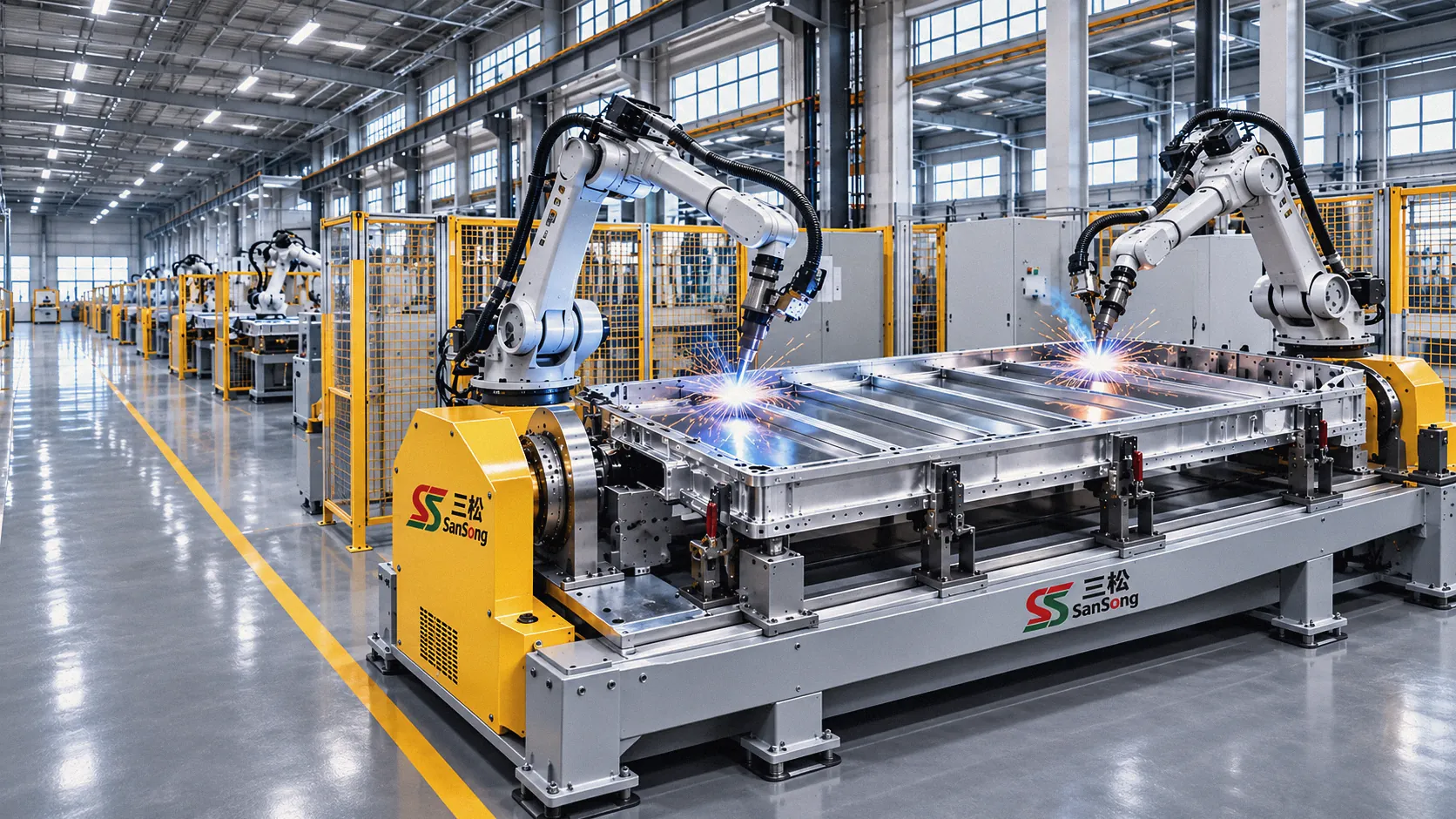
Plan every interface
A workstation needs to work with upstream and downstream operations as well as with its own robot. Identify loading, transfer, inspection and discharge points.
For a retrofit, share the installed robot and controls information, existing drawings and the available maintenance window.
Site safety responsibilities, installation conditions and commissioning arrangements are agreed for the project.
Support beyond the equipment
SanSong lists installation, commissioning and maintenance services for industrial robots and non-standard automation.
Discuss the required documentation, operator familiarisation and spare-parts scope as part of the technical enquiry.
Service availability, delivery timing and warranty terms are confirmed in the project quotation.
Other products
Explore the SanSong product range
HL series
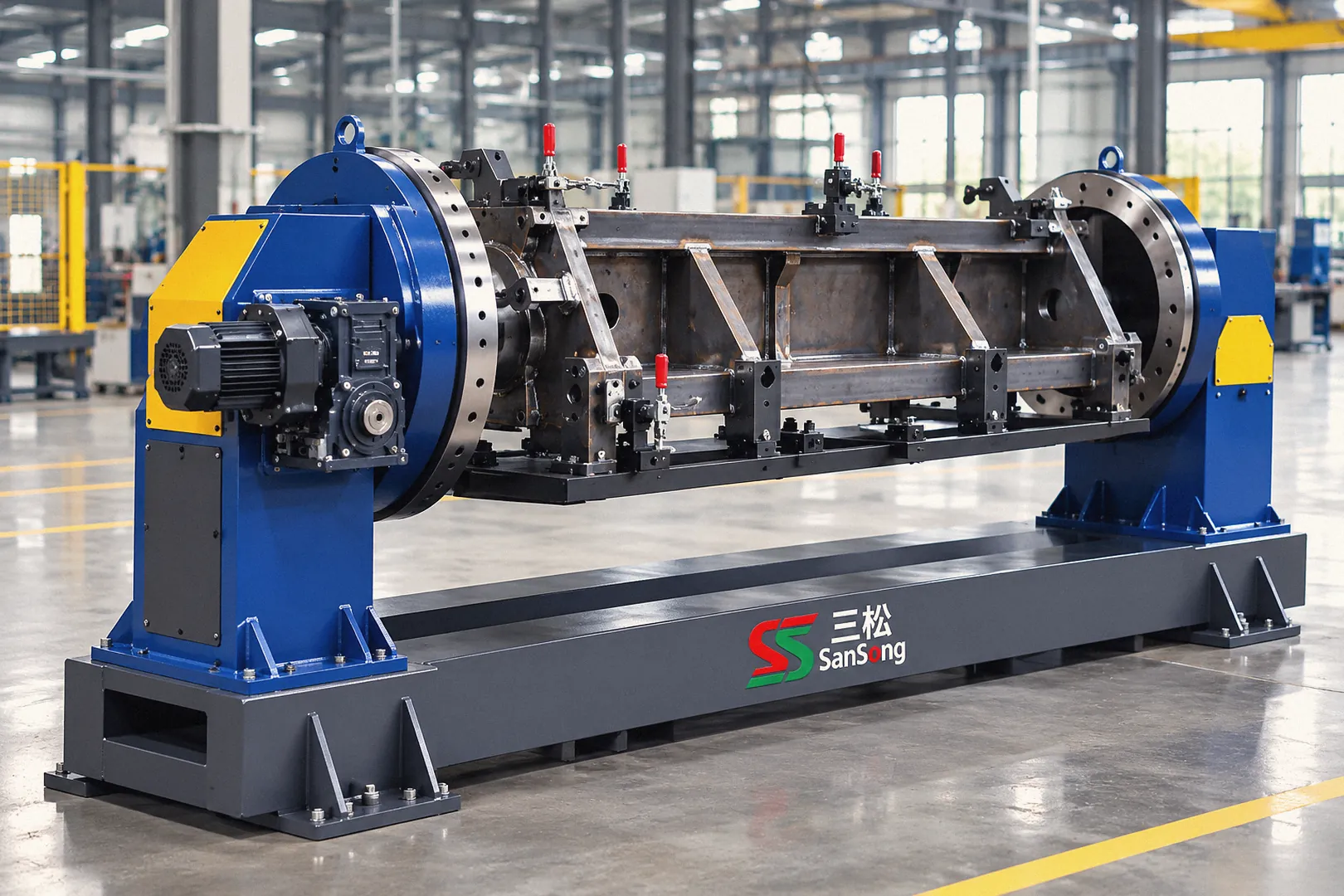
Product
Workpiece positioning
Welding Positioners
Welding Positioners
Product
Positioning equipment for robotic welding, selected around the workpiece, fixture and weld access.
One-step ISBM
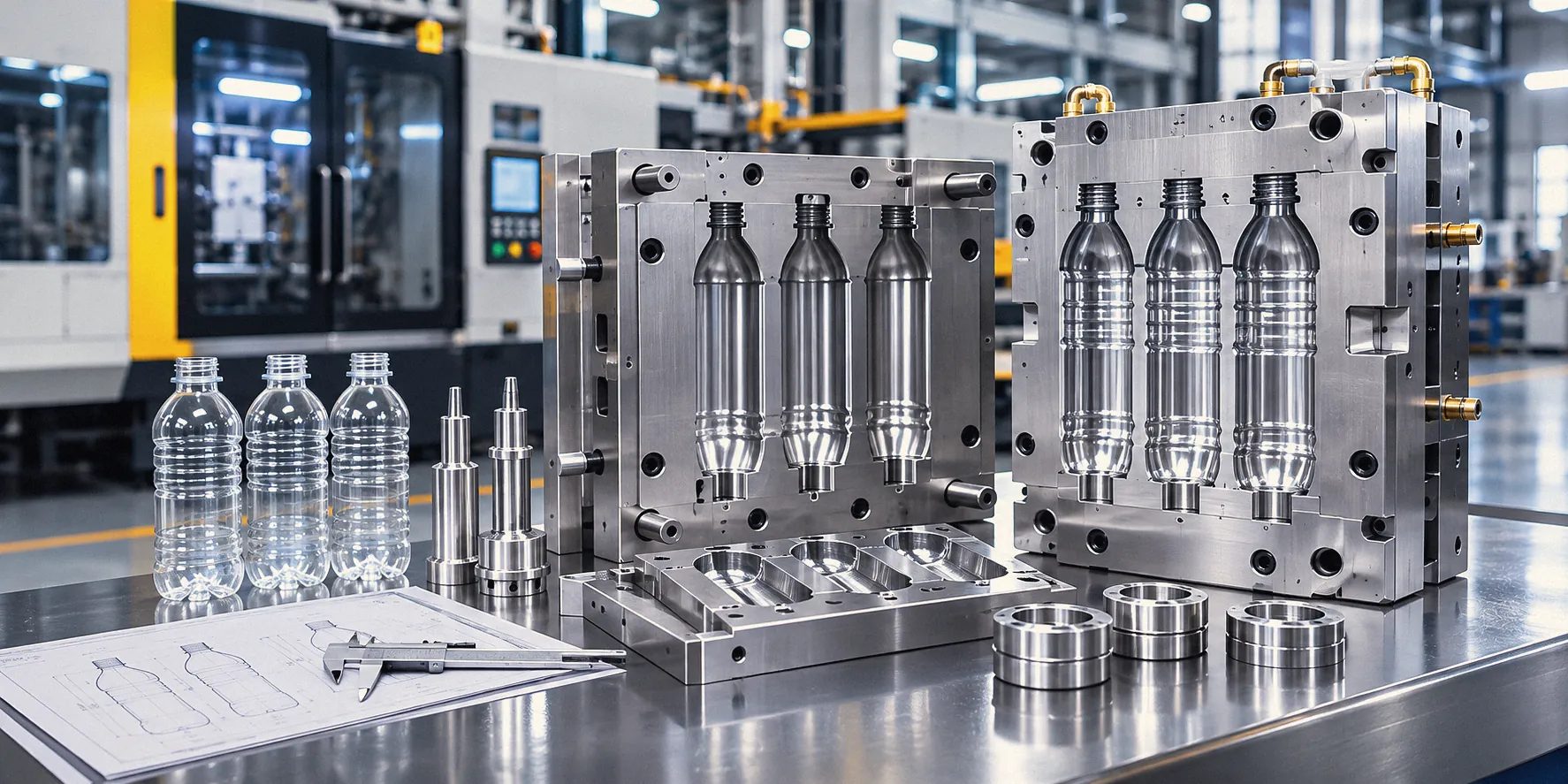
Product
One-step ISBM tooling
Bottle Molds
Bottle Molds
Product
Injection stretch blow molds developed around the container design, material and selected machine.
Ground / overhead
Product
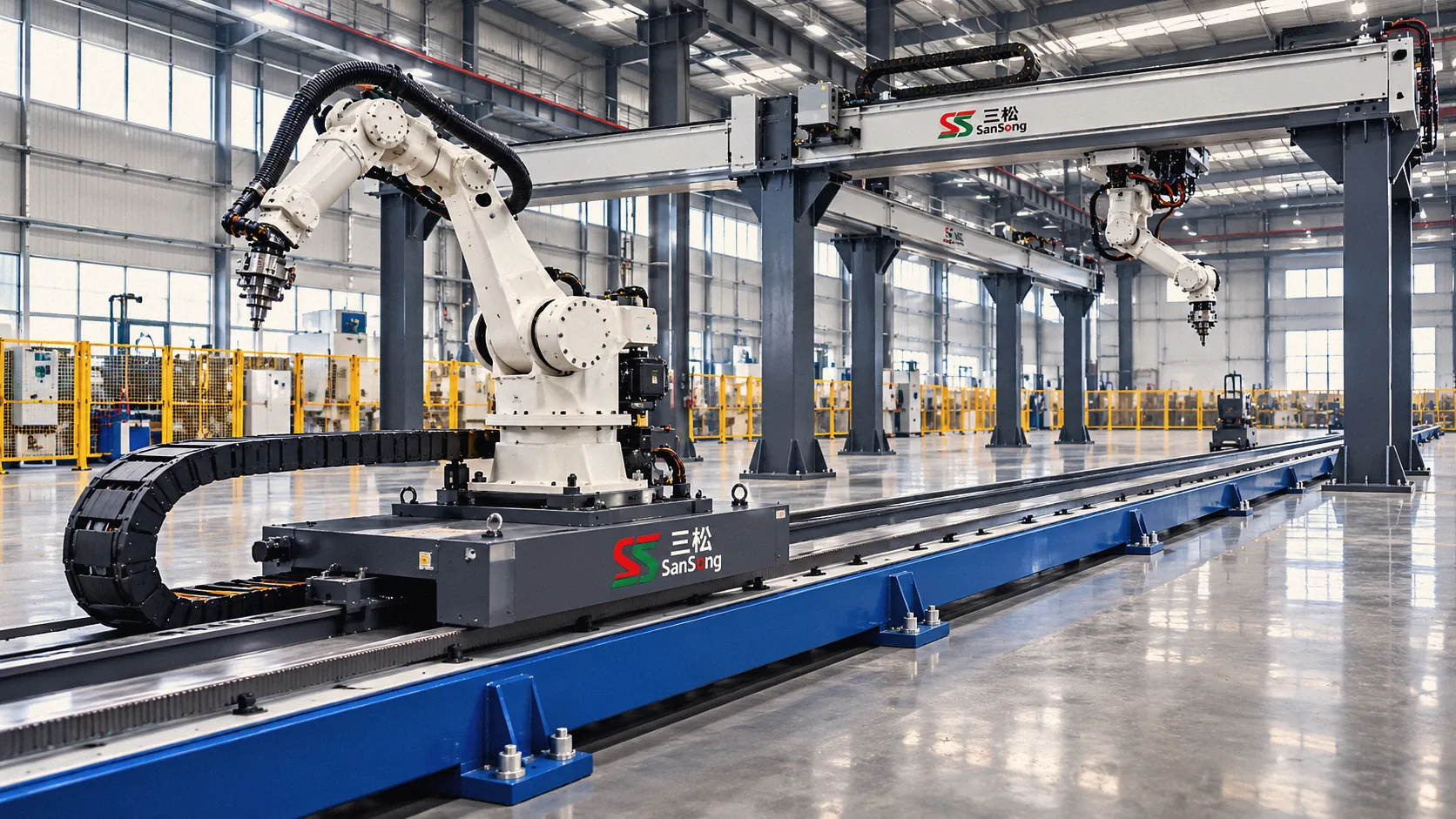
Ground and overhead axes
Robot Linear Tracks
Robot Linear Tracks
Product
Ground tracks, overhead tracks and travelling axes for extending the working area of a robot.
CONNECTED SYSTEM ARCHITECTURE
Six connected building blocks inside a SanSong robotic welding cell.
A reliable welding cell connects the robot, workpiece positioning, linear reach, clamping fixtures, seam sensing, safety guarding and lifecycle support into one coordinated project scope.
| Cell Building Block | Role in the Workstation | SanSong Scope & Related Page |
|---|---|---|
| 01 Industrial robot & welding package | Executes programmed arc-welding, spot-welding, riveting or handling paths. | Integrated to specification (published cases include third-party robots such as Yaskawa & CROBOTP) |
| 02 Welding positioner | Rotates and tilts the weldment for optimal weld access and dual-station operator loading. | SanSong HL-series welding positioners (HL1L–HL3C) |
| 03 Robot linear track (7th axis) | Extends robot working envelope across long structural parts or multiple workstations. | SanSong floor tracks, overhead tracks & walking axes |
| 04 Custom welding fixtures & jigs | Locates, clamps and manages heat distortion across part variants and batches. | In-house fixture design & CNC/CMM machining in Liuzhou |
| 05 Seam sensing & safety guarding | Compensates for part fit-up tolerance (touch/laser/through-arc) and protects operators with fencing, light curtains and interlocks. | Scoped to part tolerance & ISO 10218-2:2025 safety review |
| 06 Controls, commissioning & service | Coordinates cell PLC/HMI interlocks, installation, commissioning, operator guidance and maintenance. | Engineering & lifecycle service scope |
PUBLISHED AUTOMATION PORTFOLIO
Seven verified non-standard welding and automation line types.
Published system categories from SanSong’s engineering portfolio — described strictly by workpiece and process, without unconsented customer names.
- 01 · AUTOMOTIVE
Exhaust & muffler welding stations
Dedicated fixtures and robotic arc-welding cells built around automotive exhaust assemblies and airtightness-testing workflows.
- 02 · NEW ENERGY
New-energy battery-frame welding lines
Flexible fixtures combined with seam finding and tracking for aluminum new-energy vehicle battery frames.
- 03 · COMMERCIAL VEHICLES
Double-slide truck-floor welding lines
Dual-slide transfer layout enabling operator loading/unloading on one side while the robot welds the opposite fixture.
- 04 · BODY-IN-WHITE
Robotic spot-welding stations & quick-change lines
Standard single-station spot-welding cells and flexible quick-change lines serving multi-variant automotive stampings.
- 05 · STRUCTURAL ASSEMBLY
Vehicle-frame automatic riveting stations
Automated robotic riveting integrated into structural vehicle-frame assembly lines.
- 06 · ENGINEERING MACHINERY
Engineering-machinery 6-station dual-gantry mast line
Dual overhead gantry and conveyor architecture linking six robotic welding stations for heavy structural masts.
- 07 · TOOLING
Automotive & engineering-machinery welding fixtures
Custom manual and pneumatic/hydraulic locating and clamping jigs engineered around part tolerances and robot reach.
Related engineering insights
- Robotic welding cell components and changeover options
- Dual-station welding cells: loading while welding
- Robotic welding of aluminum battery trays and frames
- Robotic spot welding lines: spot vs arc welding
- Building the business case for a robotic welding cell
- Seam finding and seam tracking compared
- ISO 10218:2025 robot safety
- EU Machinery Regulation (EU) 2023/1230
ROBOTIC WELDING CELL CO-DESIGN & FMEA DIAGNOSTIC MATRIX
Robotic Welding Cell Co-Design & 4-Mode Weld FMEA Matrix
Co-designing HL-series positioners, 7th-axis linear tracks, clamping fixtures, and zoned operator light curtains around your weldment drawings before fabrication (direct robotics team: robot@lzsaso.com).
Showing 4 of 4 cell failure modes
| Cell Failure Mode | Root Cause | SanSong Positioner + 7th-Axis + Safety Interlock Countermeasure | Prefilled Robotics RFQ |
|---|---|---|---|
| Out-of-position vertical/overhead weld spatter & burn-through | Static clamping forces the 6-axis torch into vertical (PF) or overhead (PE) angles on thin-wall tubing, brackets, or aluminum battery frames. | SanSong HL-series single-axis or dual-axis welding positioner tilts & rotates joints into flat PA (1G) / horizontal PB (2F) orientation coordinated with the robot. | Scope HL Positioner → |
| Robot reach shadow along extended frames & multi-station trays | Fixed-pedestal 6-axis arm reaches wrist limit or dress-pack collision when welding across multi-meter structural weldments or parallel fixtures. | SanSong 7th-axis floor linear track or overhead gantry rail extends the robot working envelope along the full seam path with heavy-duty drag-chain routing. | Size 7th-Axis Track → |
| Index repeatability drift under eccentric workpiece + fixture CG | Positioner selected by payload mass alone without accounting for pneumatic fixture mass, X/Y/Z center-of-gravity offset, and inertia torque during indexing. | Co-design fixture + workpiece combined mass & overturning moment against HL-series reducer stiffness + datum locating pins & sequential clamping. | Submit Load & CG → |
| Operator load/unload waiting & safety-gate reset downtime | Single-station fixture halts robot arc time every cycle while the operator unclamps finished weldments, loads raw parts, and resets perimeter interlocks. | Dual-station H-frame or rotary-partition cell with zoned safety light curtains, arc-flash partitions, and interlocked two-hand station release (robot@lzsaso.com). | Scope Dual-Station Cell → |
FAQ
Frequently asked questions
Useful details for a focused engineering enquiry.
What information starts an automation enquiry?

Can existing robots be part of the project?
How is a positioner or track selected?
Are technical drawings available?
What installation services does SanSong offer?
What lead time and warranty should we expect?