


Ready to automate your workflow?
Ground and overhead axes
Robot linear tracks and 7th-axis rails
Ground tracks, overhead tracks and travelling axes for extending the working area of a robot.
2 layouts
Product family
Robot travel
Function
By layout
Stroke
By robot
Integration
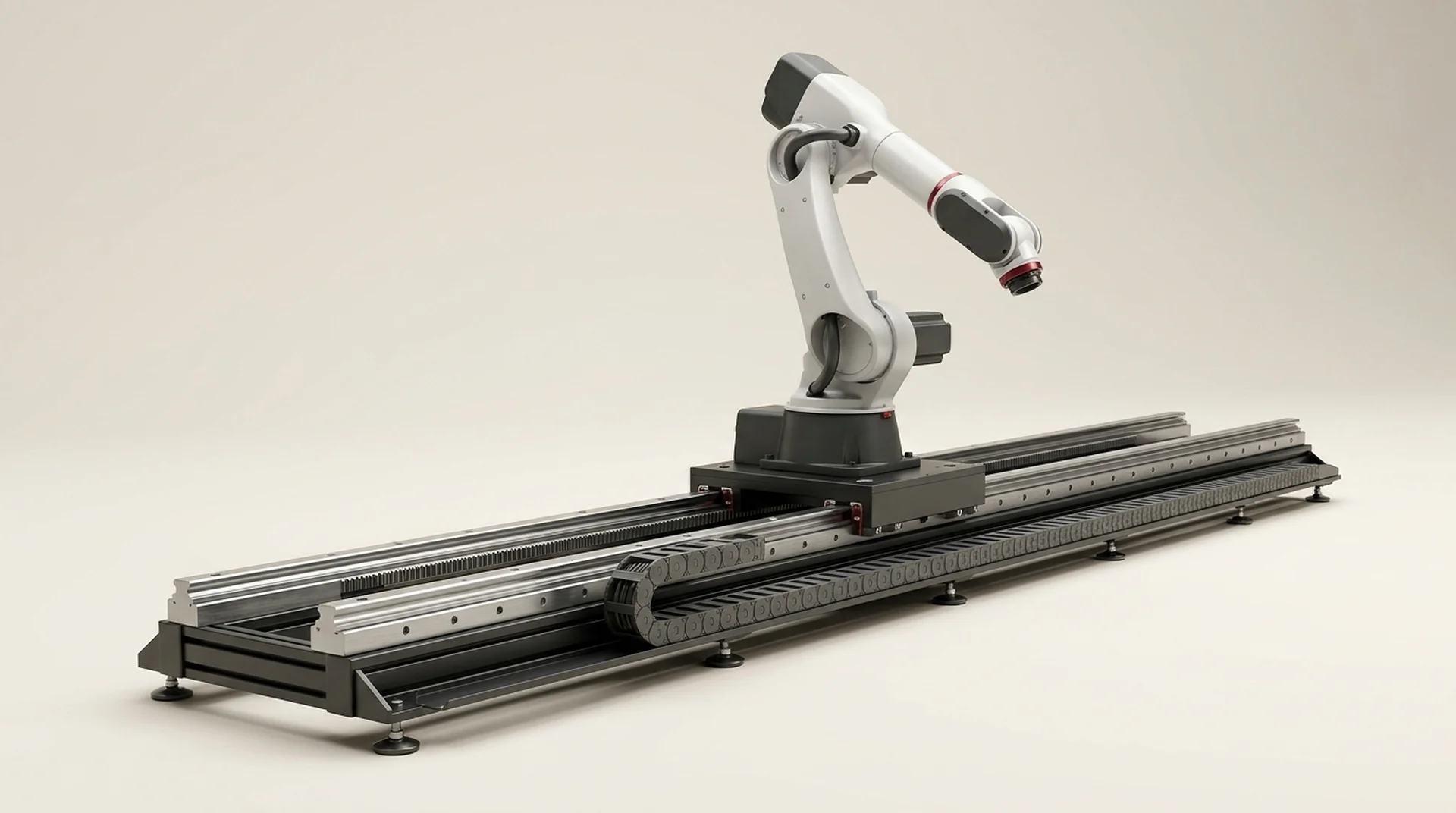
Extend the robot work area
SanSong lists robot ground tracks, overhead tracks and general travelling axes in its standard-product portfolio.
A travelling axis can move a robot between working positions or along a larger component. The layout determines how the axis fits the surrounding process.
The first selection step is to define the required travel, the robot and tooling load, and the available installation space.
Plan the movement
Track length, load, drive configuration and mounting arrangements are project dependent. Request the current technical drawing for the selected design.
Share the robot model, controller, process and installation orientation, together with the intended work positions.
Confirm the model against your layout
Allow space for cable management, access, maintenance and the full moving envelope. These requirements should appear on the cell layout. Speed, accuracy and coordinated motion requirements need confirmation with the engineering team rather than a generic catalogue assumption.
Connect the axis to the process
Review the travelling axis alongside positioners, fixtures and the robot program. The working positions should support the process sequence.
For an existing robot, confirm the available external-axis interface and controller information before selecting the drive arrangement.
Foundation, alignment, protection and site safety requirements form part of the installation review.
Installation and maintenance
SanSong offers robot installation, commissioning and maintenance services. The scope is confirmed for each project.
Include access for inspection, lubrication and servicing when planning the track location.
For service enquiries, share the installed equipment identification, drawings and symptoms so the team can assess the request.
Other products
Explore the SanSong product range
HL series
Product
Workpiece positioning
Welding Positioners
Welding Positioners
Product
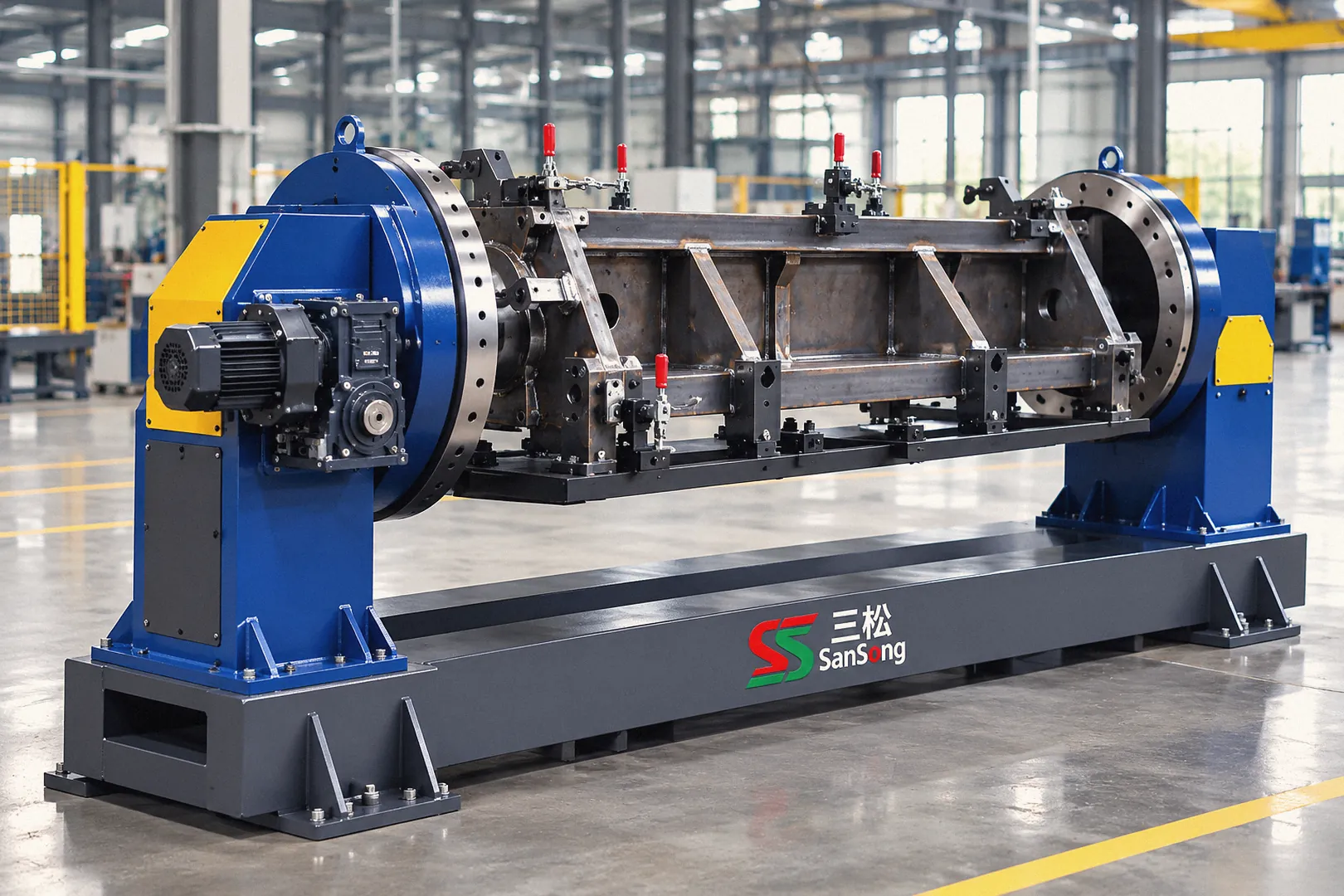
Positioning equipment for robotic welding, selected around the workpiece, fixture and weld access.
Custom automation
Product
Welding and handling
Robotic Automation Systems
Robotic Automation Systems
Product
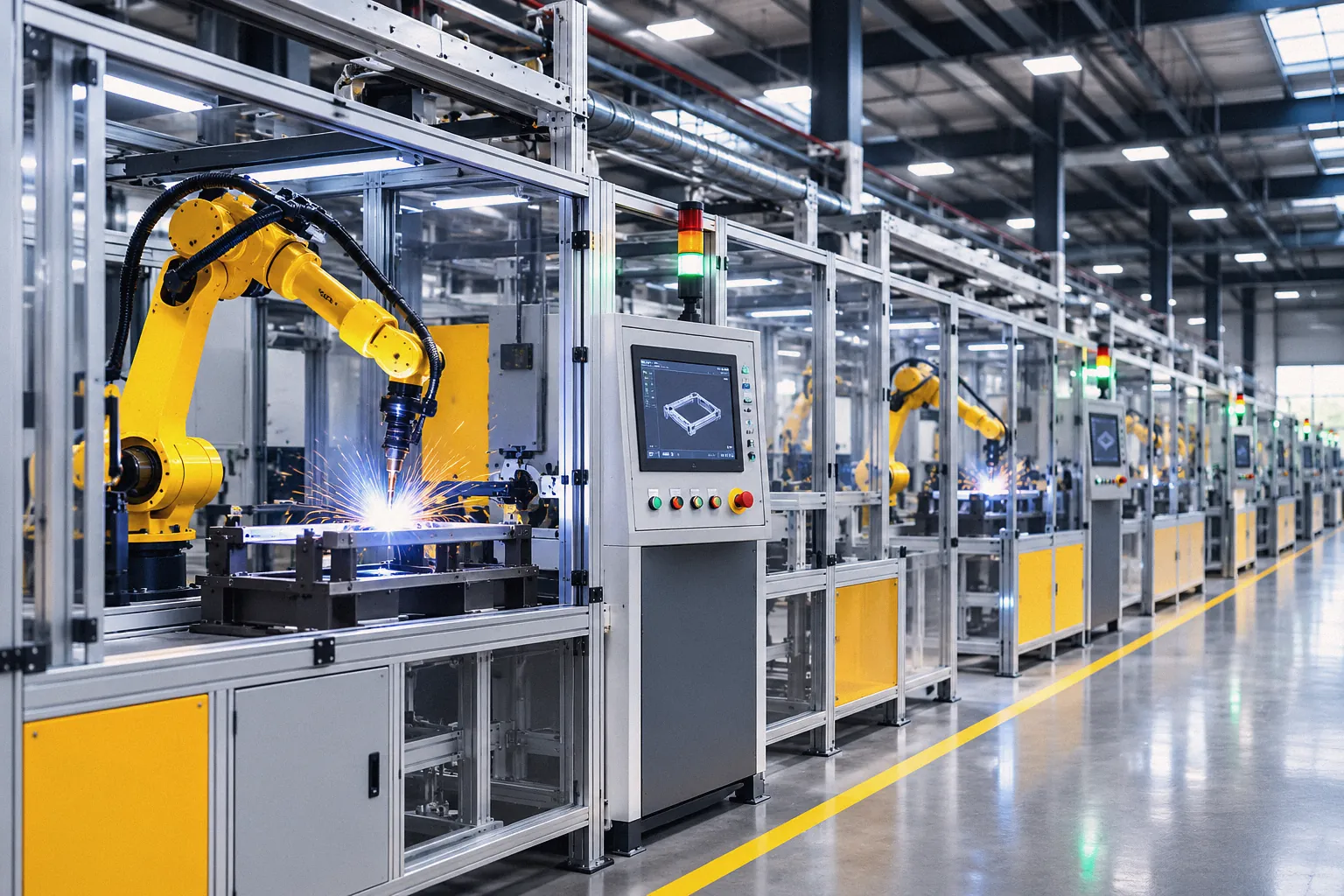
Welding workstations, fixtures and handling lines developed around real manufacturing processes.
One-step ISBM
Product
One-step ISBM tooling
Bottle Molds
Bottle Molds
Product
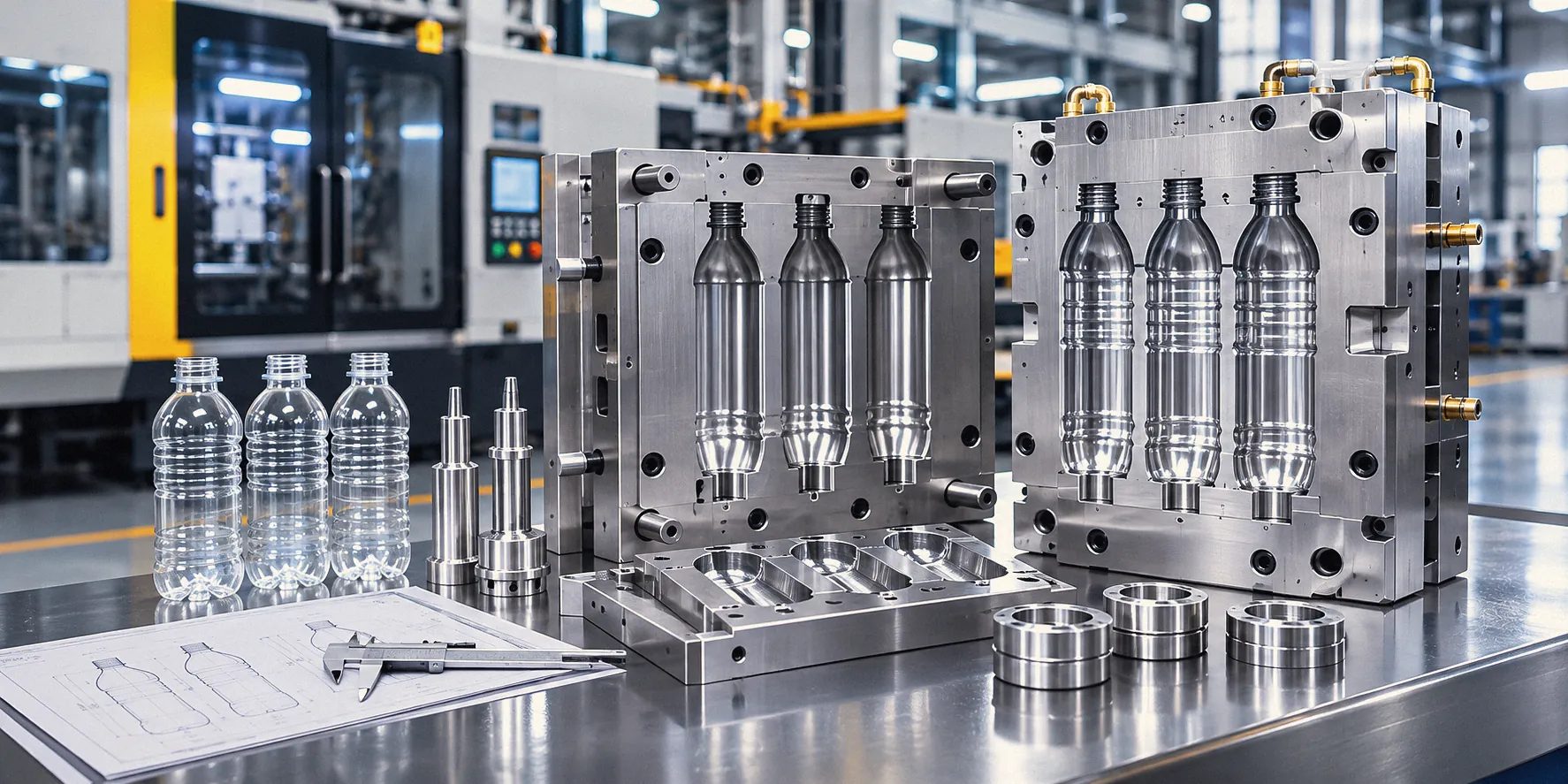
Injection stretch blow molds developed around the container design, material and selected machine.
7TH-AXIS TRACK LAYOUTS
Floor track, overhead track or general walking axis: compare the layouts.
As a robot 7th-axis track manufacturer in Liuzhou, SanSong engineers floor tracks, overhead tracks and general walking axes around your cell layout. Robot tracks are not quoted at a flat price per meter — total investment depends on travel stroke, moving load, positioning accuracy, support steel or floor foundation, spatter protection and controller synchronization.
| Engineering Factor | Floor Track (Ground Rail) | Overhead Track / Gantry | General Walking Axis |
|---|---|---|---|
| Floor-space impact | Runs at floor level alongside fixtures or positioners; simple civil layout when aisle space allows. | Keeps floor clear for large weldments, AGVs, forklifts or crane loading from below. | Configured to horizontal, elevated or side-mounted cell footprints. |
| Part & weld access | Strong lateral reach along side walls and multi-station positioner tables. | Top-down reach over wide frames, vehicle bodies, battery trays and tall structures. | Matches dedicated transfer or multi-station linear indexing paths. |
| Supporting structure | Anchored to leveled concrete floor foundation with alignment pads. | Requires engineered portal columns, overhead beam deflection check and seismic/load review. | Defined by mounting orientation and total moving inertia. |
| Protection & maintenance | Low-height access for lubrication and service; bellows or steel covers shield rails from weld spatter. | Rails sit above weld-spatter zone; requires safe maintenance platform or lift access. | Guarding and bellows scoped to welding spatter, grinding dust or stamping debris. |
| Stroke, payload & speed | Confirmed against cell layout, robot weight and dress-pack load on quotation. | Confirmed against span, inverted robot payload and beam stiffness on quotation. | Confirmed against robot controller interface and takt requirement. |
6-point robot track layout brief
- Dimensioned floor plan showing all working stations, fixtures and loading aisles
- Total moving load: robot arm mass + carriage + welding torch/gripper + dress pack
- Required effective travel stroke and target transit time between stations
- Positioning repeatability and whether laser/touch seam finding is used
- Floor slab condition (for ground rail) or clear height / column limits (for overhead gantry)
- Robot brand, controller generation and external-axis servo synchronization requirements
Related engineering insights & technical links
ROBOTIC WELDING CELL CO-DESIGN & FMEA DIAGNOSTIC MATRIX
Robotic Welding Cell Co-Design & 4-Mode Weld FMEA Matrix
Co-designing HL-series positioners, 7th-axis linear tracks, clamping fixtures, and zoned operator light curtains around your weldment drawings before fabrication (direct robotics team: robot@lzsaso.com).
Showing 4 of 4 cell failure modes
| Cell Failure Mode | Root Cause | SanSong Positioner + 7th-Axis + Safety Interlock Countermeasure | Prefilled Robotics RFQ |
|---|---|---|---|
| Out-of-position vertical/overhead weld spatter & burn-through | Static clamping forces the 6-axis torch into vertical (PF) or overhead (PE) angles on thin-wall tubing, brackets, or aluminum battery frames. | SanSong HL-series single-axis or dual-axis welding positioner tilts & rotates joints into flat PA (1G) / horizontal PB (2F) orientation coordinated with the robot. | Scope HL Positioner → |
| Robot reach shadow along extended frames & multi-station trays | Fixed-pedestal 6-axis arm reaches wrist limit or dress-pack collision when welding across multi-meter structural weldments or parallel fixtures. | SanSong 7th-axis floor linear track or overhead gantry rail extends the robot working envelope along the full seam path with heavy-duty drag-chain routing. | Size 7th-Axis Track → |
| Index repeatability drift under eccentric workpiece + fixture CG | Positioner selected by payload mass alone without accounting for pneumatic fixture mass, X/Y/Z center-of-gravity offset, and inertia torque during indexing. | Co-design fixture + workpiece combined mass & overturning moment against HL-series reducer stiffness + datum locating pins & sequential clamping. | Submit Load & CG → |
| Operator load/unload waiting & safety-gate reset downtime | Single-station fixture halts robot arc time every cycle while the operator unclamps finished weldments, loads raw parts, and resets perimeter interlocks. | Dual-station H-frame or rotary-partition cell with zoned safety light curtains, arc-flash partitions, and interlocked two-hand station release (robot@lzsaso.com). | Scope Dual-Station Cell → |
FAQ
Frequently asked questions
Useful details for a focused engineering enquiry.
What information starts an automation enquiry?

Can existing robots be part of the project?
How is a positioner or track selected?
Are technical drawings available?
What installation services does SanSong offer?
What lead time and warranty should we expect?





