


Ready to automate your workflow?
Workpiece positioning
Welding positioners for robotic welding
Positioning equipment for robotic welding, selected around the workpiece, fixture and weld access.
HL series
Product family
Welding
Application
By project
Configuration
Part study
Selection
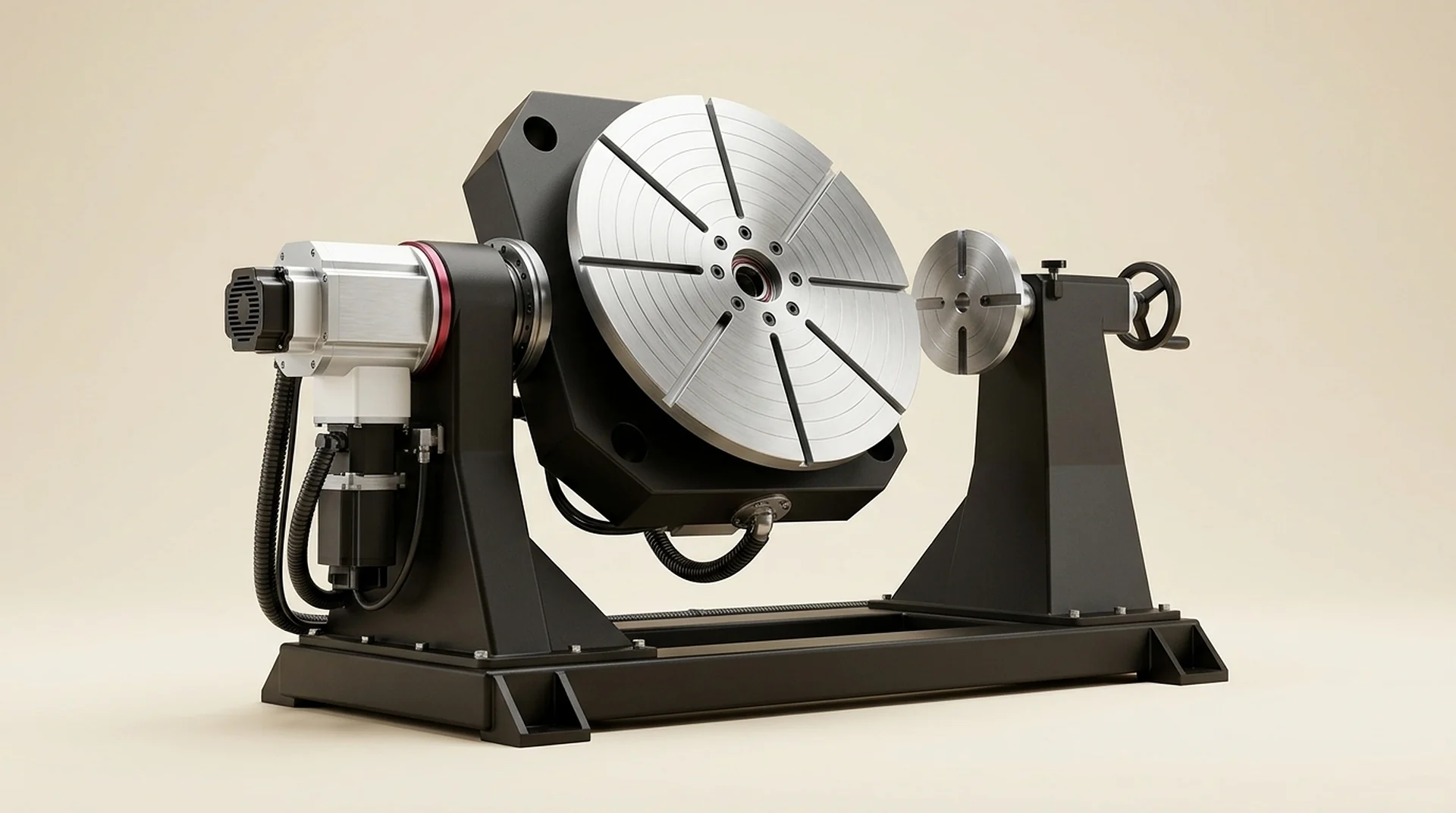
The workpiece comes first
A welding positioner brings the joint into a useful welding position. SanSong lists several HL-series configurations for integration with robotic welding systems.
Begin with the combined weight of the workpiece and fixture, the centre of gravity, the turning envelope and access to each weld.
Share drawings and the intended process with the engineering team to discuss the appropriate structure and project scope.
Selection information
The published range includes HL1L, HL1S, HL2C, HL2L, HL2S, HL2U and HL3C configurations. The appropriate model depends on the workpiece and station layout.
Load capacity, torque, speed, accuracy and mounting dimensions need to be confirmed for the selected configuration. This page does not assign one specification to the whole range.
Include the fixture mass and the space needed for loading, unloading and rotation when preparing your enquiry.
Specify the application, then the equipment
Request the current model drawing and technical specification from SanSong before completing your cell design.
The complete welding station
Review the positioner together with the robot, welding fixture, power source and access for operators. Each interface forms part of the application study.
For an existing robot, share its model, controller and available external-axis configuration so the team can assess integration.
Cable routing, earthing, guarding and installation conditions should be agreed with the responsible integrator for the specific station.
Engineering support
SanSong lists non-standard production-line design, robot installation and commissioning, and maintenance among its engineering services.
The quotation should identify the equipment scope, technical documents, commissioning responsibilities and spare parts required for the project.
For an existing positioner, provide its identification, drawings and a description of the issue when contacting the service team.
Other products
Explore the SanSong product range
Custom automation
Product
Welding and handling
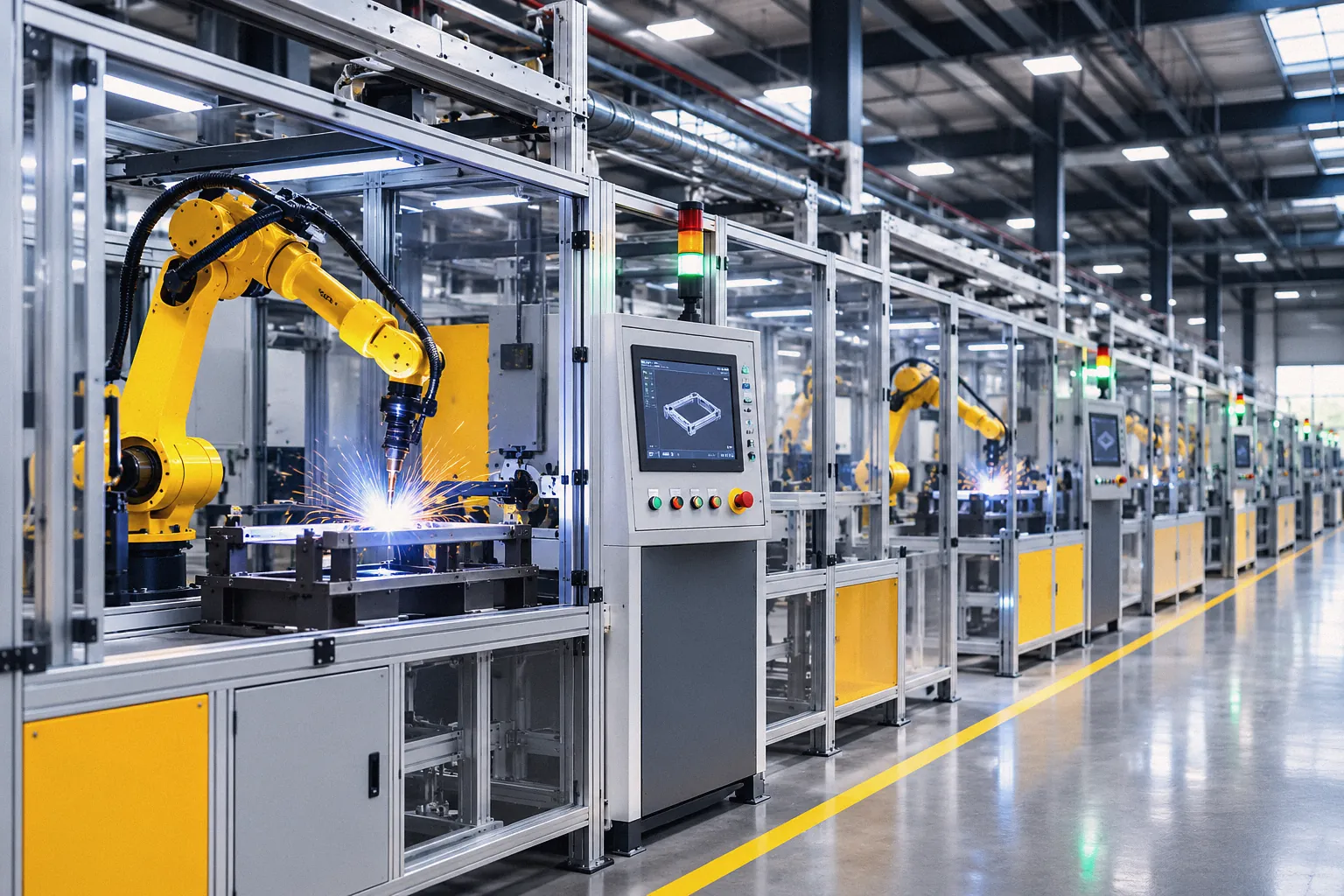
Robotic Automation Systems
Robotic Automation Systems
Product
Welding workstations, fixtures and handling lines developed around real manufacturing processes.
One-step ISBM
Product
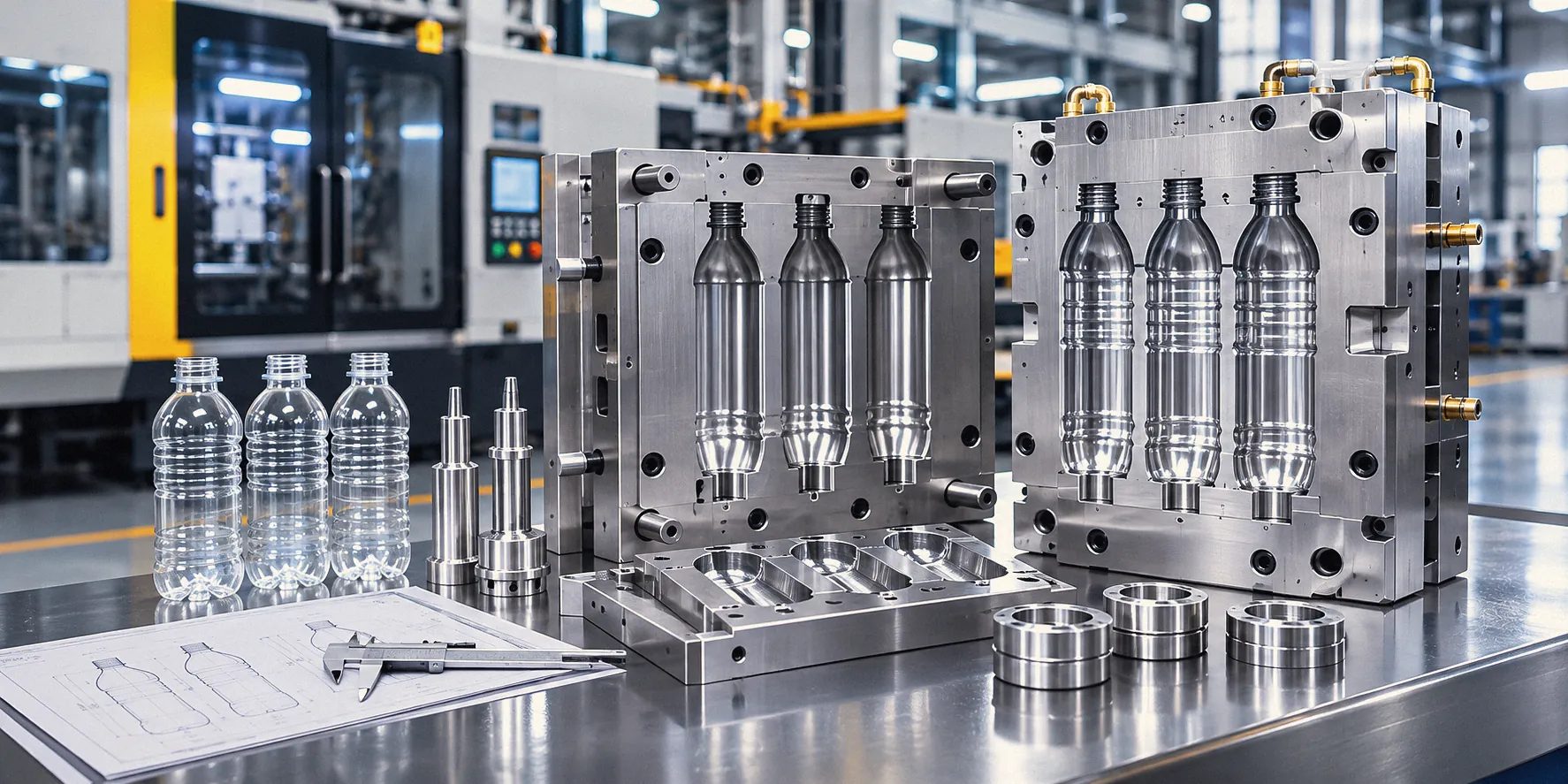
One-step ISBM tooling
Bottle Molds
Bottle Molds
Product
Injection stretch blow molds developed around the container design, material and selected machine.
Ground / overhead
Product
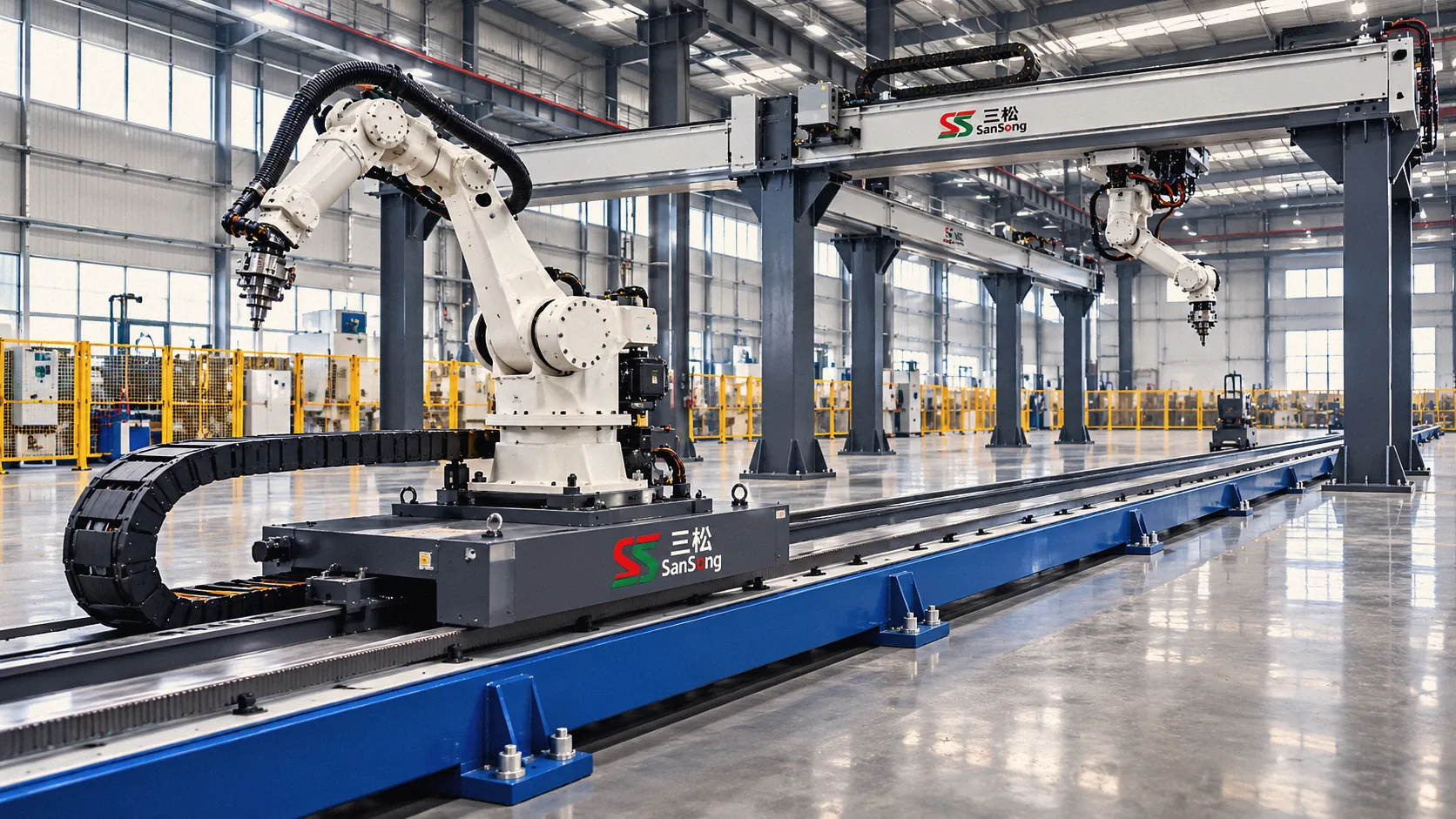
Ground and overhead axes
Robot Linear Tracks
Robot Linear Tracks
Product
Ground tracks, overhead tracks and travelling axes for extending the working area of a robot.
HL SERIES CONFIGURATION INDEX
Published HL-series welding positioner configurations.
As a Liuzhou robotic welding positioner manufacturer, SanSong lists seven HL-series configurations. Rated payload, axis configuration, torque, rotation speed, repeatability and CAD mounting drawings are confirmed on the configuration datasheet for your workpiece — this table never guesses ratings from model codes.
| Series Code | Published Designation Ref. | Selection Basis | Rated Load, Axes & CAD Drawing |
|---|---|---|---|
| HL1L | HL1L-300-0407 | Workpiece + fixture mass, CG & weld access | Spec sheet & CAD on request |
| HL1S | HL1S-1000-0570 | Workpiece + fixture mass, CG & weld access | Spec sheet & CAD on request |
| HL2C | HL2C-1000-1880 | Workpiece + fixture mass, CG & weld access | Spec sheet & CAD on request |
| HL2L | HL2L-2000-1490 | Workpiece + fixture mass, CG & weld access | Spec sheet & CAD on request |
| HL2S | HL2S-600-0885 | Workpiece + fixture mass, CG & weld access | Spec sheet & CAD on request |
| HL2U | HL2U-1000-1580 | Workpiece + fixture mass, CG & weld access | Spec sheet & CAD on request |
| HL3C | HL3C-1000-1880 | Workpiece + fixture mass, CG & weld access | Spec sheet & CAD on request |
5-point workpiece-to-positioner sizing brief
- Combined rotating mass: workpiece weight plus welding fixture and clamps (kg)
- Center of gravity (CG) offset and eccentricity relative to the rotation axis
- Overall workpiece L × W × H envelope and required turning clearance
- Weld seam locations, preferred flat/horizontal weld attitude and loading method (crane, hoist or manual)
- Robot brand, controller model and whether external-axis coordinated motion is required
Related engineering insights & technical links
- How a welding positioner works and how to size one
- Robot and positioner coordinated motion: how it works
- Welding fixture design for robots: locating, clamping and distortion control
- Dual-station welding cells: loading while welding
- Welding positioner RFQ checklist
- EU Digital Product Passport draft: HL welding positioners
ROBOTIC WELDING CELL CO-DESIGN & FMEA DIAGNOSTIC MATRIX
Robotic Welding Cell Co-Design & 4-Mode Weld FMEA Matrix
Co-designing HL-series positioners, 7th-axis linear tracks, clamping fixtures, and zoned operator light curtains around your weldment drawings before fabrication (direct robotics team: robot@lzsaso.com).
Showing 4 of 4 cell failure modes
| Cell Failure Mode | Root Cause | SanSong Positioner + 7th-Axis + Safety Interlock Countermeasure | Prefilled Robotics RFQ |
|---|---|---|---|
| Out-of-position vertical/overhead weld spatter & burn-through | Static clamping forces the 6-axis torch into vertical (PF) or overhead (PE) angles on thin-wall tubing, brackets, or aluminum battery frames. | SanSong HL-series single-axis or dual-axis welding positioner tilts & rotates joints into flat PA (1G) / horizontal PB (2F) orientation coordinated with the robot. | Scope HL Positioner → |
| Robot reach shadow along extended frames & multi-station trays | Fixed-pedestal 6-axis arm reaches wrist limit or dress-pack collision when welding across multi-meter structural weldments or parallel fixtures. | SanSong 7th-axis floor linear track or overhead gantry rail extends the robot working envelope along the full seam path with heavy-duty drag-chain routing. | Size 7th-Axis Track → |
| Index repeatability drift under eccentric workpiece + fixture CG | Positioner selected by payload mass alone without accounting for pneumatic fixture mass, X/Y/Z center-of-gravity offset, and inertia torque during indexing. | Co-design fixture + workpiece combined mass & overturning moment against HL-series reducer stiffness + datum locating pins & sequential clamping. | Submit Load & CG → |
| Operator load/unload waiting & safety-gate reset downtime | Single-station fixture halts robot arc time every cycle while the operator unclamps finished weldments, loads raw parts, and resets perimeter interlocks. | Dual-station H-frame or rotary-partition cell with zoned safety light curtains, arc-flash partitions, and interlocked two-hand station release (robot@lzsaso.com). | Scope Dual-Station Cell → |
FAQ
Frequently asked questions
Useful details for a focused engineering enquiry.
What information starts an automation enquiry?

Can existing robots be part of the project?
How is a positioner or track selected?
Are technical drawings available?
What installation services does SanSong offer?
What lead time and warranty should we expect?





