


Ready to automate your workflow?
LINE 03 · LASER PROCESSING & INDUSTRIAL SPRAYING
Laser welding, cutting and spraying robot workstations
Expanding beyond arc and resistance spot welding, SanSong engineers turnkey fiber-laser welding/cutting cells (introduced in 2022) and enclosed multi-axis robotic painting workstations in Liuzhou.
Since 2022
Laser welding & cutting line
6-Axis + HL
Multi-axis path coordination
Enclosed
Laser guarding & spray exhaust
Custom FAT
Built & trial-tested in Liuzhou
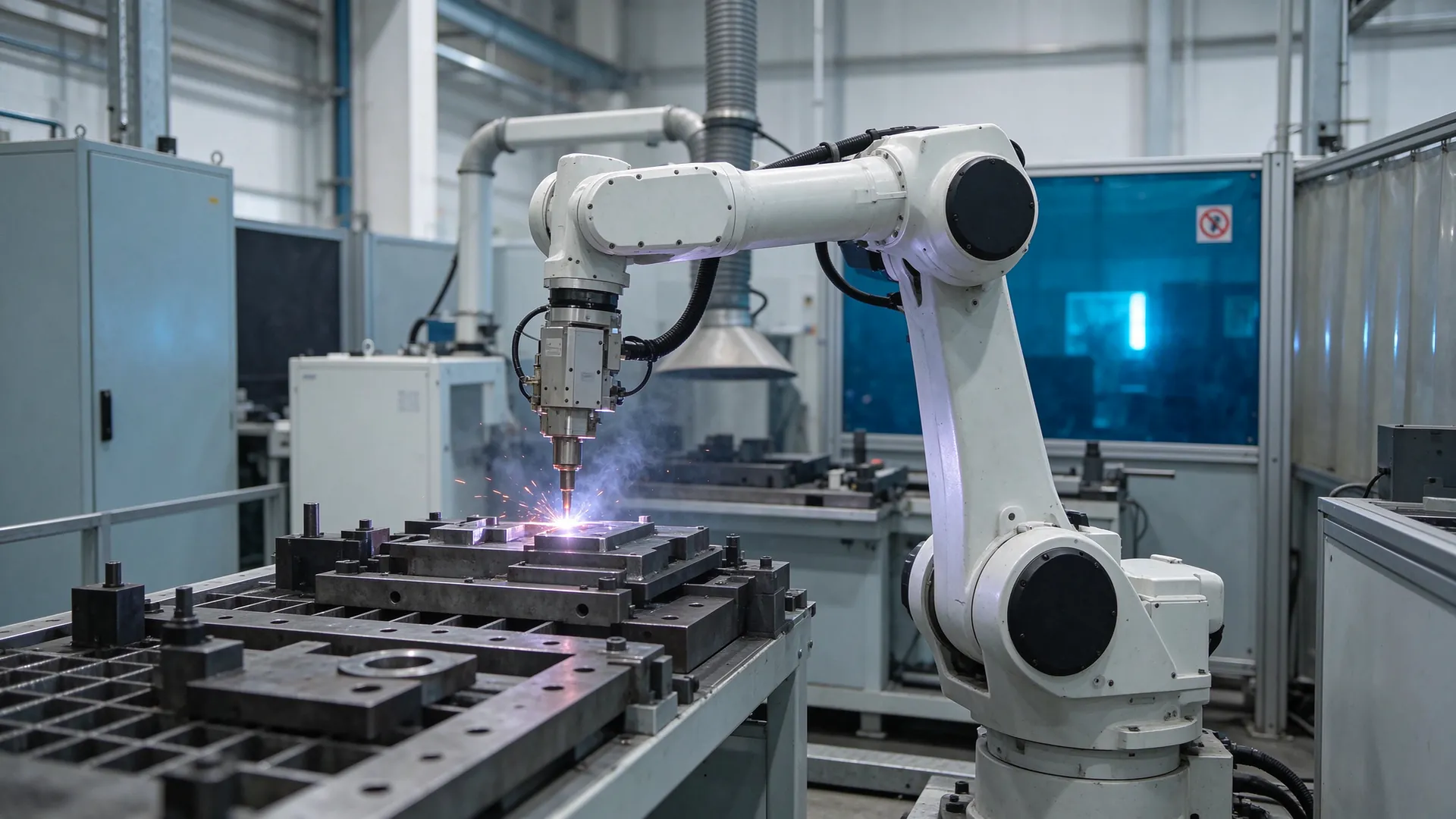
Robotic & dedicated laser welding and cutting turnkey cells
Introduced in 2022 and backed by the Liuzhou Municipal Smart Welding Equipment Engineering Technology Research Center, SanSong’s laser workstations combine six-axis industrial robots or precision motion stages with fiber-laser sources, wobble or seam-tracking laser heads, precision clamping fixtures, water chillers and fume extraction.
Laser cells are particularly suited to low-distortion thin stainless steel housings, aluminum EV battery trays, kitchenware, electrical enclosures and spatial 3D trim/hole cutting on stamped or hydroformed parts where fit-up clamping repeatability is critical.
| Workstation Type | Core Integrated Subsystems | Project-Scoped Engineering Inputs |
|---|---|---|
| Robotic laser welding cell | 6-axis robot + fiber laser + wobble/wire-feed head + precision zero-gap fixture + HL positioner + light-tight enclosure + fume extractor | Alloy & sheet thickness, joint type (lap/butt/fillet), permissible heat input, part CAD & takt time |
| 3D robotic / dedicated laser cutting cell | Articulated robot or gantry + capacitive height-following cutting head + nest fixture + slag/fume collection | 3D trim contour & hole tolerances, material thickness, assist gas (N2 / O2 / air) & batch changeover |
| Industrial spraying robot workstation | Spraying robot + paint supply/metering pump + spray gun + turntable/track + dry/wet filtration booth + explosion-protection cabinet | Coating chemistry (waterborne / solvent / powder), target film thickness, part hanging envelope & VOC/exhaust rules |
Enclosed industrial spraying robots & multi-axis coating booths
Manual spray painting exposes operators to solvent mist and produces uneven film thickness on multi-ribbed weldments and enclosures. SanSong spraying workstations isolate the coating zone inside an airflow-balanced booth while coordinating a spraying robot with rotary turntables, HL positioners or HLT overhead tracks.
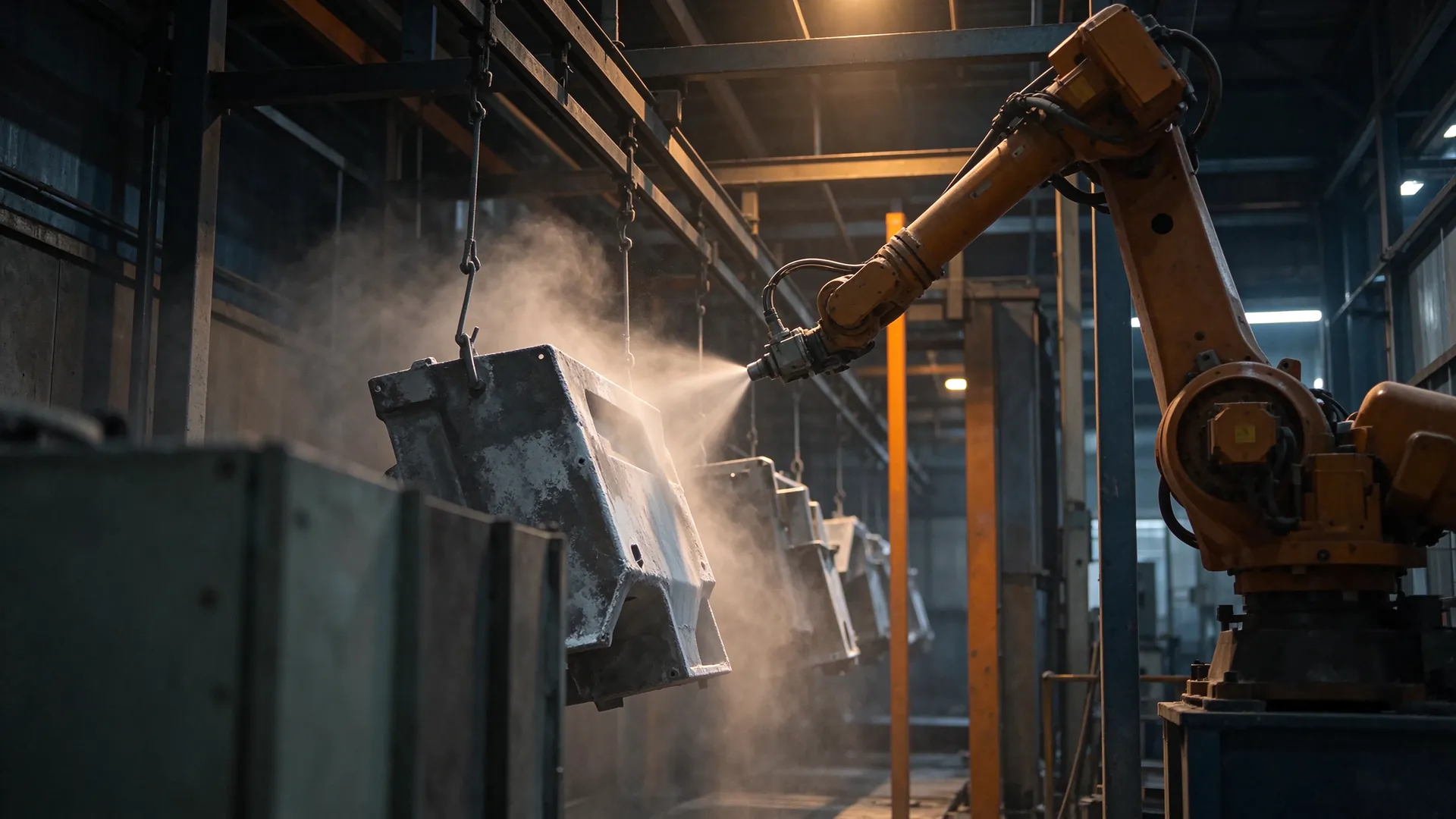
Backed by granted CNIPA spraying & fixture patents in Liuzhou
SanSong’s engineering archive includes a 2024 granted CNIPA invention patent for automated mechanical-component spraying equipment alongside multiple welding positioning, arc-shielding and end-effector clamping patents — manufactured and pre-commissioned inside our 9,336 m² Liuzhou plant under ISO 9001:2015 (Cert. 11426Q00192R201).
Start a laser processing or robotic spraying feasibility review
Because laser source power, optical safety enclosures, paint metering hardware and explosion-protection classifications are strictly application-dependent, SanSong confirms every subsystem specification in a dedicated technical proposal after reviewing your drawings and sample requirements.
Other products
Explore the SanSong product range
1.8 m / 35 kg
Product
LINE 03 · STANDARDIZED SPOT-WELDING PACKAGE
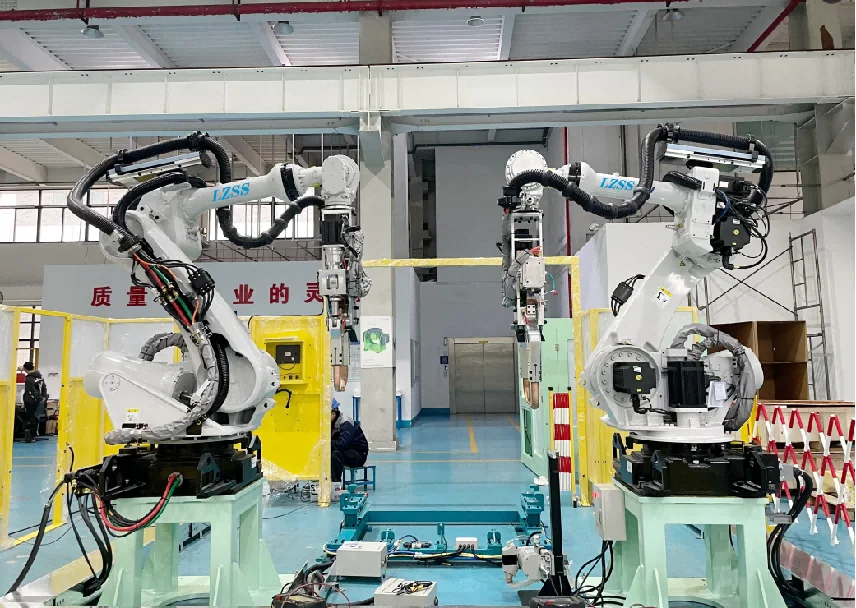
SSR-R1.8/35 lightweight spot-welding robot package
SSR-R1.8/35 lightweight spot-welding robot package
Product
SanSong SSR-R1.8/35 standardized spot-welding robot package: 1.8 m reach, 35 kg payload, SSDHKZ-400A MF controller, 40 kN C/X weld gun, 17 kA transformer and auto tip wear compensation.
Multi-SKU
Product
LINE 05 · FLEXIBLE TOOLING, GAUGES & INDUSTRIAL SOFTWARE
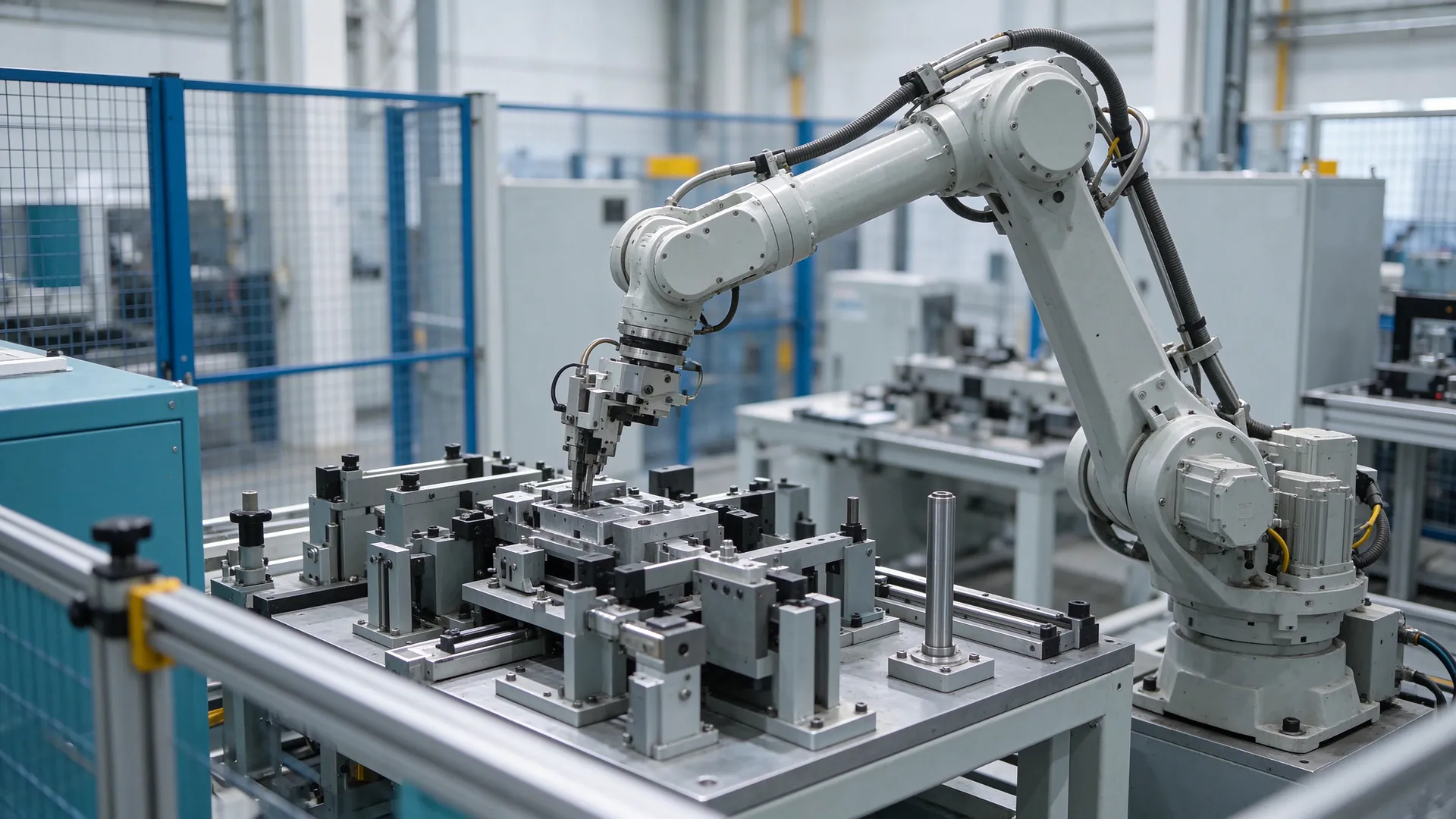
Flexible tooling fixtures, inspection gauges and smart robotic cells
Flexible tooling fixtures, inspection gauges and smart robotic cells
Product
SanSong multi-SKU quick-change robotic welding fixtures, dimensional checking gauges, flexible workstations, scheduling software R&D and in-house CNC robot part machining in Liuzhou.
300–2,000 kg
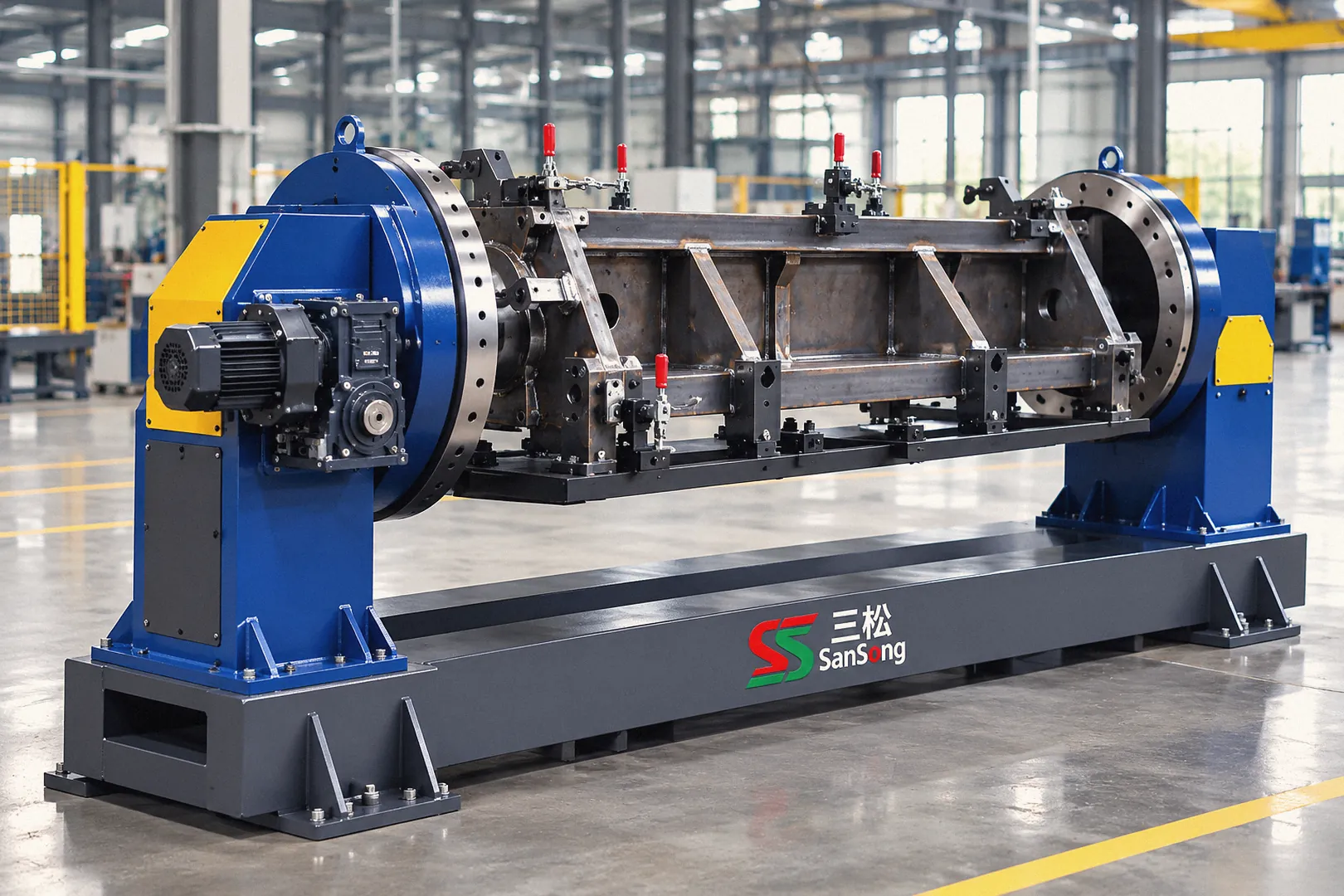
Product
LINE 04 · 1-/2-/3-AXIS POSITIONERS
HL robotic welding positioners (10 models)
HL robotic welding positioners (10 models)
Product
Single-, dual- and tri-axis servo positioners with conductive slip-rings and ±1.0–1.5 arcmin repeatability.
FAQ
Engineering & buyer questions
Practical answers on package scope, site utilities and customization.
Does SanSong supply complete guarded laser welding cells or fixtures only?

How is weld fit-up controlled for fiber-laser welding?
Can spraying robot cells handle heavy structural parts as well as small housings?
Are laser kW ratings and spray-booth dimensions fixed or customized?