


Ready to automate your workflow?
Engineering design, installation, commissioning and maintenance
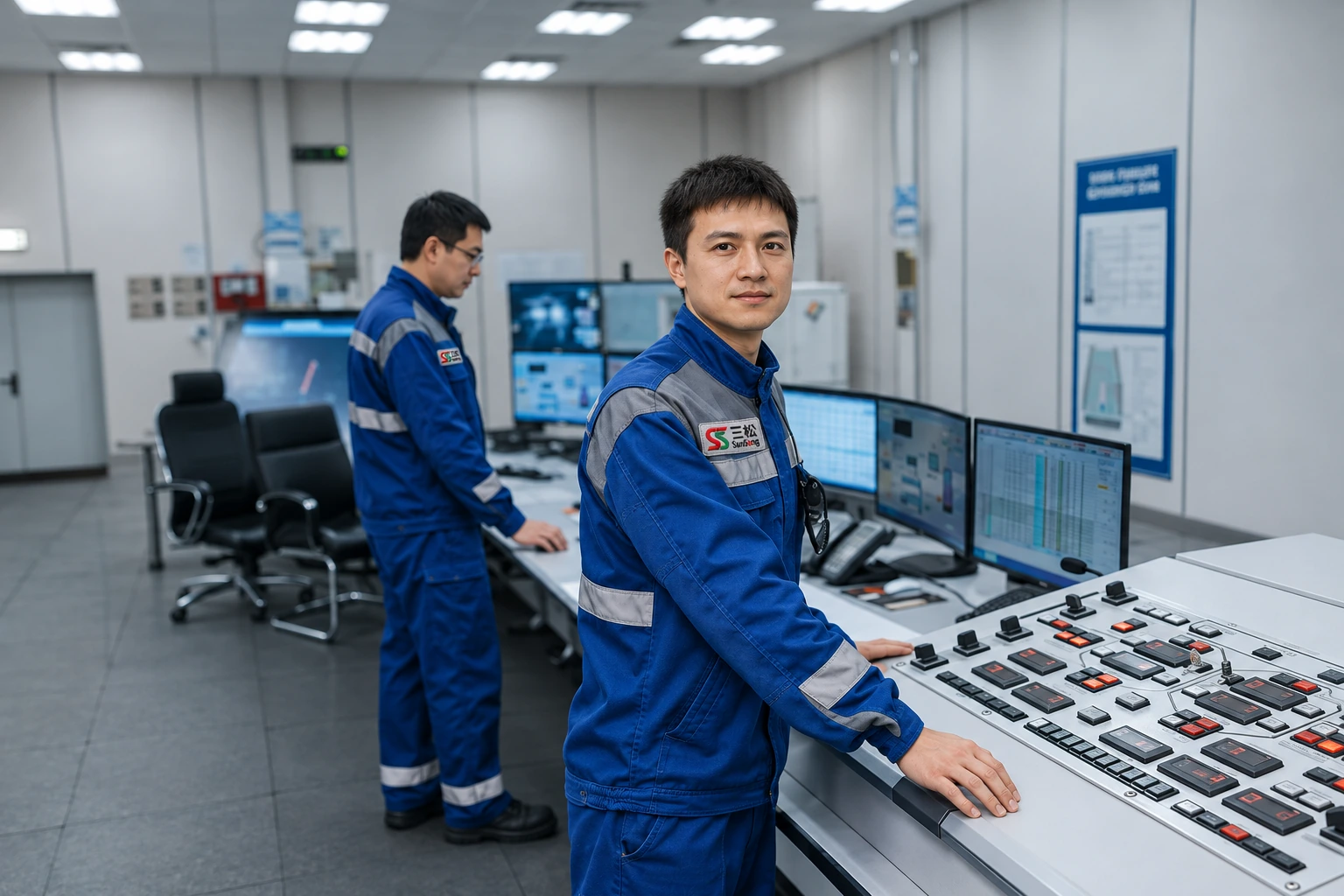
The application
An equipment project has to fit its working environment. Existing robots, plant layouts, access and utilities all influence the installation plan.
SanSong lists non-standard production-line design, robot installation and commissioning, and repair and maintenance services.
Provide the equipment identification and a clear description of the requirement so the engineering team can assess the scope.
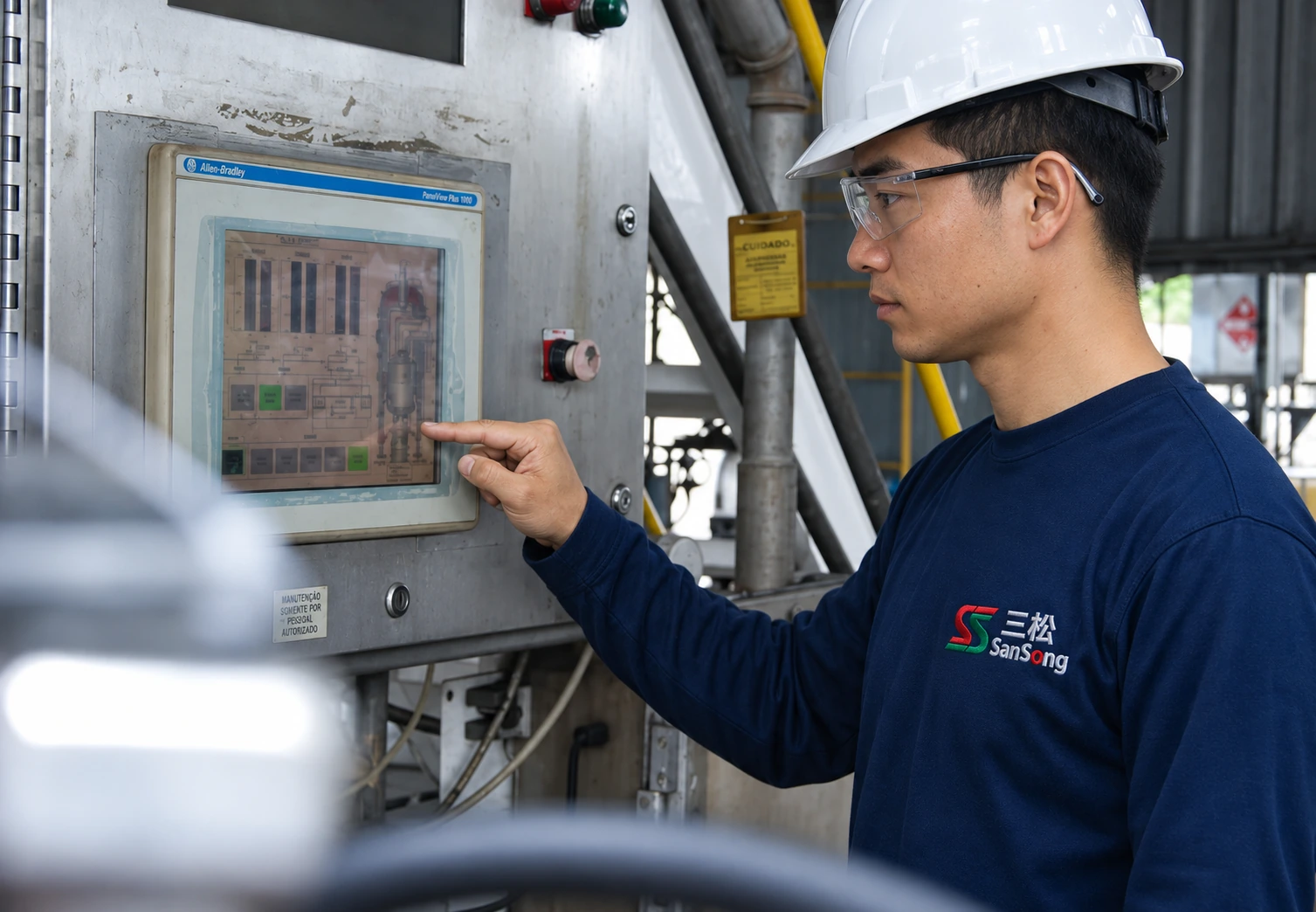
Develop the right specification
A useful brief is the first step
For an upgrade, share the existing drawings, robot and controller details, and the operating issue to be addressed.
Identify access constraints, utilities and the available installation window. These are inputs to planning, not assumed delivery promises.
Agree the responsibilities for equipment, site work, testing and documentation before the service starts.
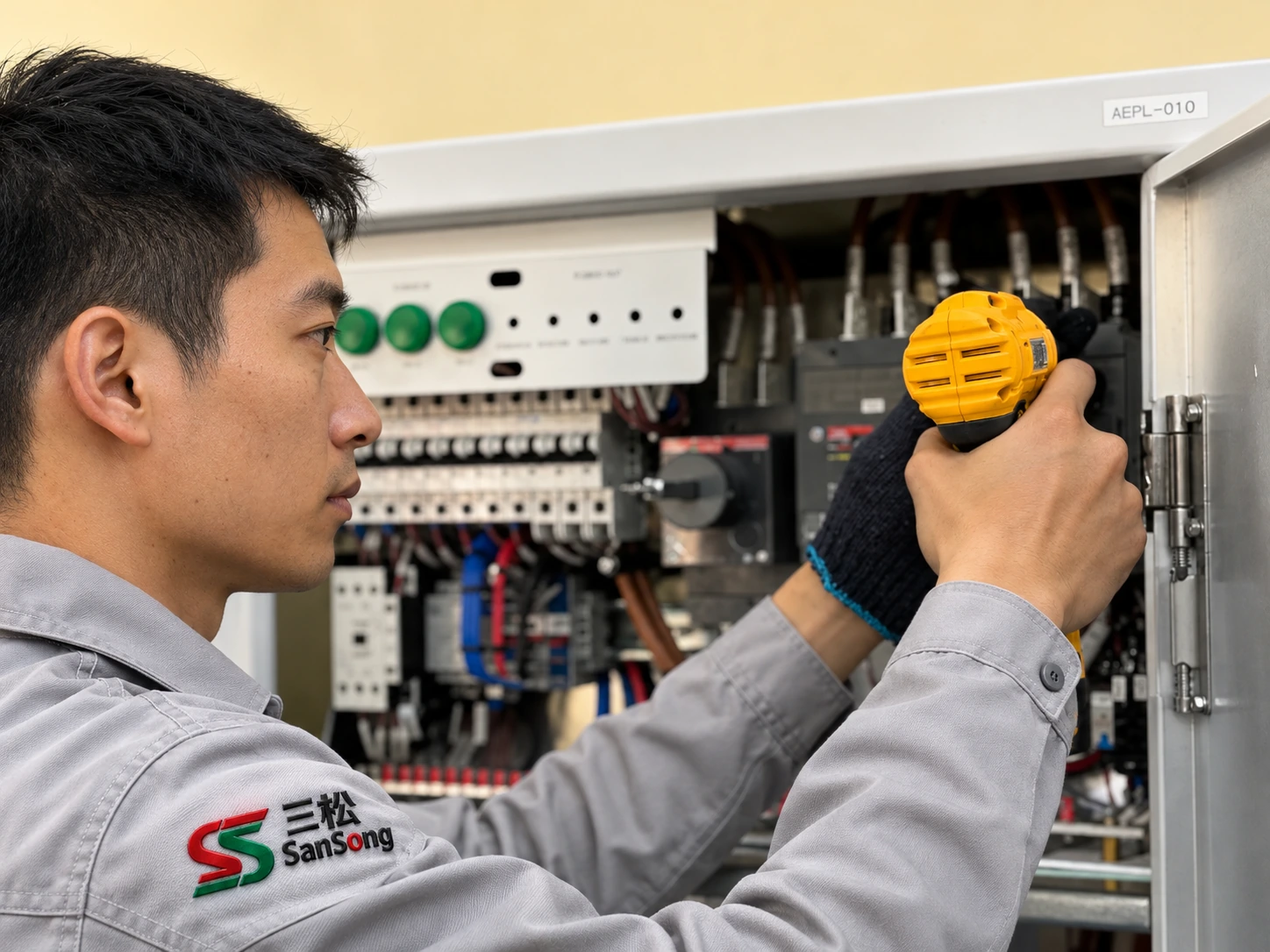
Build the project scope
Five points for the technical discussion
[01] Technical enquiry
Equipment identification, drawings and the required outcome.
[02] Scope review
Design or service work appropriate to the request.
[03] Interface review
Connections to the existing robot and production equipment.
[04] Site planning
Access, services and installation conditions.
[05] Service proposal
Responsibilities, timing and commercial terms for agreement.
From proposal to delivery
Agree what the project needs to demonstrate
Service availability and attendance arrangements are confirmed against the project and location.
The technical scope should state what is included in commissioning and which checks require customer participation.
For maintenance enquiries, photographs and a description of symptoms help the team prepare an appropriate response.
LIFECYCLE SUPPORT & PLANT PLANNING
Six-stage engineering support from first drawing to maintenance.
Every stage below clarifies what the buyer provides, what SanSong engineers deliver in-house in Liuzhou, and what is confirmed in the written contract — with zero invented response-hour SLAs.
| Stage | Buyer Inputs | SanSong Engineering Scope | Commercial Confirmation |
|---|---|---|---|
| 01 Application & drawing review | Container sample/drawing or part drawing, resin/material, target output | Feasibility check, station/model matching, compatibility review | Technical clarification record |
| 02 Proposal & layout design | Plant floor plan, utilities, voltage/frequency, existing line interfaces | Machine/mold or cell layout, 10-zone ISBM factory consulting, itemized scope | Written quotation & schedule |
| 03 In-house machining & assembly | Approved drawing revision & sample material specification | CNC gantry (6×3.2×1.4 m), CNC mill (2×0.9×0.75 m), laser cutter (3×1.5×0.2 m), CMM & assembly under ISO 9001:2015 | Confirmed build milestones |
| 04 Pre-shipment inspection | Agreed inspection checklist and trial material (where scoped) | Mechanical, electrical and sample/movement checks before packing | Acceptance criteria per contract |
| 05 Installation & commissioning | Prepared foundation, utilities, rigging and operator attendance | Site setup, calibration, parameter tuning and production handover | Attendance & travel per quotation |
| 06 Training & maintenance support | Equipment serial/model ID, maintenance access and spare-parts plan | Operator familiarization, maintenance guidance and spare-parts supply | Warranty & response per contract |
Turnkey 10-zone ISBM molding factory layout consulting (April 2026 brochure)
- 01 Discussion & technical review room · 02 Central control room
- 03 Sample inspection & maintenance workshop · 04 Dedicated mold storage room
- 05 Public utilities zone (water, power, compressed air) · 06 Raw material drying room
- 07 Raw material storage & central feeding · 08 Finished container warehouse
- 09 Automated packaging line (vision inspection, printing/coding, packing) · 10 Scalable automated molding floor
Related engineering insights
FAQ
Frequently asked questions
Useful details for a focused engineering enquiry.
What information starts an automation enquiry?

Can existing robots be part of the project?
How is a positioner or track selected?
Are technical drawings available?
What installation services does SanSong offer?
What lead time and warranty should we expect?