


Ready to automate your workflow?
Components and battery frames
Robotic welding automation for automotive and EV battery frames
Automation for vehicle components, battery-frame welding and production-line handling.
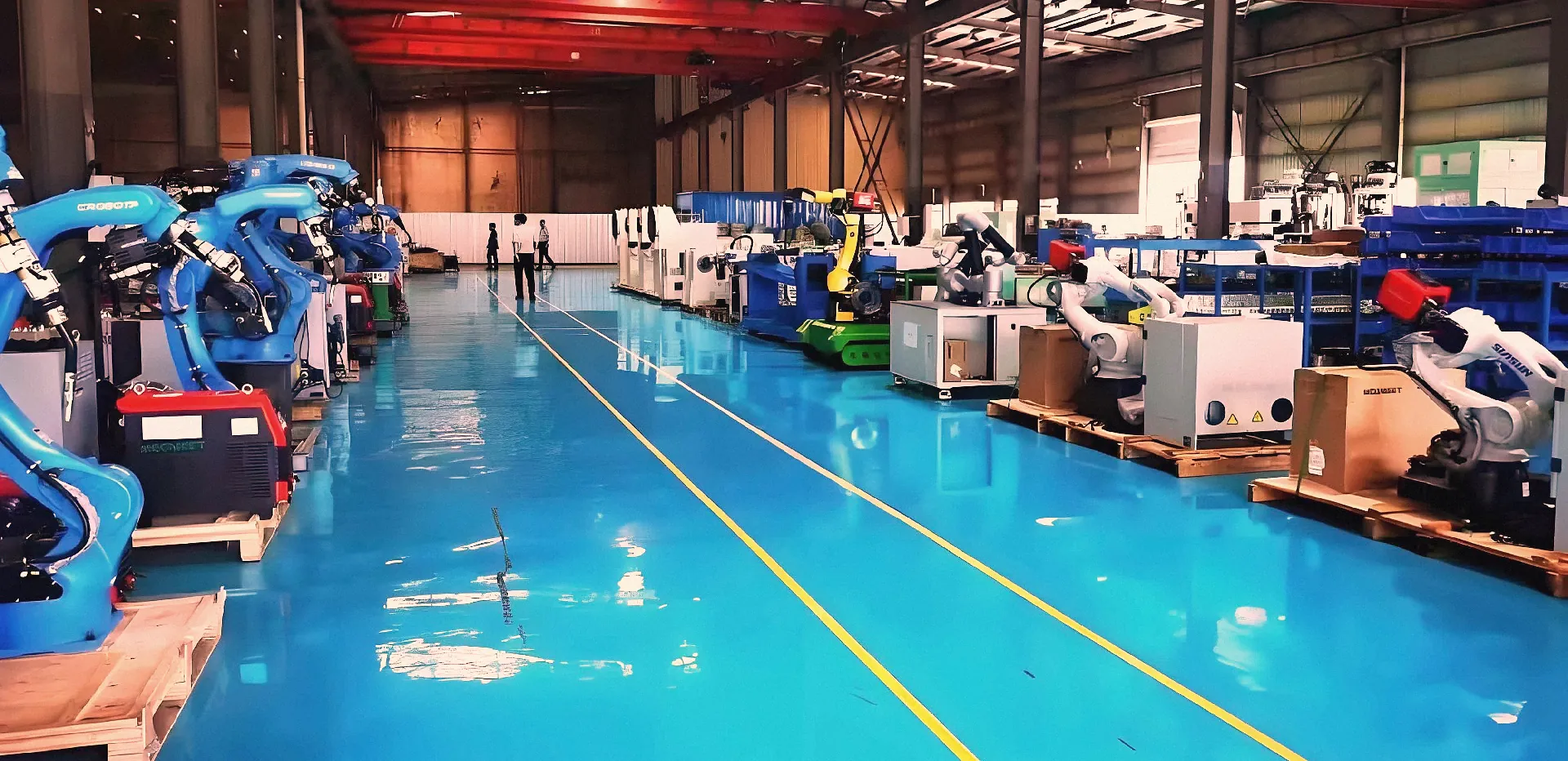
The application
The SanSong project catalogue includes battery-frame welding, robot spot-welding lines and vehicle-component handling applications.
These projects combine the component, tooling and process into a production sequence. A new application must be reviewed against its own part and output needs.
The selection brief
Share drawings, material grades, joint requirements and any part-family variations. Include inspection and traceability needs where relevant.
Loading arrangements, changeover frequency and the available production area influence the workstation layout.
The acceptance plan should use the actual components and agreed conditions. Published project examples do not establish a universal production rate.
Discuss the equipment
Discuss welding fixtures, positioners, tracks and handling equipment alongside the robot system.
For an existing line, include robot models, controller details and the interfaces that must be retained.
Related equipment
Explore the product families.
HL series
Industry
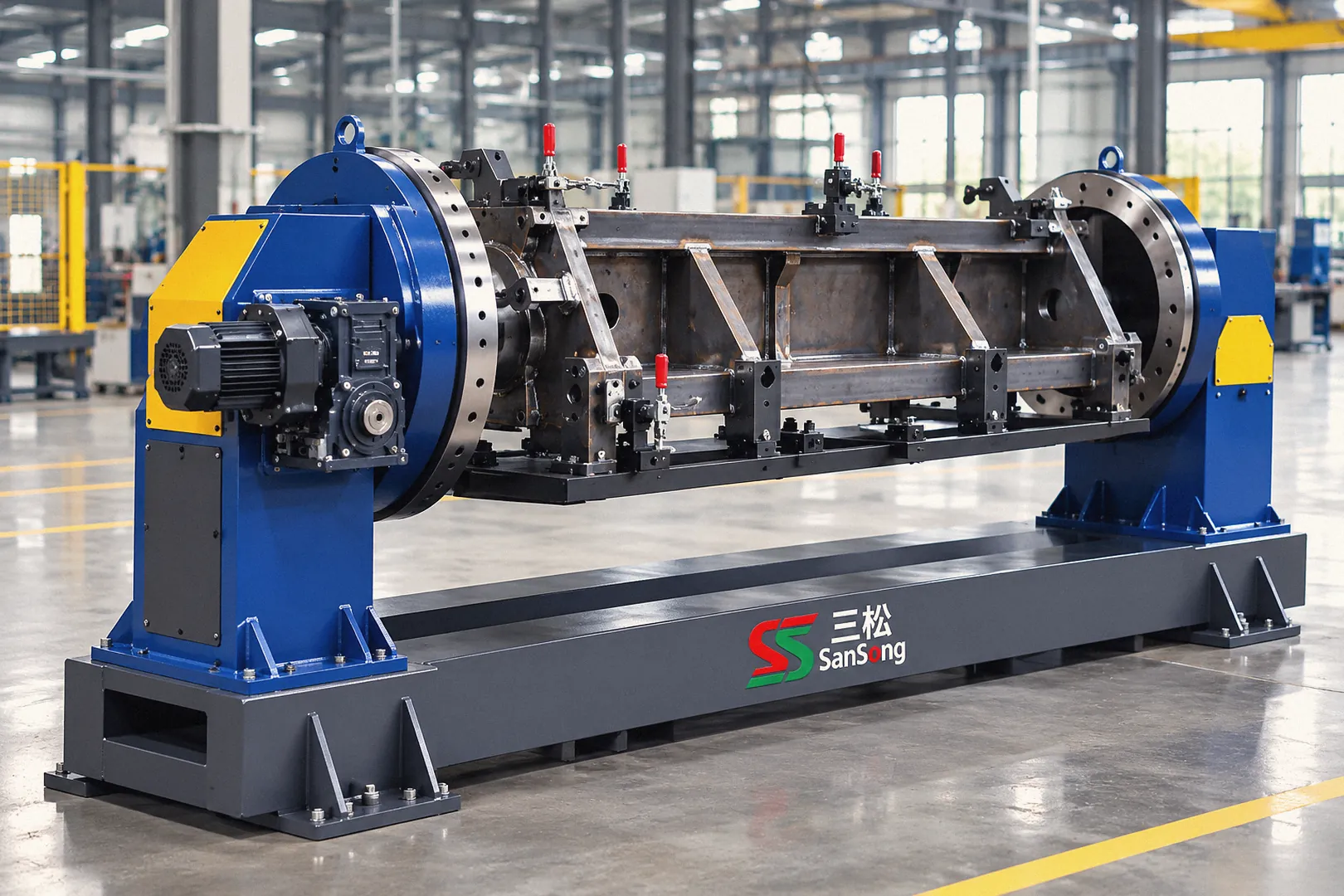
Workpiece positioning
Welding PositionersPositioning equipment for robotic welding, selected around the workpiece, fixture and weld access.
Ground / overhead
Industry
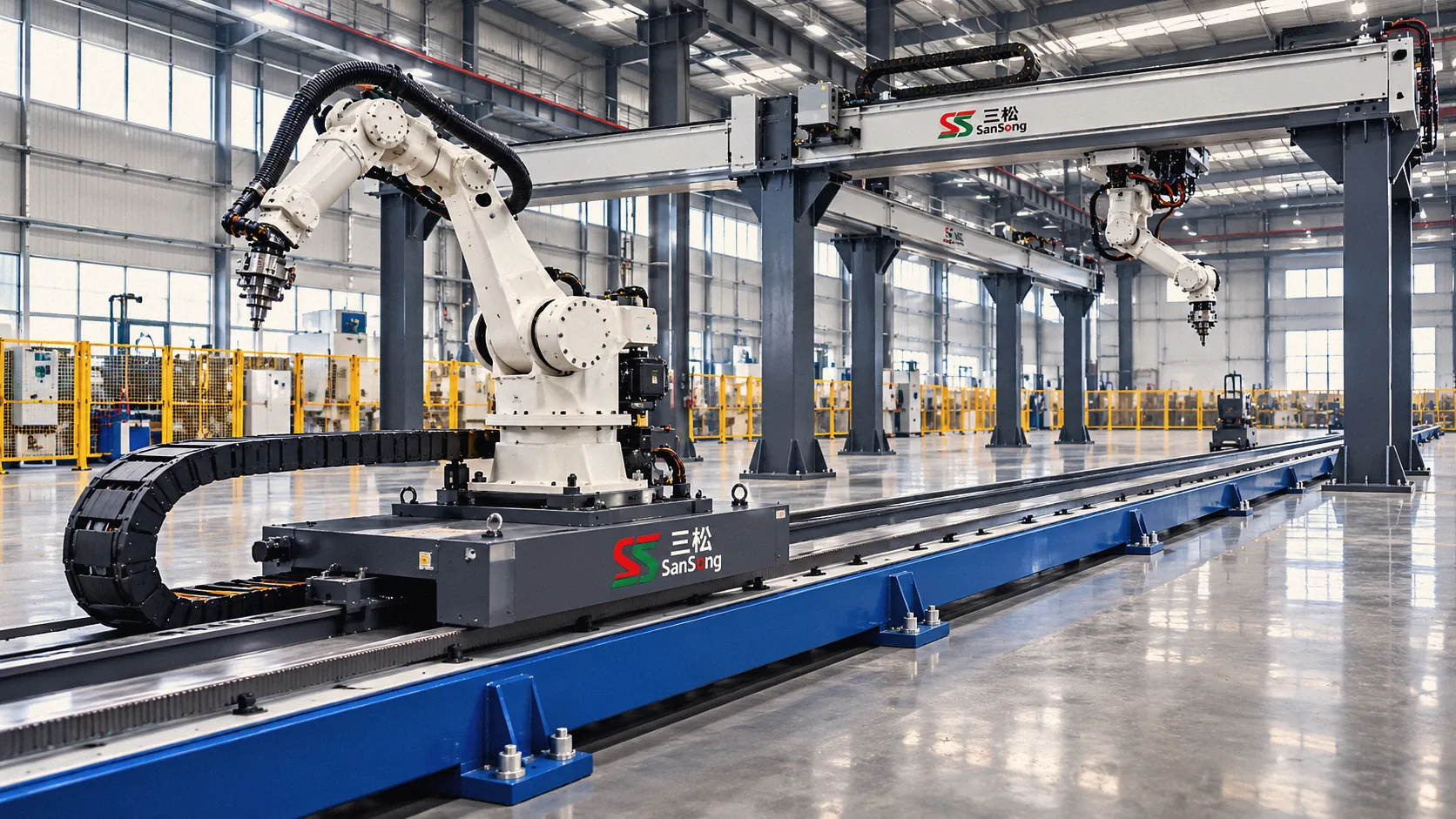
Ground and overhead axes
Robot Linear TracksGround tracks, overhead tracks and travelling axes for extending the working area of a robot.
Custom automation
Industry
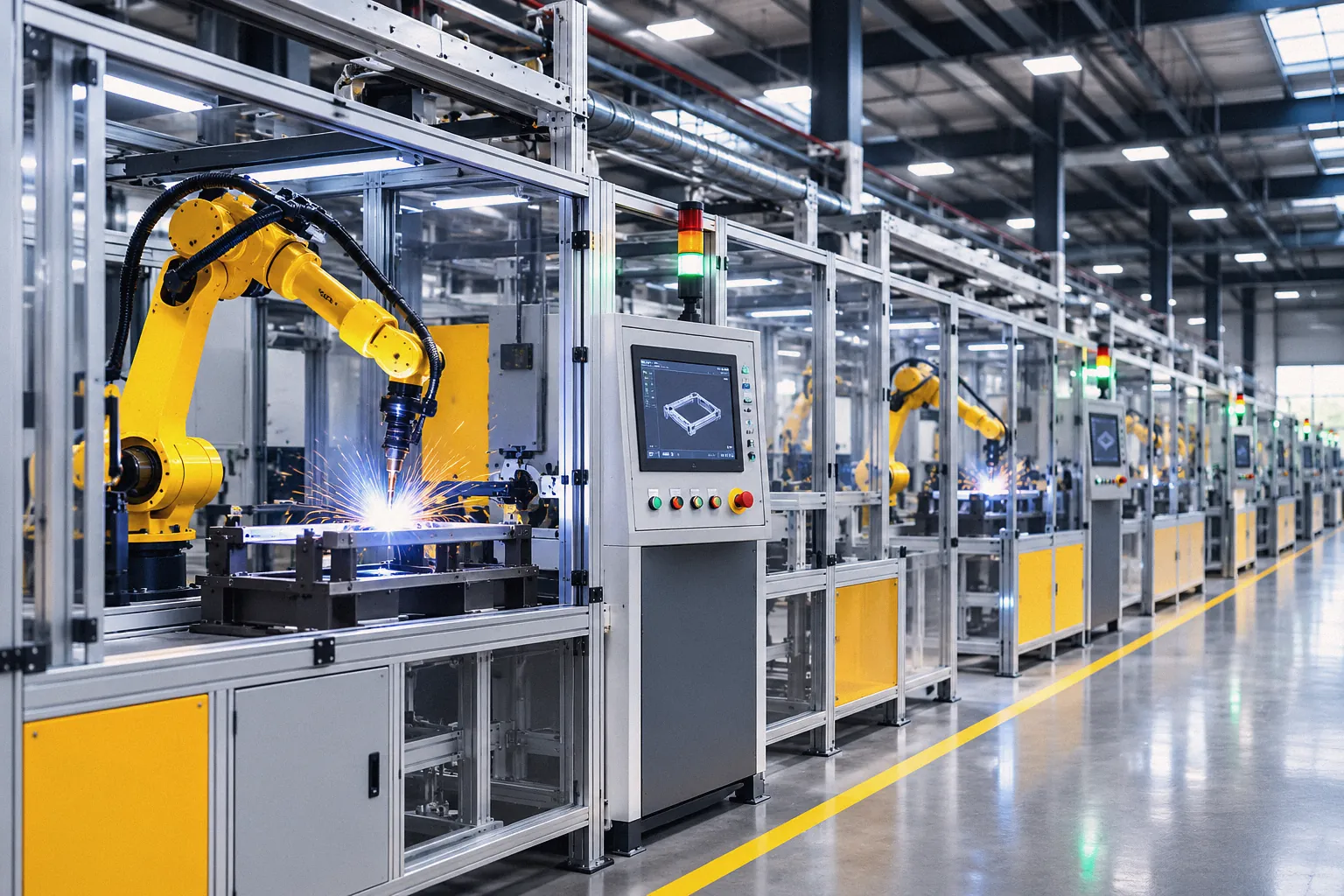
Welding and handling
Robotic Automation SystemsWelding workstations, fixtures and handling lines developed around real manufacturing processes.
ANONYMOUS PROJECT PROOF
Published automotive and new-energy robotic welding applications.
Project categories from SanSong’s published Liuzhou automation portfolio. Customer names are omitted without written consent; every new line is engineered to the buyer’s drawings and takt requirements.
- EV BATTERY FRAMES
Aluminum battery-frame welding line
Flexible clamping fixtures paired with seam finding and tracking to control aluminum weld distortion and porosity.
- POWERTRAIN / EXHAUST
Exhaust & muffler welding station
Robotic arc-welding cells and dedicated jigs aligned with downstream airtightness-testing workflows.
- BODY & CHASSIS
Double-slide truck-floor & spot-welding lines
Dual-slide loading stations and quick-change spot-welding lines for multi-variant vehicle stampings.
- HANDLING & RIVETING
Frame riveting, fuel-tank handling & stamping tending
Automated structural frame riveting, automotive fuel-tank handling/shaking and stamping transfer automation.
Related engineering insights
FAQ
Frequently asked questions
Useful details for a focused engineering enquiry.
What information starts an automation enquiry?

Can existing robots be part of the project?
How is a positioner or track selected?
Are technical drawings available?
What installation services does SanSong offer?
What lead time and warranty should we expect?