The choice between ISBM vs IBM vs EBM comes down to three questions: does the container need a stretched, clear and strong wall, does it need a handle or a very large size, and how many do you need a year? Extrusion blow molding (EBM) suits handles and large HDPE or PP containers, injection blow molding (IBM) suits small precise bottles, and injection stretch blow molding (ISBM) suits clear, strong PET and copolyester containers, made in one step or two.
This guide compares the four routes buyers usually weigh, then shows how to narrow the choice for your own container.
The four processes at a glance
All blow molding inflates a hot plastic shape inside a cooled mold; the processes differ in how that shape is made and whether it is stretched. The table summarizes the differences that matter when you choose.
| EBM | IBM | One-step ISBM | Two-step SBM | |
|---|---|---|---|---|
| Starting shape | Extruded tube (parison) | Injection-molded preform on a core rod | Injection-molded preform | Preform molded elsewhere, then reheated |
| Stretched? | No | No | Yes, rod plus air | Yes, rod plus air |
| Flash to trim | Yes, neck and base | No | No | No |
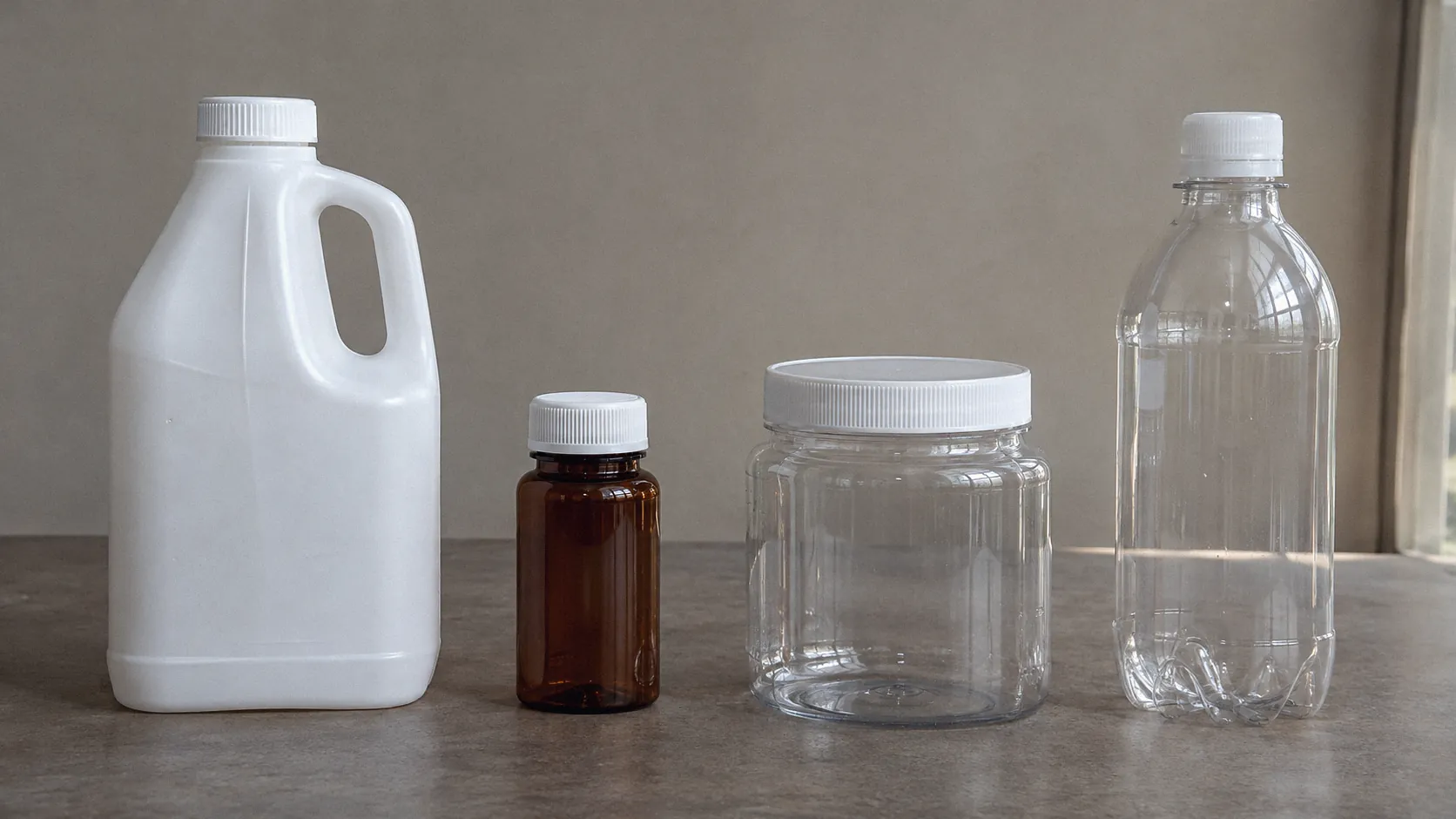
| Typical containers | Jugs, detergent bottles, tanks, ducts | Pharmaceutical and cosmetic bottles, small personal-care packs | Wide-mouth jars, cosmetics, pharma, reusable drinkware | Water, soft drink, juice and edible-oil bottles |
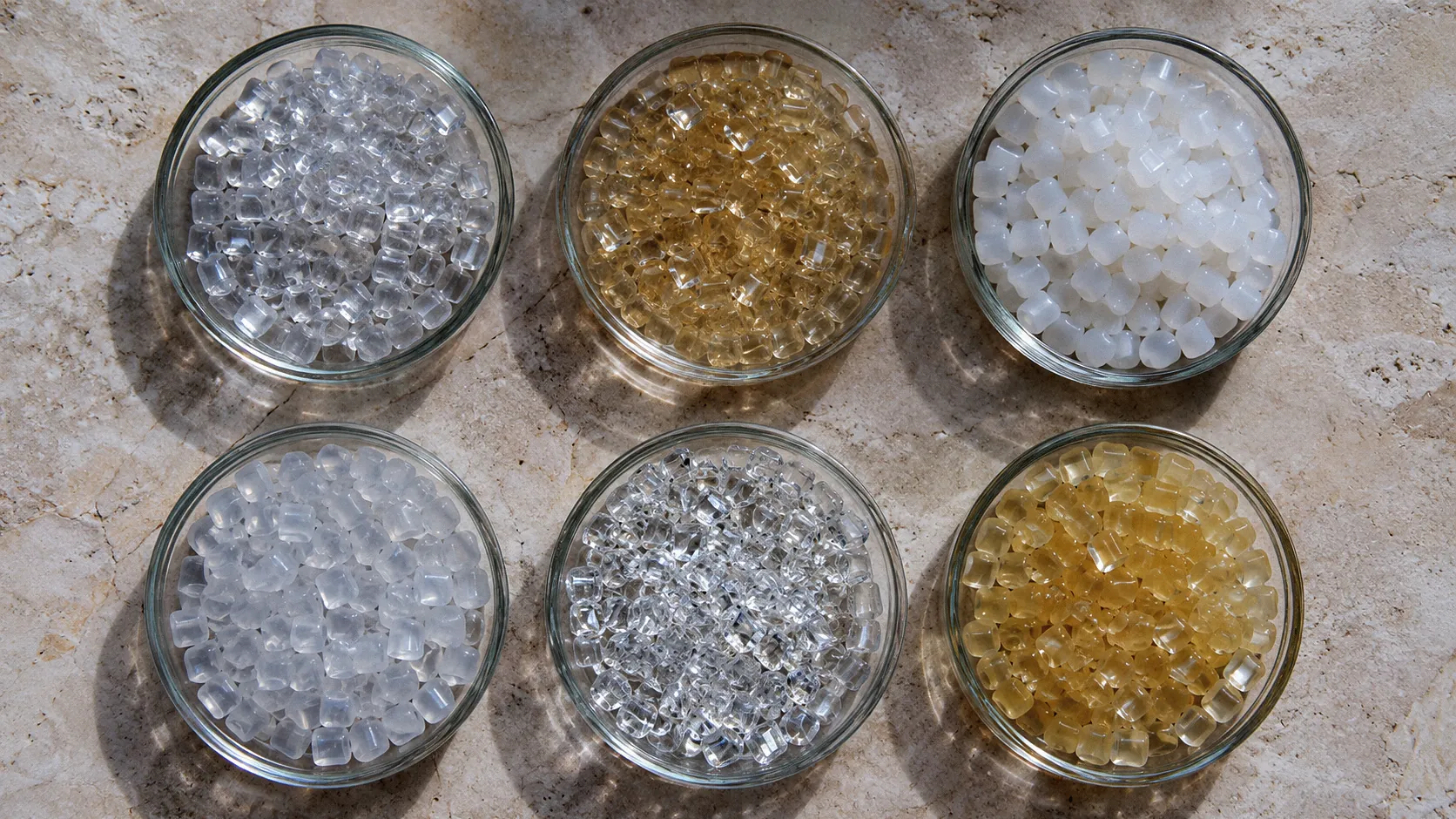
| Typical resins | HDPE, PP | Chosen per container | PET, PP, PC and copolyesters such as Tritan | Mainly PET |
The definitions and typical products in this table follow the overview published by Plastics Engineering in 2025.[1] The one-step ISBM resins are those Paul Atkin of Nissei ASB lists for the process.[2]
Extrusion blow molding (EBM): handles and large parts
EBM is the process to look at first when the container needs an integral handle or a large volume. The machine extrudes a hollow tube, called a parison, closes the mold around it and blows it out. Plastics Engineering lists milk jugs, detergent bottles and automotive ducts and tanks as typical products, and notes that the process is not the preferred route for PET bottles that need high clarity and strength.[1]
The trade-offs are wall control and trimming. OpenLearn points out that EBM produces scrap at the base and neck, and that long parts suffer from parison draw-down, which makes uniform walls hard to achieve.[3]
Injection blow molding (IBM): small and precise
IBM makes a thick-walled preform by injecting melt around a core rod, then moves the still-warm preform on the same rod into a blow mold and inflates it. There is no stretch rod. The result is very consistent dimensions and a fully formed neck, which is why IBM is common for small pharmaceutical bottles, cosmetic containers and travel-size personal-care packs.[1]
Its limits are size and orientation. Without stretching, the wall gains little strength or clarity from orientation, and the process is not suited to large containers or high-volume beverage production.[1]
Injection stretch blow molding (ISBM): clarity and strength
ISBM adds the stretch. The preform is injection molded, then stretched lengthwise by a rod while compressed air expands it radially. OpenLearn explains that stretching improves control of crystallinity and molecular orientation, which improves mechanical properties, clarity and barrier, and allows thinner walls.[3] ISBM is also written injection stretch blow moulding in British English.
ISBM comes in two layouts, and the difference is where the preform’s heat comes from.
One-step ISBM
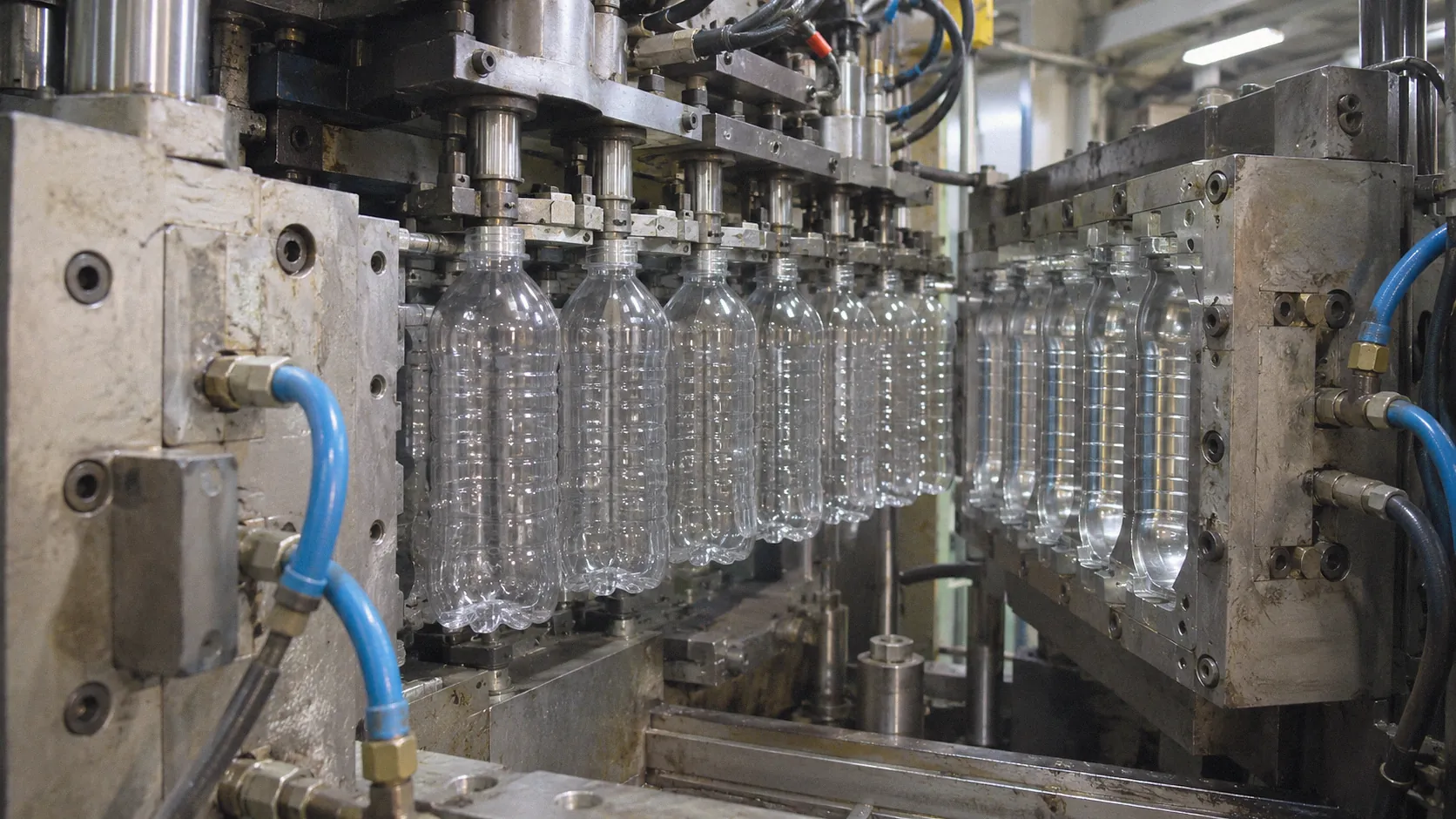
In one-step ISBM the same machine injects the preform and blows it while it still holds its molding heat. The preform is held by the neck from injection to ejection, so it is never scratched in handling or reheated. Paul Atkin of Nissei ASB lists the results: complex or thin necks, wide-mouth jars, injection-molded shoulders and preforms designed freely for each container.[2] Our process guide walks through each station.
Two-step stretch blow molding
In two-step SBM, preforms are injection molded on one machine, stored, then reheated in an infrared oven and blown on another. Ottmar Brandau, writing in Plastics Technology, notes that two-stage output scales from about 1,000 to 72,000 bottles per hour, that it gives very good wall distribution on round bottles, and that most beverage bottles are made this way.[4]
One-step or two-step: where the line falls
The line between one-step and two-step is mostly volume and shape. Brandau describes single-stage as the clear choice when a bottle must be blemish-free, oblong and carry a fixed thread, and notes that single-stage tooling is hard to justify below about 2,000,000 bottles a year, while two-stage needs less capital for the blow molder.[4] OpenLearn gives about 1,200 bottles per hour for single-stage against about 15,000 for two-stage, as a general order of magnitude.[3]
In practice, buyers choose one-step ISBM when several of these apply:
- The container is wide-mouthed, oval, flat or has an unusual neck.
- Surface quality matters, for example cosmetics, premium drinkware or display packaging.
- The resin is not standard bottle PET: PETG, Tritan, ECOZEN, PC, PPSU or PP.
- Annual volume is moderate and the product range changes often.
- The buyer wants to control preform design in-house rather than buy stock preforms.
How to choose for your container
Start from the container, not the machine. Write down the volume, neck finish, material, wall appearance, any handle, the annual quantity and the number of variants. Then check against these rules of thumb:
- Integral hollow handle, or a large HDPE container such as a jug or drum: look at EBM.
- Small, precise bottle without a stretched wall: IBM is often enough.
- Clear, tough wall in PET or a copolyester, wide mouth or special shape: one-step ISBM.
- Very high volumes of round beverage bottles: two-step SBM.
Some containers sit between two routes. A trial on the candidate process, using your resin, is the most reliable way to settle the choice. Our article on ISBM resin selection helps with the material question.
How SanSong can help
SanSong builds one-step ISBM machines and the molds that run on them. The SS-400-60-03-01 three-station machine makes containers up to 4.6 L with 1 to 12 cavities, and its published materials include PC, PCTG (Tritan and ECOZEN grades), PET, PETG, AS, PPSU, PS and PP. The SS-400-110-04-02 adds a conditioning station and double-row molds, and the SS-400-60-03-02 produces two-color gradient containers.
Published applications include sports bottles, large water jugs, juicer cups, baby bottles and straw cups, pharmaceutical and syrup bottles, shake flasks, plasma separation cups, cosmetic bottles and mascara tubes. If your container fits ISBM, compare the machines or send us the drawing and annual quantity for a process review.
Frequently asked questions
Is injection blow molding the same as injection stretch blow molding?
No. Both start with an injection-molded preform, but injection blow molding inflates the preform without stretching it, while injection stretch blow molding stretches it with a rod before and during blowing. The stretch is what gives ISBM containers their clarity and strength.
Can ISBM make bottles with handles?
A separate, pre-molded handle can be inserted and molded in place on some one-step machines, but an integral hollow handle like a milk jug is an extrusion blow molding feature. Check the handle design with the machine supplier early.
Which process wastes the least material?
Injection-based processes (IBM and ISBM) produce no pinch-off flash because the preform is molded to its exact weight. Extrusion blow molding trims flash at the neck and base, which is usually reground.
Does SanSong supply EBM or two-step machines?
No. SanSong builds one-step injection stretch blow molding machines and their molds. This comparison is meant to help you confirm that ISBM is the right process before you ask for a quotation.
Sources
- What Is Blow Molding? Main Types and Technologies Explained, Plastics Engineering (Society of Plastics Engineers), .
- Update on one step injection stretch blow molding, PETnology (Paul Atkin, Nissei ASB), .
- Blow moulding, The Open University, OpenLearn.
- Blow Molding: Single- or Two-Stage PET Bottle Making? Get to Know Your Options, Plastics Technology (Ottmar Brandau).
Editorial note: written from the public sources listed above and SanSong’s published product information, checked on the dates shown. It is general guidance, not legal or compliance advice. Specifications not yet published by SanSong are confirmed during the project review.