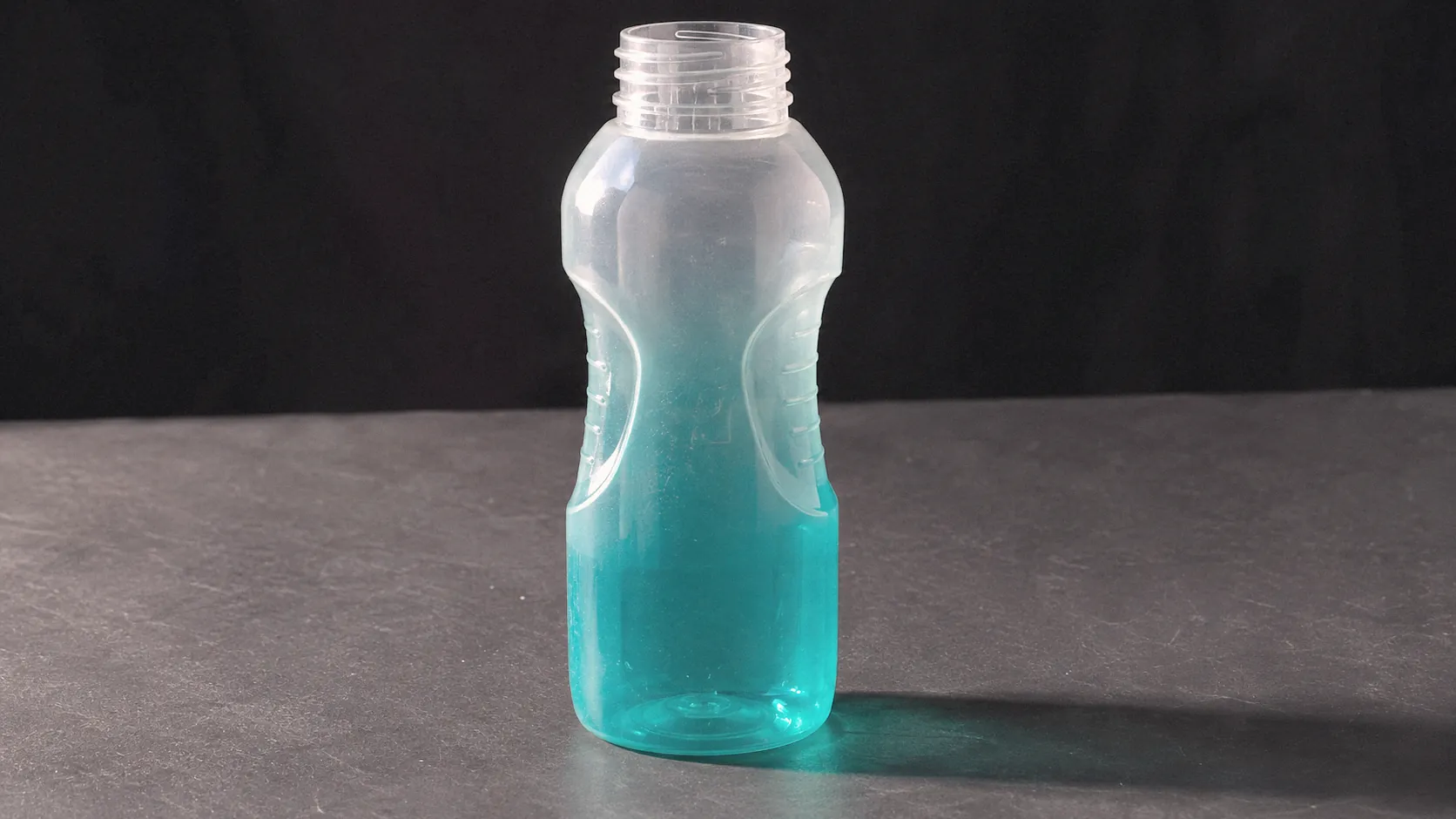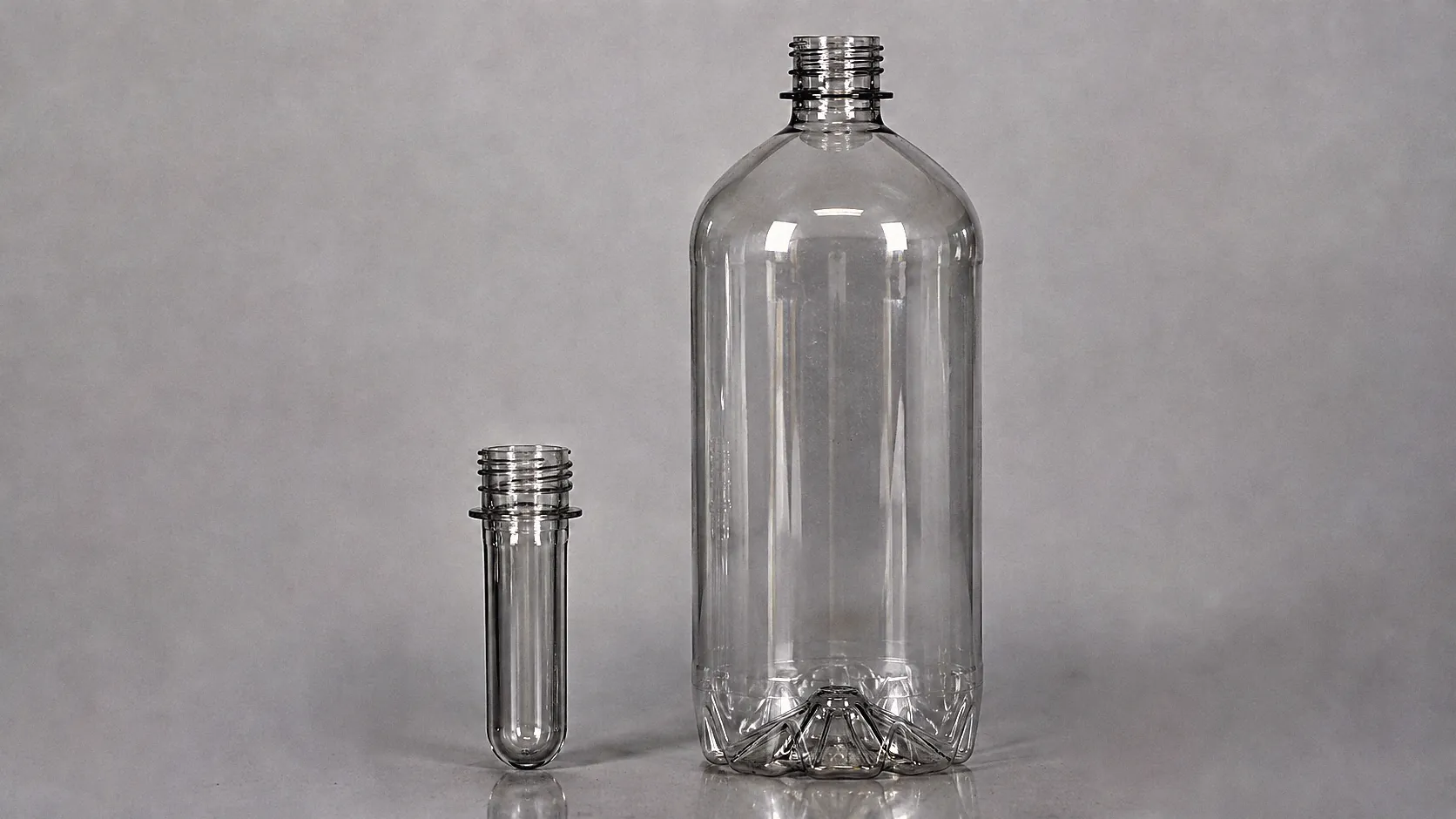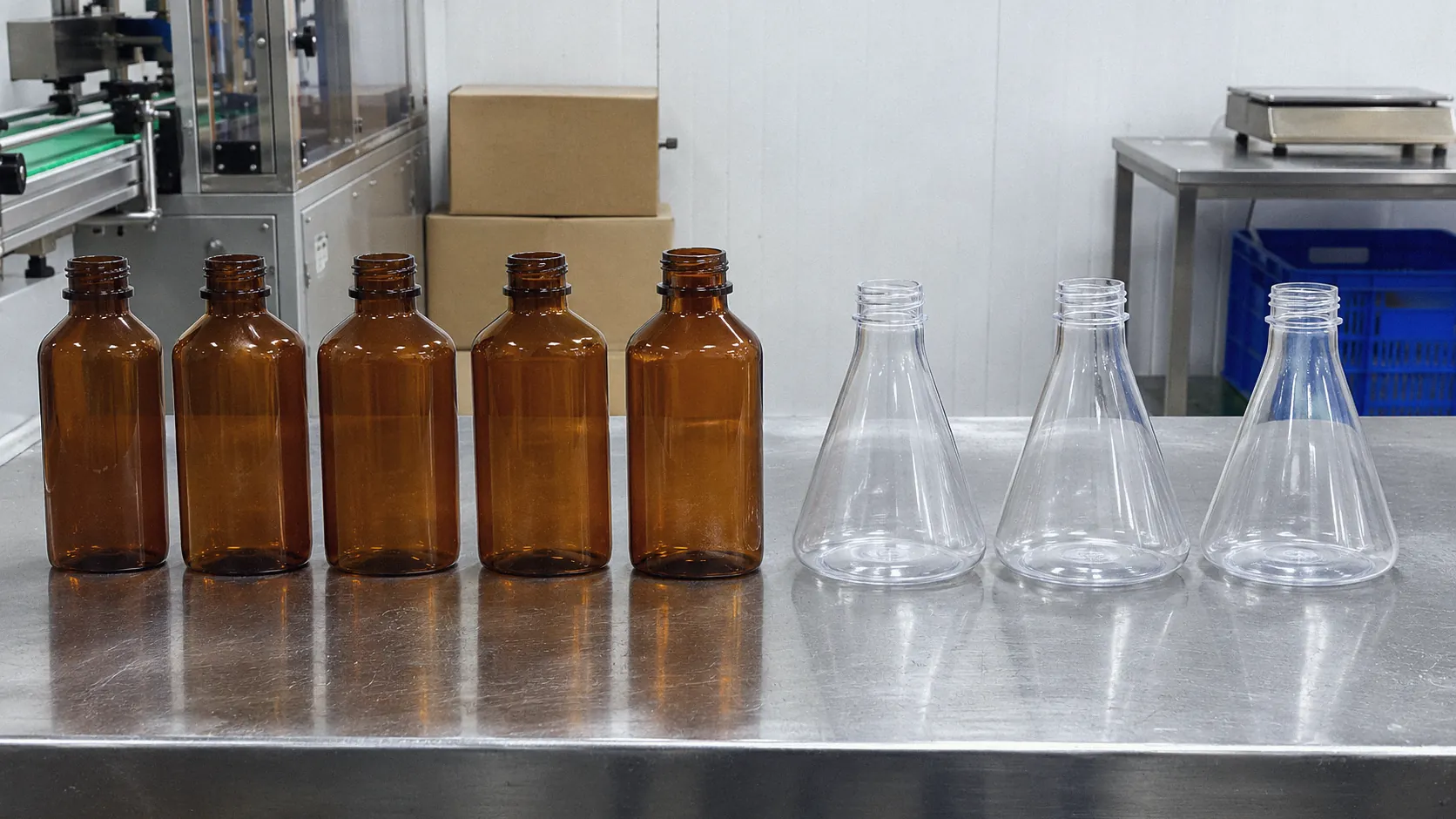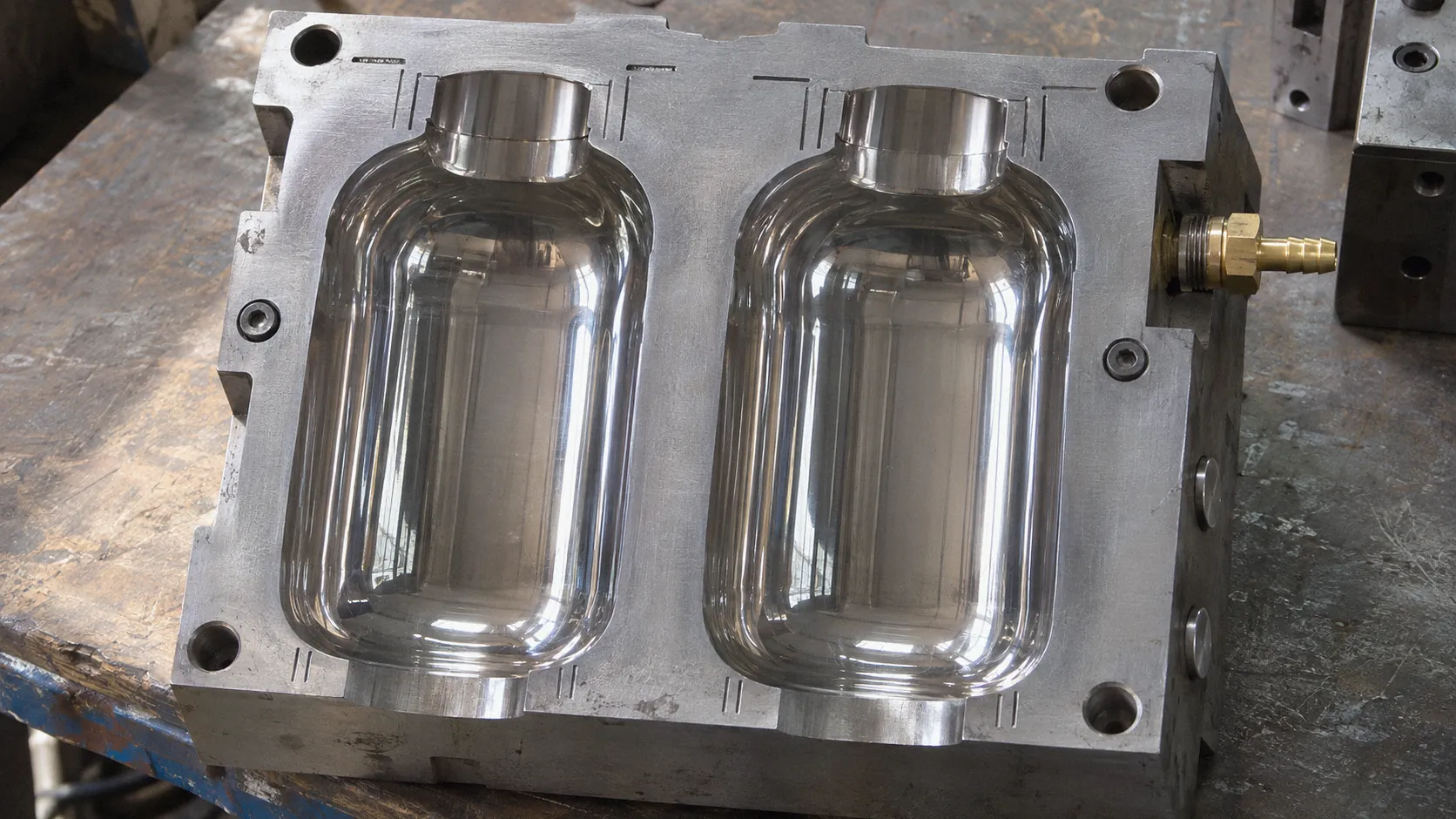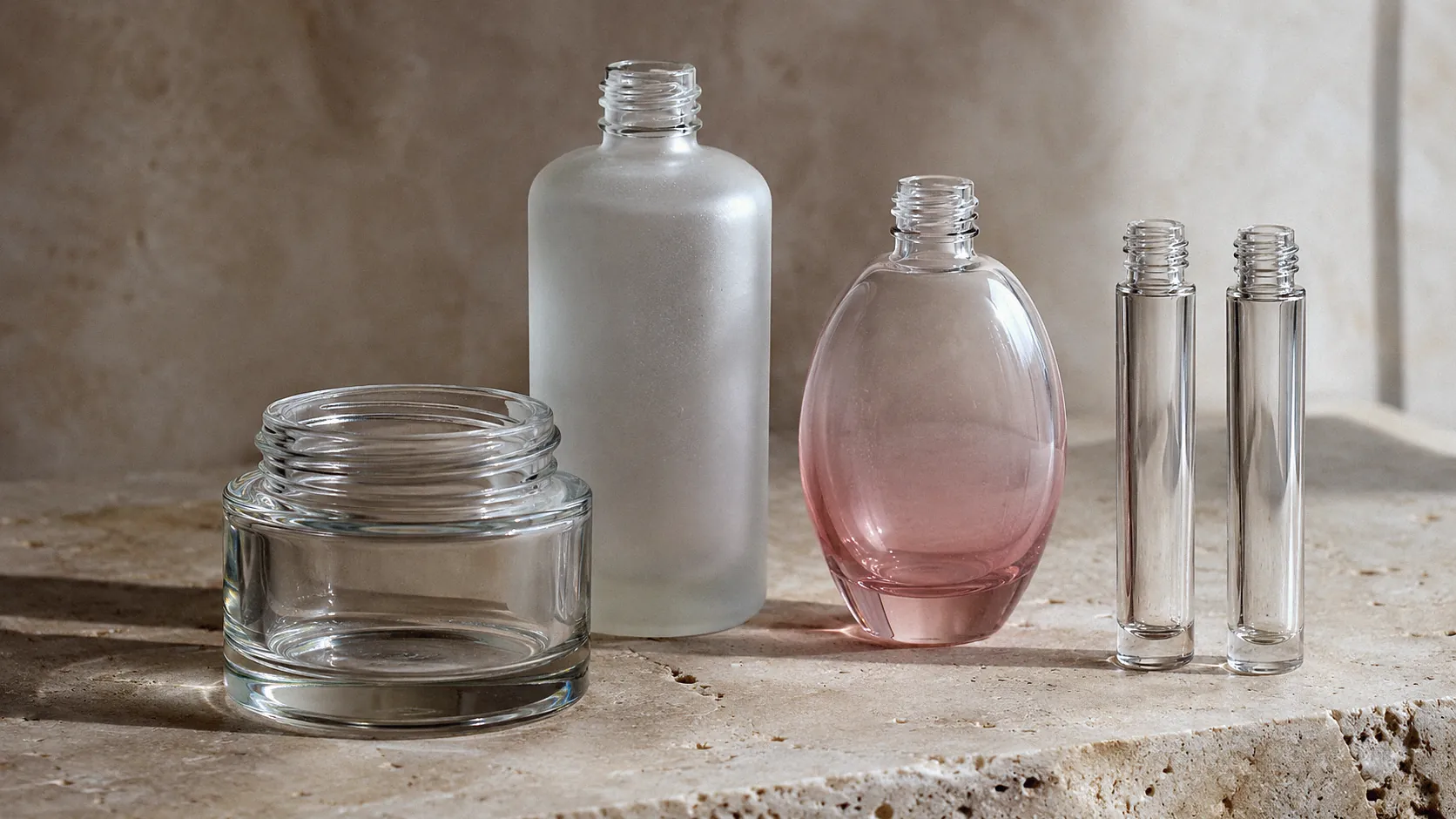
A cosmetic bottle blow molding machine for premium bottles, jars and tubes is often a one-step injection stretch blow molding (ISBM) machine. It molds the neck to its final shape, keeps every container off hard surfaces until ejection, and lets the preform be designed for heavy walls, thick bases and oval shapes. What the pack looks like is then decided by the preform, the mold surface, the resin and, for gradients, the machine.
This guide covers the containers, the design points that change the mold and cycle, the finishes, and what to agree before tooling.
Why cosmetic brands use one-step ISBM
Cosmetic packs are bought on looks, and one-step injection stretch blow molding (also written moulding) protects the surface. Paul Atkin of Nissei ASB points out that the preform is held by the neck throughout, which avoids scuffing; that complex and thin necks with undercuts, tabs or holes are possible because the neck is never reheated; and that injection-molded shoulders, which reheating would damage in two-step molding, are possible in one step.[1] His examples include cosmetic containers such as a lotion jar with a 10 mm base, and a 63 mm screw-cap jar with a 0.75 mm neck.[1]
Ottmar Brandau names the cases where single-stage is the clear choice: a bottle that must be blemish-free, oblong and have a fixed thread.[2] Many cosmetic bottles are all three.
SanSong’s published applications include cosmetic bottles and mascara tubes, and its published mold cases include a six-cavity PET daily-chemical bottle.[3][4]
Containers and their design points
| Container | Typical features | Points to plan |
|---|---|---|
| Lotion and toner bottles | Oval or round, pump or cap | Oval wall distribution, neck for the pump |
| Cream jars | Wide mouth, heavy wall, thick base | Preform weight, cooling time, base cooling |
| Mascara tubes | Slim body, small neck, wiper fit | Neck bore tolerance, straightness |
| Gift and travel sizes | Small volume, many shapes | Shared preforms, mold changeovers |
Oval shapes and heavy walls
Two features common in cosmetics make the preform harder to design.
Oval and flat bottles. The long sides stretch further than the short sides, so a round, even preform gives thin long sides and thick short sides. Brandau notes that some single-stage machines offer good conditioning for oblong bottles.[2] Atkin describes the conditioning station on four-station machines, where partial or spot heating and cooling can be applied and the preform even reshaped.[1] Our guide on three or four stations explains when a conditioning station is worth it, and the preform design guide covers the ratios.
Heavy walls and thick bases. Glass-look jars need thick walls and bases. One-step preforms can be designed for them, and Atkin notes that thick bases are achievable through conditioning and mold design.[1] Two costs come with them: cooling time rises steeply with wall thickness, which lengthens the cycle, and thick PET preforms can crystallize and turn hazy, which has traditionally pushed processors toward costlier copolymers.[1]
Finishes, colors and decoration
Decide the finish before the mold is cut, because most of it lives in the mold or the resin:
- Gloss. Polished cavities give a glossy, clear wall. A PETnology report notes that injection-blow molding “delivers parts that exactly replicate the mould surface.”[5]
- Frosted or textured. A textured blow-mold surface gives a frosted look without a coating.
- Tints. Colorant masterbatch gives a uniform tint; dose it consistently for color matching.
- Two-color gradients. A two-color machine injects two resins into one preform. SanSong’s SS-400-60-03-02 makes two-color gradient or single-color containers.[6] Our article on two-color gradient bottles explains the process.
- Printing and labels. Screen printing, hot stamping and labels are applied after molding; flat label panels must be planned into the shape.
Necks, pumps and wipers
The neck is molded once and cannot be corrected later, so agree it with the pump, cap or wiper supplier first. For mascara tubes, the bore must suit the wiper that controls how much product the brush picks up. For pumps, check the thread, the sealing surface and the dip-tube clearance. Ask for neck samples before cutting all cavities.
Brandau’s rule for even walls applies here too: “wall thickness will go where the gate goes,” so keep the gate centered in the blow mold.[7]
Materials
PET and PETG are common for clear bottles and jars, PP for lighter packs or where chemical resistance matters, and AS or PS for rigid clear jars. A PETnology report describes clarified PP for personal care packaging with walls up to about 1.2 mm and jars for cosmetics.[5] Whatever the resin, the brand tests compatibility with its formula: stress cracking, discoloration, weight loss and fragrance absorption. Our resin selection guide compares the options.
How SanSong can help
SanSong designs one-step ISBM machines and the molds that run on them. The SS-400-60-03-01 three-station machine makes containers up to 4.6 L with 1 to 12 cavities, the SS-400-60-03-02 adds two-color gradient production, and the SS-400-110-04-02 four-station double-row machine adds a conditioning station for oval and temperature-sensitive shapes. Published applications include cosmetic bottles and mascara tubes.
To discuss a cosmetic pack, see pharma and cosmetic packaging, see the bottle molds or send us the drawing, finish, resin and closure.
Frequently asked questions
Which resins are used for cosmetic containers on ISBM machines?
PET and PETG are common for clear bottles and jars, PP for lighter or chemically resistant packs, and AS or PS for rigid clear jars. SanSong’s published materials are PC, PCTG copolyesters, PET, PETG, AS, PPSU, PS and PP. Compatibility with the formula decides.
Can ISBM make heavy-wall, glass-look jars?
Yes, within limits. One-step preforms can be designed with thick walls and bases, and conditioning helps form thick bases. Thicker walls lengthen cooling and the cycle, and thick PET can turn hazy, so the resin and design are chosen together.
Can a cosmetic bottle have a color gradient?
Yes. A two-color one-step machine injects two resins into the preform so the color changes along the container. SanSong’s SS-400-60-03-02 makes two-color gradient or single-color containers.
Is one-step ISBM suitable for small runs of many cosmetic shapes?
It can be, if shapes share a neck and preform and only the blow molds change. Brandau notes that single-stage tooling is hard to justify below about 2,000,000 bottles a year, so plan how shapes share tooling.
Sources
- Update on one step injection stretch blow molding, PETnology (Paul Atkin, Nissei ASB), .
- Blow Molding: Single- or Two-Stage PET Bottle Making? Get to Know Your Options, Plastics Technology (Ottmar Brandau).
- SS-400-60-03-01 three-station one-step ISBM machine, SanSong (lzsansong.com).
- Injection stretch blow molds and application cases, SanSong (lzsansong.com).
- Milliken’s new clarifying agent Millad NX8000 opens up a world of opportunity for highly transparent injection blow moulded PP containers, PETnology, .
- SS-400-60-03-02 three-station two-color ISBM machine, SanSong (lzsansong.com).
- How to Address Uneven Wall Thickness in Stretch Blow Molding, Plastics Technology (Ottmar Brandau).
Editorial note: written from the public sources listed above and SanSong’s published product information, checked on the dates shown. It is general guidance, not legal or compliance advice. Specifications not yet published by SanSong are confirmed during the project review.