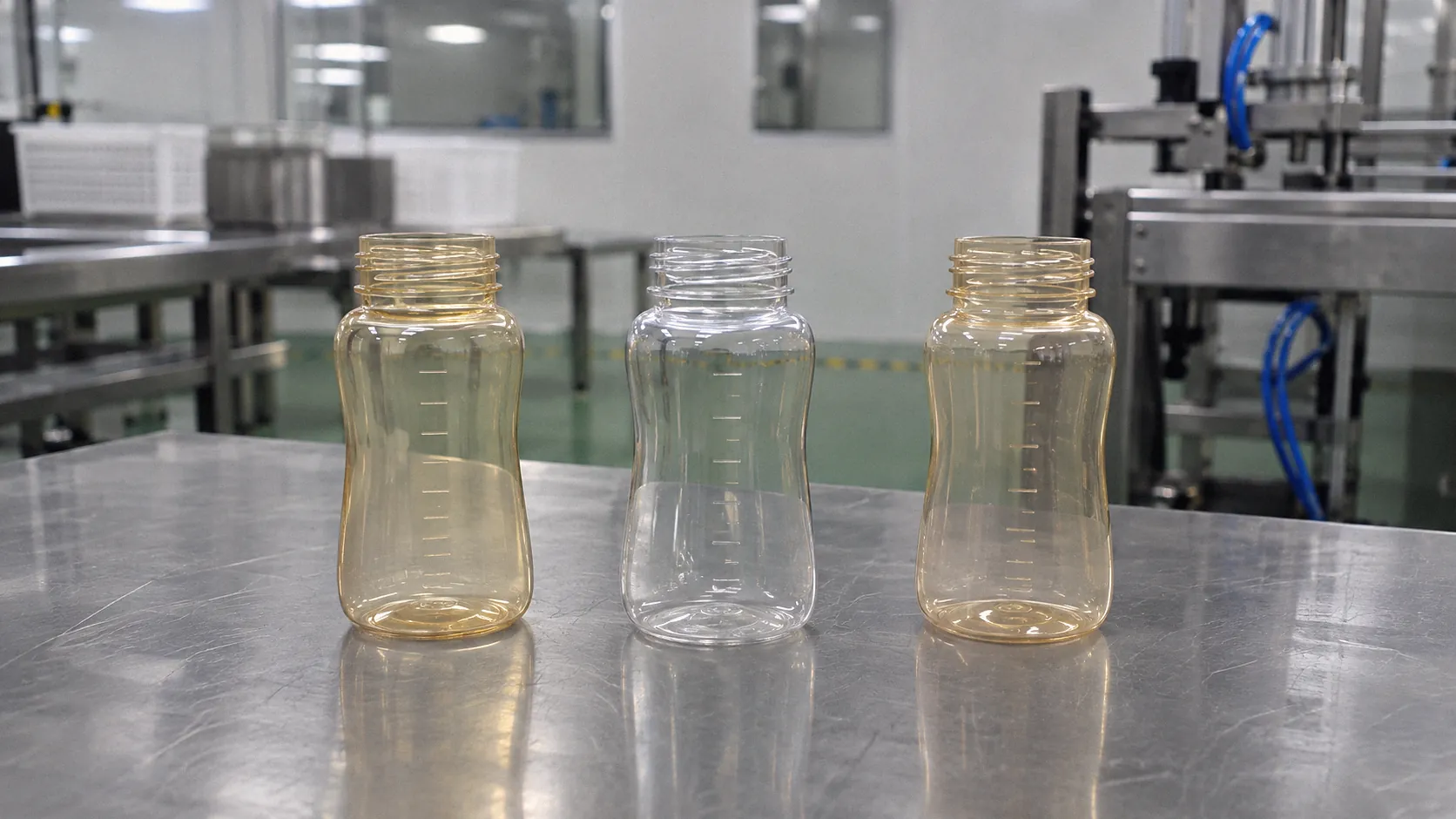
A baby bottle making machine for plastic feeding bottles is usually a one-step injection stretch blow molding (ISBM) machine set up for PPSU or PP. Before choosing one, check four things: that the machine and mold heating suit the resin, that the neck and graduations can be molded to the teat and collar system, that the target markets’ rules are known, and that the finished bottle can be tested and documented for each market.
This guide walks through those checks. It explains manufacturing choices; it does not replace the testing and certification your bottles need.
Why ISBM for baby bottles
Baby bottles need a precise neck, a clear or tinted wall without scratches, and molded volume markings. One-step injection stretch blow molding (also written moulding) forms the neck once, to final size, and holds the bottle by the neck until it is ejected, so the body is not handled while warm. The stretch orients the wall, which improves clarity and strength.
SanSong’s published applications include baby feeding bottles and baby straw cups, and its SS-400-60-03-01 machine lists PPSU and PP among its published materials.[1]
Materials and the BPA rules
The material question for baby bottles was largely settled by regulation. In the EU, Commission Directive 2011/8/EU of 28 January 2011 prohibited bisphenol A for the manufacture of polycarbonate infant feeding bottles, with manufacture banned from 1 March 2011 and placing on the market and import banned from 1 June 2011.[2] Regulation (EU) 2024/3190 has since extended the BPA ban across food-contact materials; the Food Packaging Forum reports that its main transition period ended on 20 July 2026.[3]
| Resin | Why it is used | Processing points |
|---|---|---|
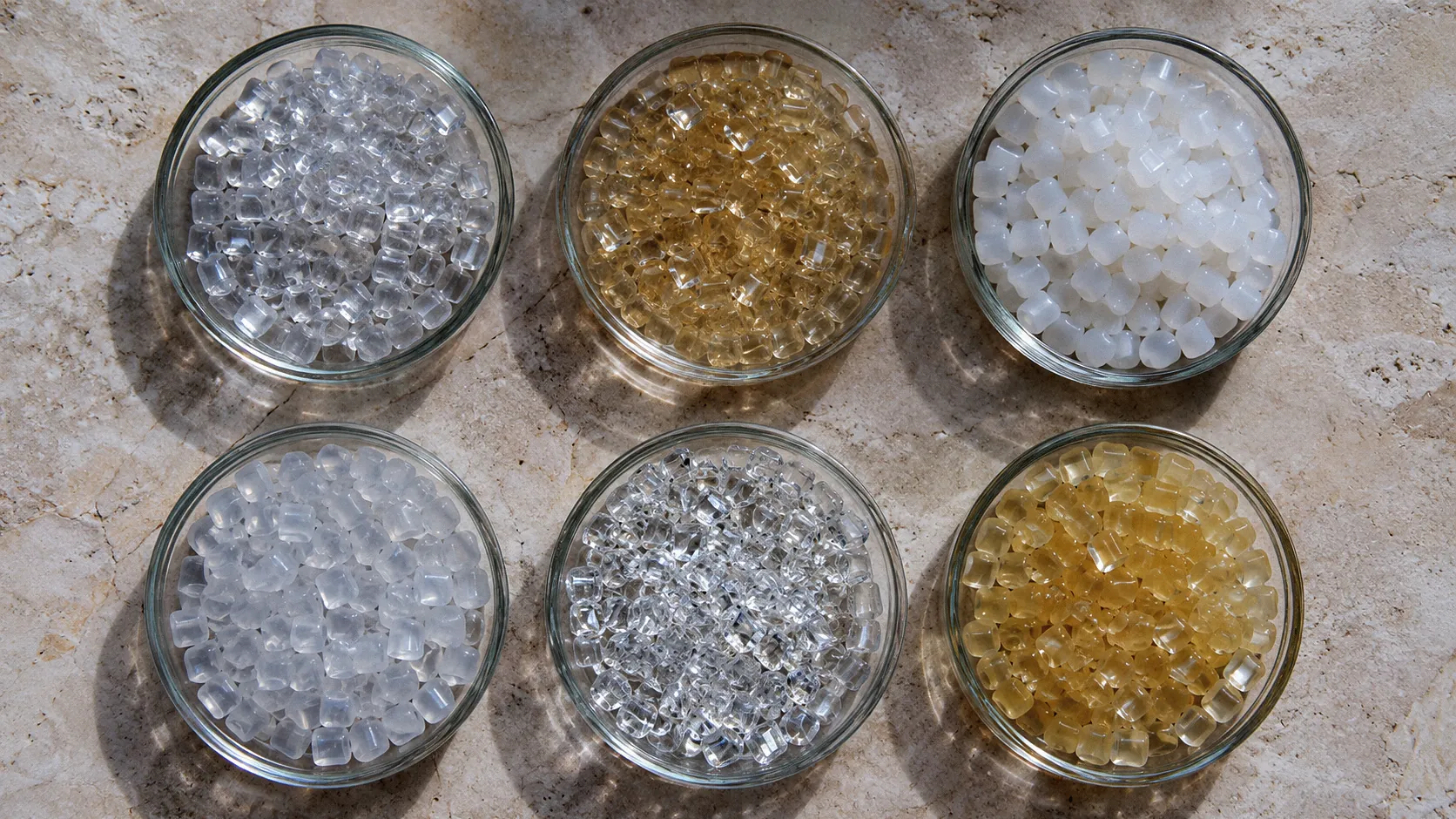
| PPSU | High heat and repeated sterilization; amber tint | Very high melt and mold temperatures; thorough drying |
| PP | Light, lower cost, no pre-drying | Clarity depends on grade; clarified grades help |
| Copolyesters | Clear, tough, made without BPA | Drying and temperature window per grade |
Our resin selection guide compares these in more detail.
PPSU: plan the heat from the start
PPSU changes the specification of the whole cell. Solvay’s sulfones processing guide recommends drying with pellet temperatures of at least 135 °C and an inlet dew point of -40 °C, to below 0.05% moisture for injection molding. It gives a melt target around 375 °C and mold temperatures of 138 to 160 °C, noting that such temperatures call for heat-transfer oil rather than electric cartridge heaters.[4]
For a buyer, that means:
- The injection unit and hot runner must be rated for PPSU melt temperatures.
- The preform mold needs oil-based temperature control, and the machine must accept those connections.
- The dryer must reach the pellet temperature and dew point.
- Purging and start-up procedures need more time and material than for PP.
Note that Solvay’s guide attributes the baby-bottle application to its PESU grade and describes Radel PPSU for repeated-sterilization service, so confirm the exact grade with your resin supplier.[4]
PP baby bottles
PP is the lighter, lower-cost choice and needs no pre-drying. A PETnology report on Milliken’s Millad NX8000 clarifier names baby bottles among the higher-value products that clarified PP opened up, with haze in plaque tests at least 50% lower than the previous benchmark grade.[5] The report concerns injection blow molding and plaque data, so confirm clarity on your own bottle.
Neck, graduations and wall: set them in the mold
Several features that parents notice are fixed in the mold:
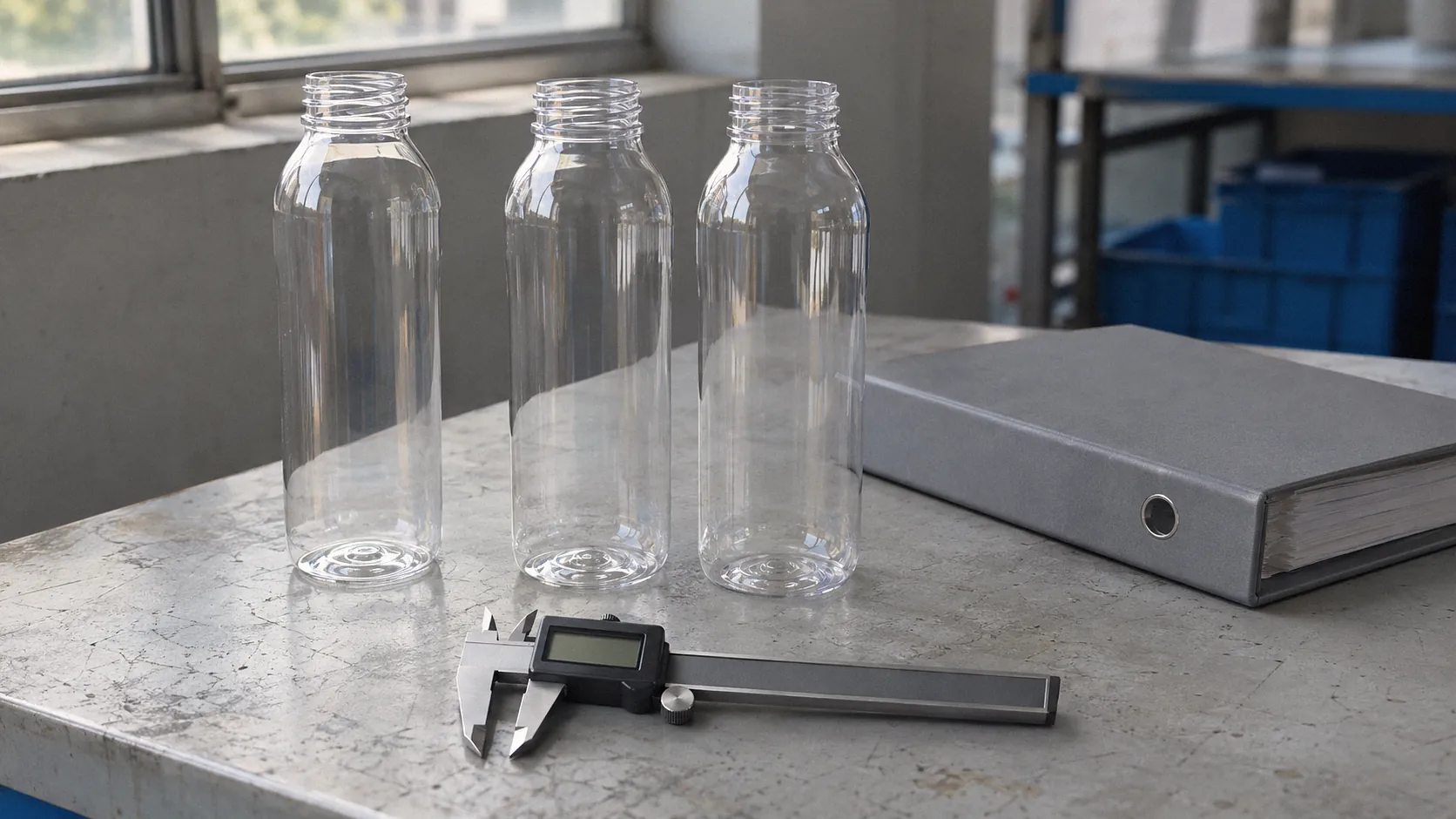
- Neck and collar fit. Standard-neck and wide-neck systems need different preforms. Agree the thread, sealing surface and tolerances with the teat and collar supplier first.
- Volume graduations. Molded markings are engraved in the blow mold. Their position must be checked against the bottle’s measured volume, and they must stay legible after stretching.
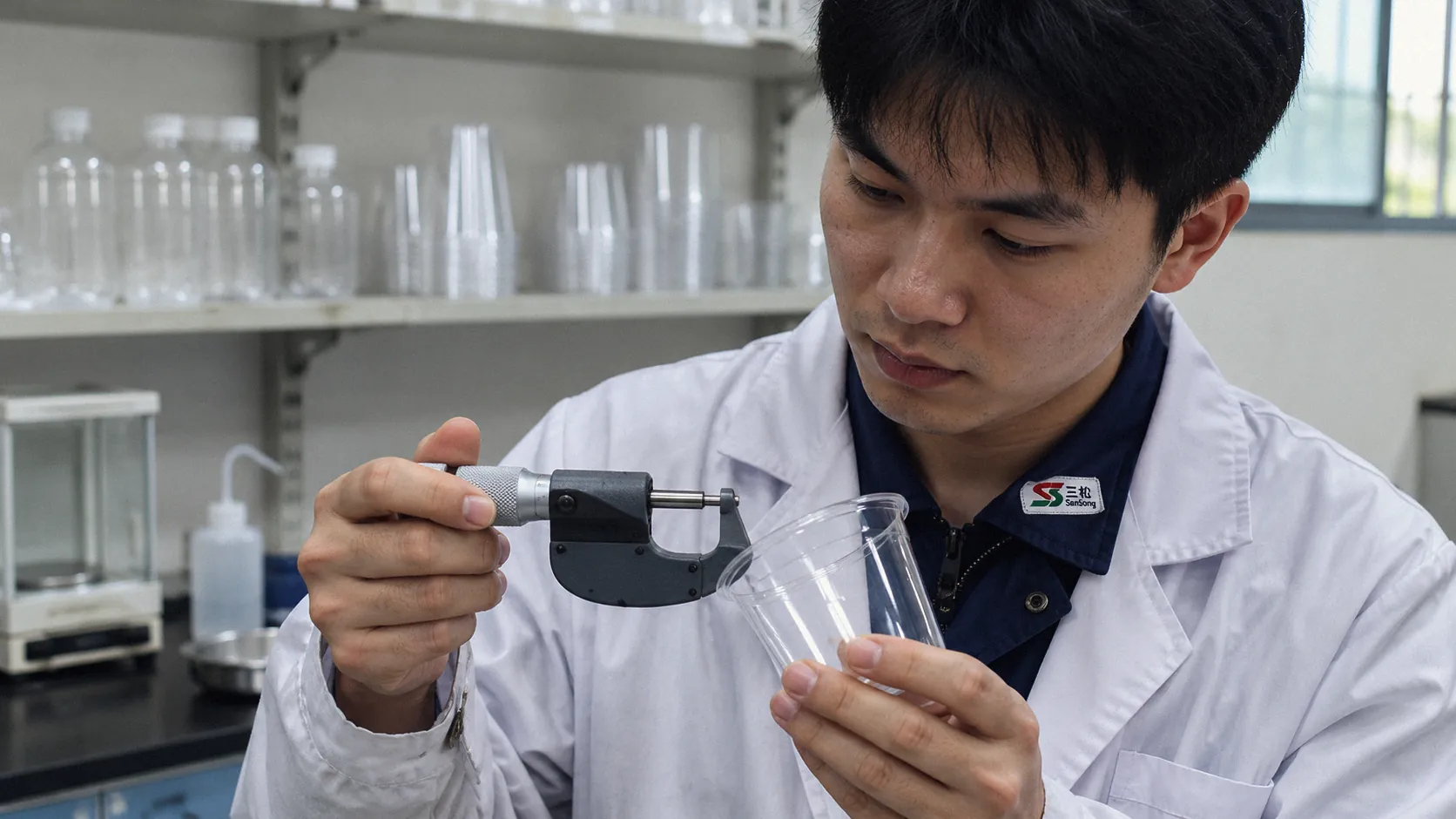
- Wall consistency. An even wall avoids weak spots and keeps graduations accurate. Our preform design guide explains how stretch ratios control the wall.
- Surface. Polished cavities keep the wall clear; textured grip zones are machined into the blow mold.
Test and document for each market
Compliance belongs to the finished bottle, so plan testing as part of the project. For China, GB 4806.7-2023, the national food-safety standard for food-contact plastics issued by the National Health Commission, has applied since 6 September 2024.[6] Our article on China’s GB 4806 food-contact rules explains the framework, and the EU BPA article covers the EU.
Typical evidence includes the resin and colorant suppliers’ declarations of compliance, migration testing on finished bottles, tests for heat and sterilization resistance, and production records that link each lot to its resin batch.
How SanSong can help
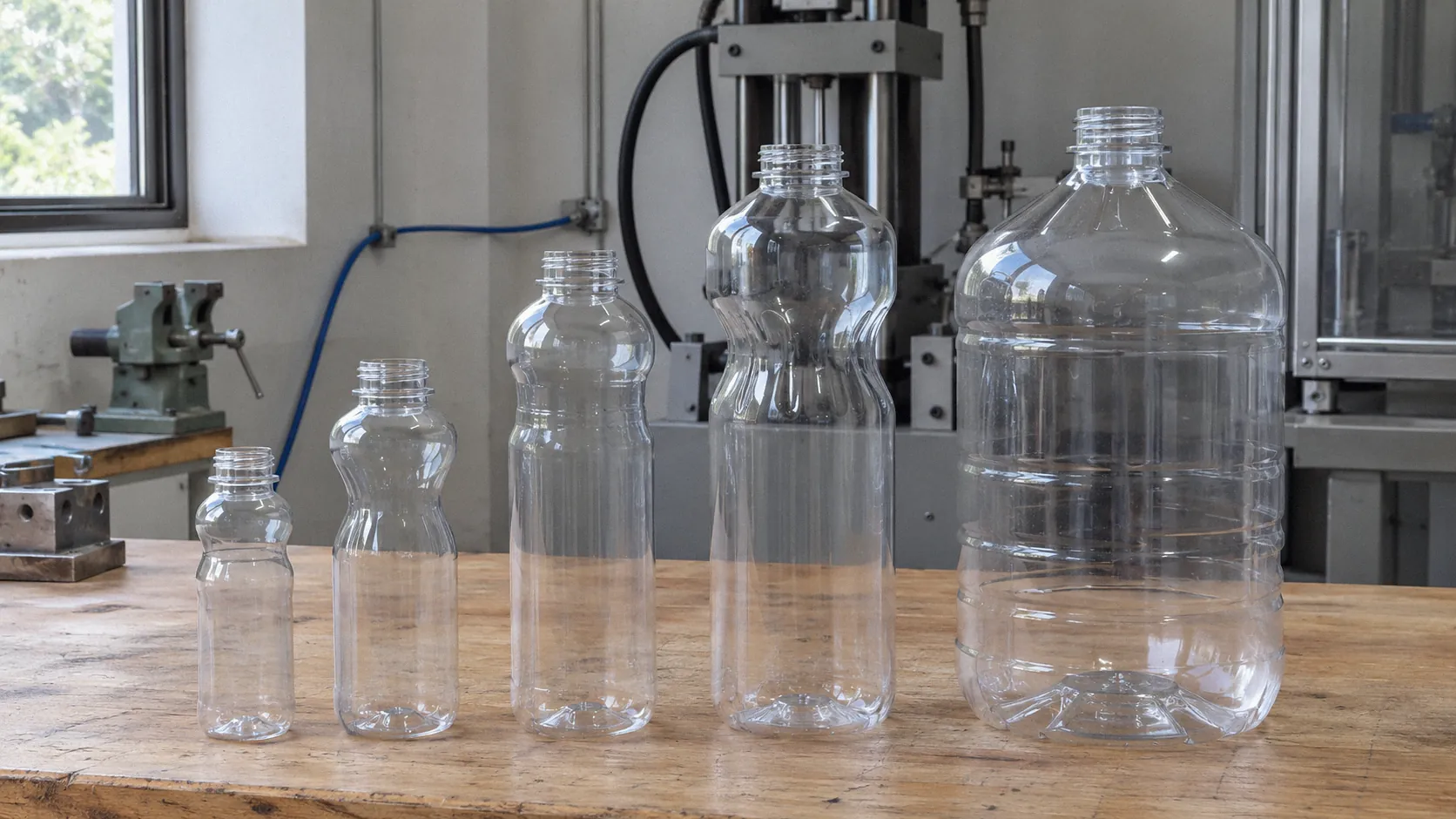
SanSong’s SS-400-60-03-01 three-station one-step ISBM machine makes containers up to 4.6 L with 1 to 12 cavities, and its published materials include PPSU, PP, PET, PETG, PC, AS, PS and PCTG copolyesters (Tritan and ECOZEN grades). Baby feeding bottles and baby straw cups are among its published applications. The SS-400-110-04-02 adds a conditioning station for shapes that need a tailored preform temperature.
To discuss a baby bottle project, see everyday bottle applications, compare the ISBM machines or send us the bottle drawing, neck system and resin grade.
Frequently asked questions
Which materials are used for plastic baby bottles?
PPSU and PP are the most common today. PPSU is chosen for high heat and repeated sterilization; PP is lighter and lower cost. Some brands also use copolyesters. Glass and silicone bottles are made by other processes.
Can I make PC baby bottles for export?
Not for the EU: Directive 2011/8/EU prohibited bisphenol A in polycarbonate infant feeding bottles, with manufacture banned from 1 March 2011 and placing on the market from 1 June 2011. Check every target market before considering PC.
Does the machine supplier certify the bottles as food safe?
No. Food-contact and child-product compliance is shown by testing the finished bottle made from your resin, colorants and process, with the resin supplier’s declarations. The machine supplier can support with process records and samples.
Can the same machine make baby bottles and straw cups?
Yes, with different molds, as long as the containers fit the machine’s size range and the resin’s temperature requirements. SanSong’s published applications include both baby feeding bottles and baby straw cups.
Sources
- SS-400-60-03-01 three-station one-step ISBM machine, SanSong (lzsansong.com).
- Commission Directive 2011/8/EU of 28 January 2011 (BPA in polycarbonate infant feeding bottles), legislation.gov.uk (EU-derived legislation archive), .
- EU BPA ban reaches main transition deadline, Food Packaging Forum.
- Sulfones Processing Guide, Solvay Specialty Polymers.
- Milliken’s new clarifying agent Millad NX8000 opens up a world of opportunity for highly transparent injection blow moulded PP containers, PETnology, .
- GB 4806.7-2023 National Food Safety Standard: Food Contact Plastic Materials and Articles, ChemLinked.
Editorial note: written from the public sources listed above and SanSong’s published product information, checked on the dates shown. It is general guidance, not legal or compliance advice. Specifications not yet published by SanSong are confirmed during the project review.