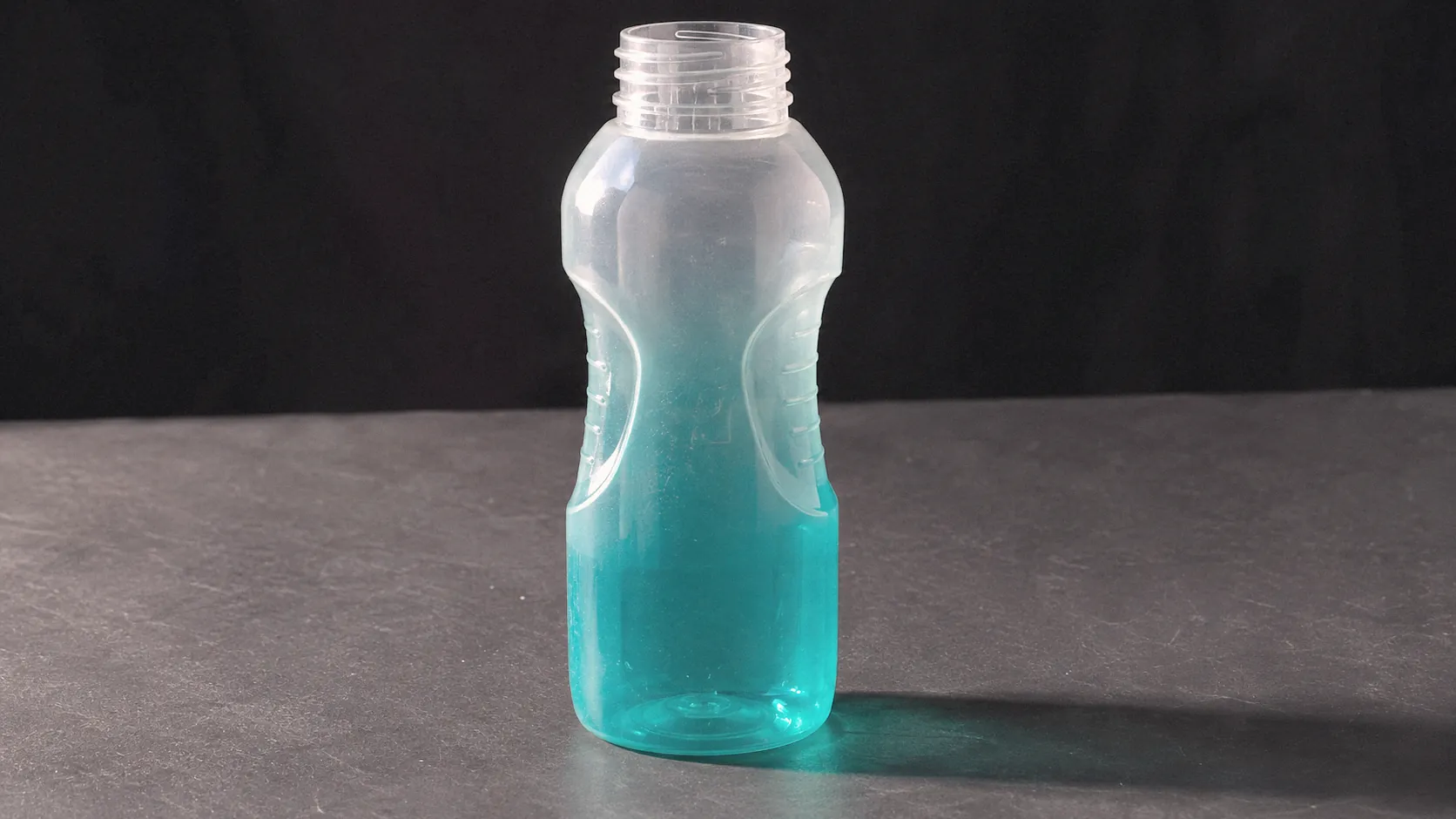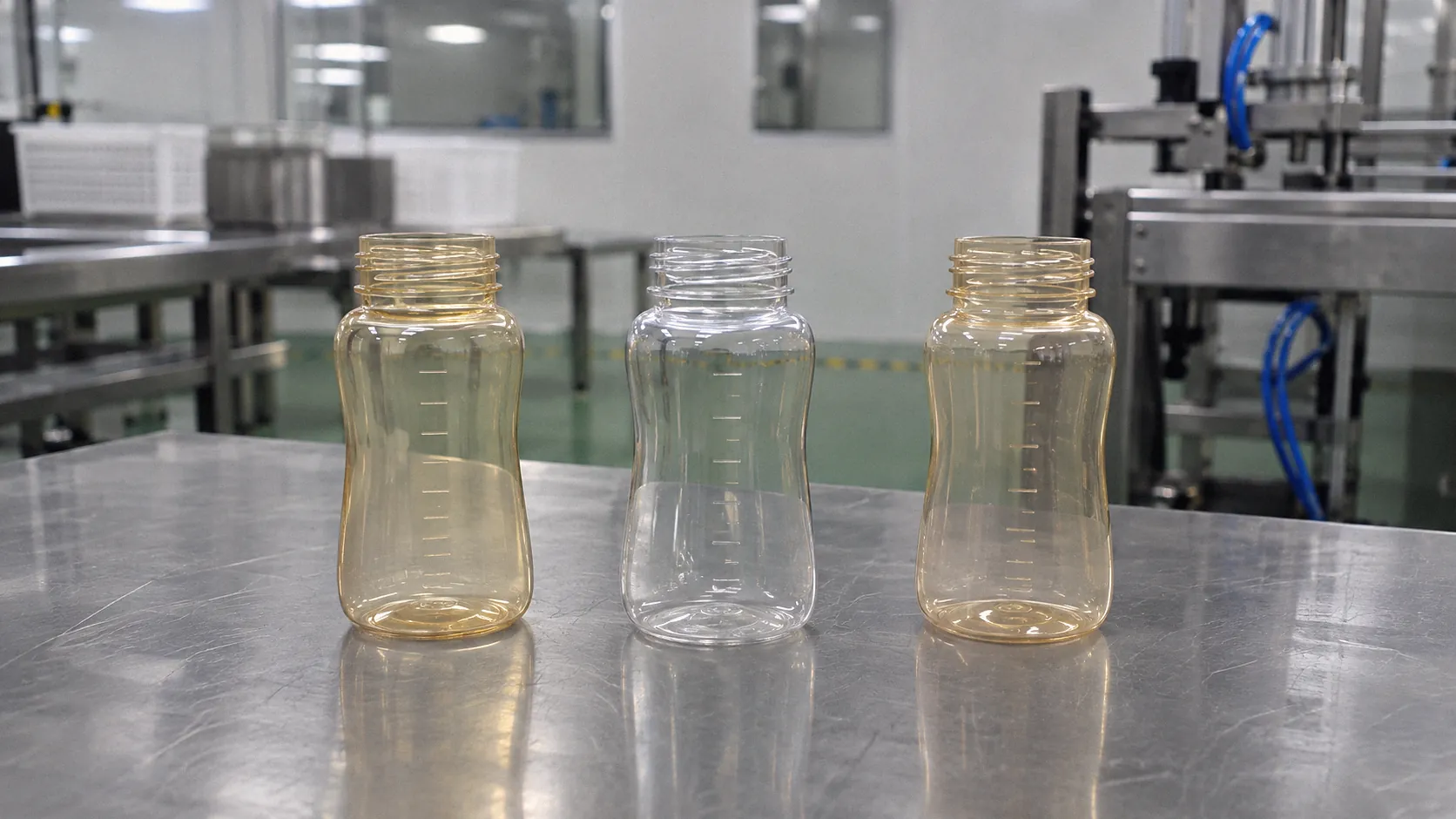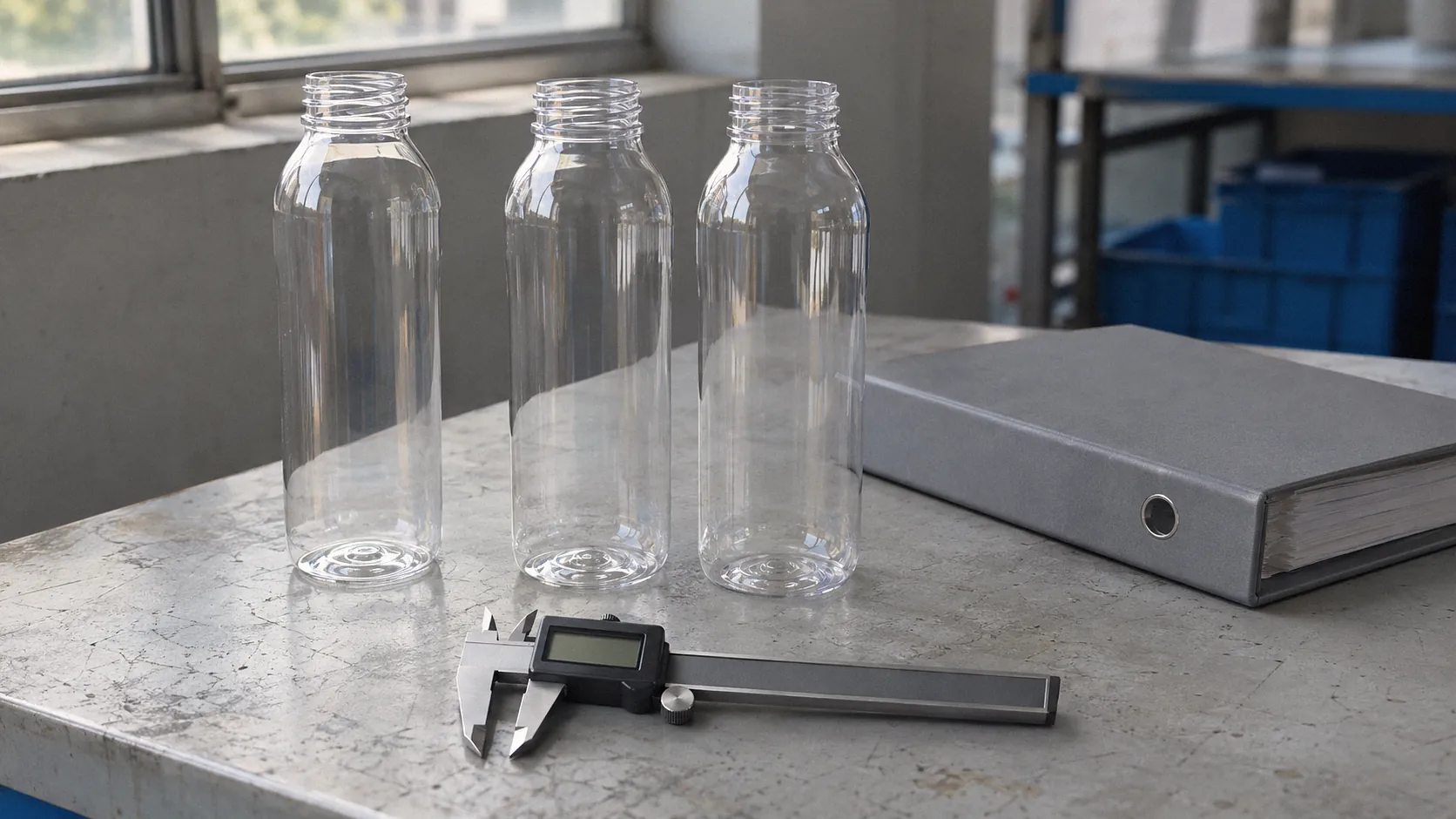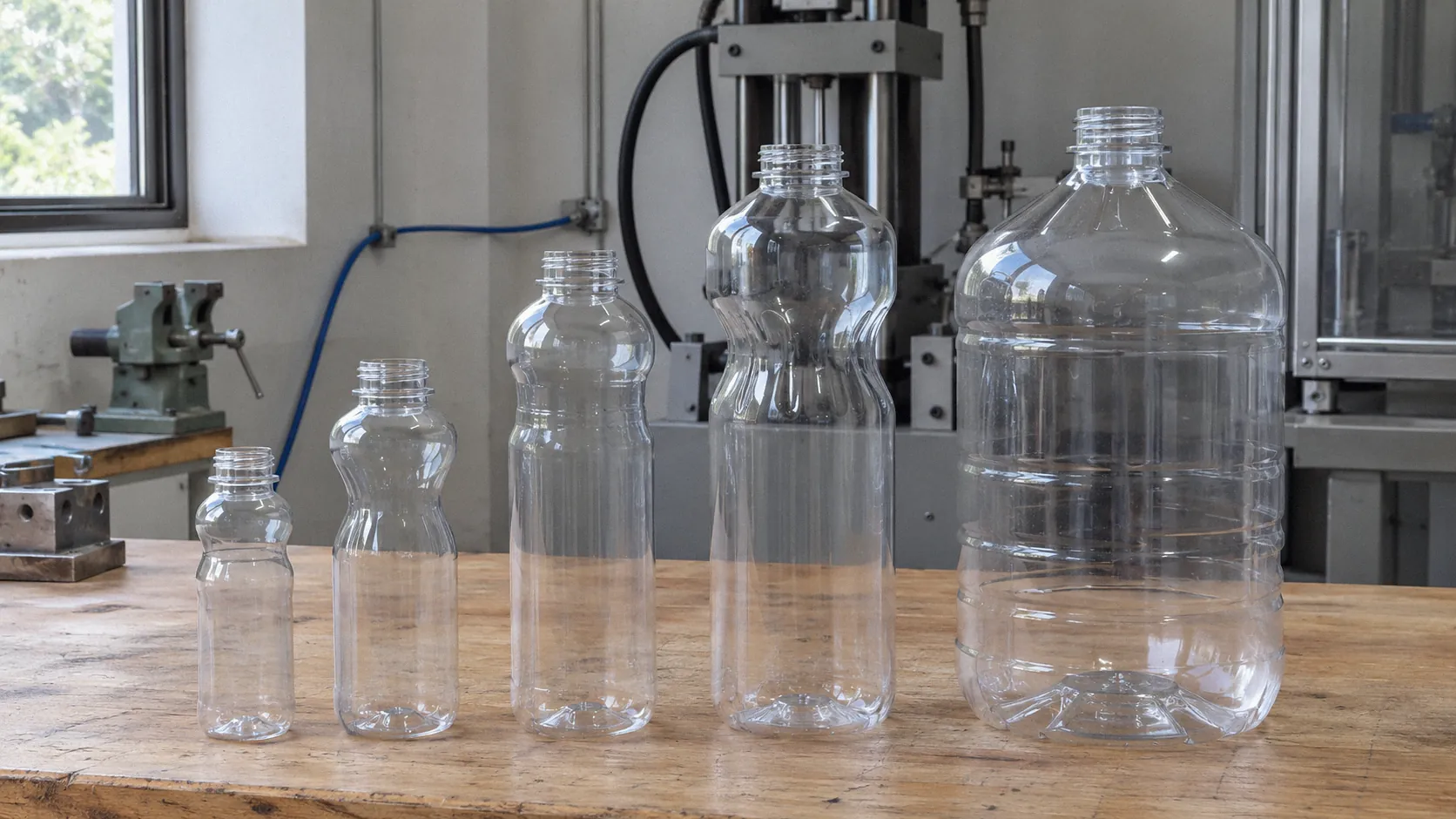
A blow molding machine for water bottles that will be reused, washed and carried every day is usually a one-step injection stretch blow molding (ISBM) machine. It molds the neck to its final size, stretches the body for clarity and toughness, and keeps every container off hard surfaces until it is ejected. The same machines make large water jugs, cups and wide-mouth jars.
This guide covers the containers, the resins, the design points that affect the mold and cycle, and the tests to run before approval.
Why one-step ISBM suits drinkware and jars
Reusable drinkware is judged on looks, feel and leak-tightness, and one-step ISBM (also written moulding) protects all three. Paul Atkin of Nissei ASB lists the relevant strengths: the preform is held by the neck so it is not scuffed, complex and thin necks are possible because the neck is never reheated, wide-mouth and screw-cap jars are standard, and handles can be molded in place on some designs.[1]
SanSong’s published applications for its one-step machines show the range:
| Container | Typical features |
|---|---|
| Sports bottles | Clear or tinted wall, threaded neck for a sports cap |
| Large water jugs | Large volume, thick wall, carrying handle on the cap or body |
| Wide-belly cups | Wide body, wide neck |
| Juicer cups | Wide mouth fitting a blender base |
| Baby straw cups | Small volume, child-safe materials |
| Wide-mouth jars | Short, wide shape, screw cap |
Resin choice for drinkware
The resin is decided by how the container will be used and where it will be sold. Most reusable drinkware uses a copolyester, PP or PET; our resin selection guide compares them in detail.
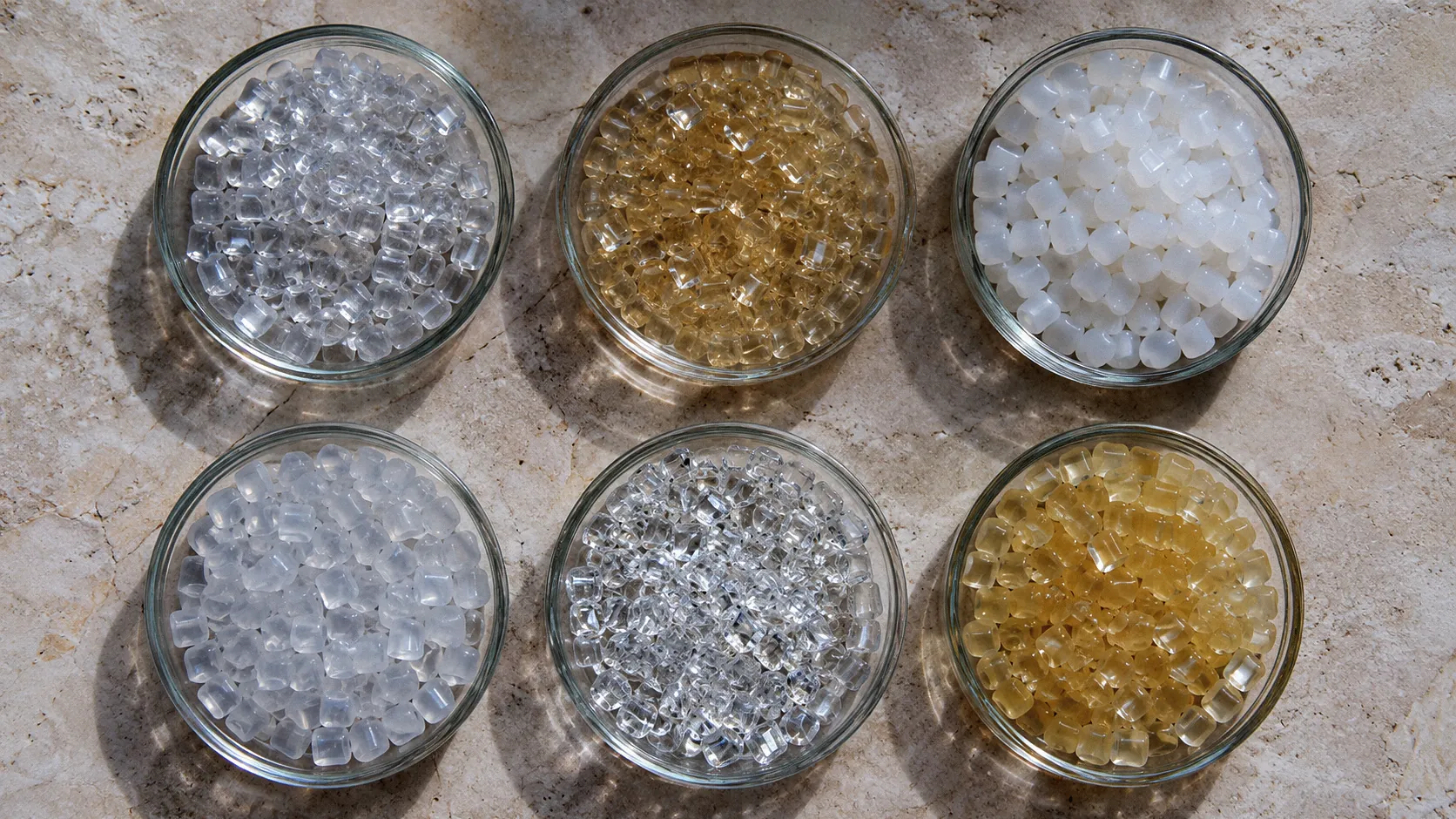
- Copolyesters (Tritan, ECOZEN) are common for clear, tough reusable bottles. Eastman’s guide for Tritan calls for drying at least 4 hours at 88 °C to 0.03% moisture or less, a melt temperature around 282 °C and mold surface temperatures of 38 to 66 °C.[2]
- PP needs no pre-drying and is light. Clarified grades improve transparency; one producer cited in a PETnology report described a 2 mm-wall PP drinks bottle.[3]
- PET is clear and stiff and suits bottles that are not exposed to high heat.
- PC made with bisphenol A is now restricted for food contact in the EU. The Food Packaging Forum reports that the main transition period under Regulation (EU) 2024/3190 ended on 20 July 2026.[4] See our article on the EU BPA ban.
Design points that change the mold and the cycle
Wide, short containers are harder to stretch evenly than tall, narrow bottles. Plan these points before the mold is designed:
- Neck finish. Agree the thread and sealing surface with the closure supplier first; the neck is molded once and cannot be corrected later.
- Stretch ratios. Wide-mouth jars have little room for axial stretch, so the preform is shorter and thicker. Thicker walls cost cooling time. Our preform design guide explains the ratios.
- Wall and weight. Drop impact depends on orientation as much as on thickness; Ottmar Brandau links drop failures to too little orientation, most often in custom bottles with small stretch ratios.[5]
- Base. A flat, stable base on a wide container needs base cooling and a well-centered gate.
- Handles and loops. Decide early whether the handle is on the cap, molded around an insert, or not needed.
- Finish and color. Polished, frosted, tinted or two-color gradient walls each change the mold or the machine.
Cavities and output
Cavity count follows the container size and the annual volume. SanSong’s published cases include a four-cavity sports bottle mold and a three-cavity juicer cup mold, each run with a take-out robot, and a two-cavity PP water cup. Our guide to estimating ISBM output shows how to turn cavities and cycle time into annual output.
Tests before approving the mold
Test finished containers with their real closures and under the conditions your customers will create:
- Drop impact, empty and full, at the temperatures of use.
- Dishwasher cycles and hot-liquid filling if the product claims them.
- Leak and torque tests with the production closure.
- Clarity, color and gradient against approved samples.
- Food-contact migration testing for every target market, with the resin supplier’s documentation.
Our guide on what to check before ordering a mold lists the specification items to agree.
How SanSong can help
SanSong’s SS-400-60-03-01 three-station machine makes containers up to 4.6 L with 1 to 12 cavities on a single injection unit. Its published materials are PC, PCTG (Tritan TX1001 and TX2001, ECOZEN YF300, T110 and T110Pro), PET, PETG, AS, PPSU, PS and PP, and its published applications include sports bottles, large water jugs, wide-belly cups, juicer cups and baby straw cups.[6] The SS-400-60-03-02 adds two-color gradient production.
To discuss a drinkware or jar project, see everyday bottle applications, compare the ISBM machines or send us the container drawing and resin.
Frequently asked questions
What size of water bottle can a one-step ISBM machine make?
It depends on the machine. SanSong’s SS-400-60-03-01 makes containers up to 4.6 L, which covers sports bottles, cups and large water jugs.
Which resin is used for Tritan bottles, and does it need drying?
Tritan is a copolyester from Eastman. Its injection guide calls for drying at least 4 hours at 88 °C with dry air at a dew point of -29 °C, down to 0.03% moisture or less.
Can ISBM bottles have a handle or loop?
An integral hollow handle is an extrusion blow molding feature. One-step ISBM can mold around a separately made handle on some designs, and many sports bottles carry the loop on the cap instead.
How many cavities does a sports bottle mold have?
It depends on bottle size and volume. SanSong’s published cases include a four-cavity sports bottle mold run with a take-out robot and a two-cavity PP water cup.
Sources
- Update on one step injection stretch blow molding, PETnology (Paul Atkin, Nissei ASB), .
- Drying and processing guidelines for injection molding, Eastman Tritan copolyester (TRS-DUR-244), Eastman Chemical Company.
- Milliken’s new clarifying agent Millad NX8000 opens up a world of opportunity for highly transparent injection blow moulded PP containers, PETnology, .
- EU BPA ban reaches main transition deadline, Food Packaging Forum.
- Solve Four Common Problems in PET Stretch-Blow Molding, Plastics Technology (Ottmar Brandau).
- SS-400-60-03-01 three-station one-step ISBM machine, SanSong (lzsansong.com).
Editorial note: written from the public sources listed above and SanSong’s published product information, checked on the dates shown. It is general guidance, not legal or compliance advice. Specifications not yet published by SanSong are confirmed during the project review.