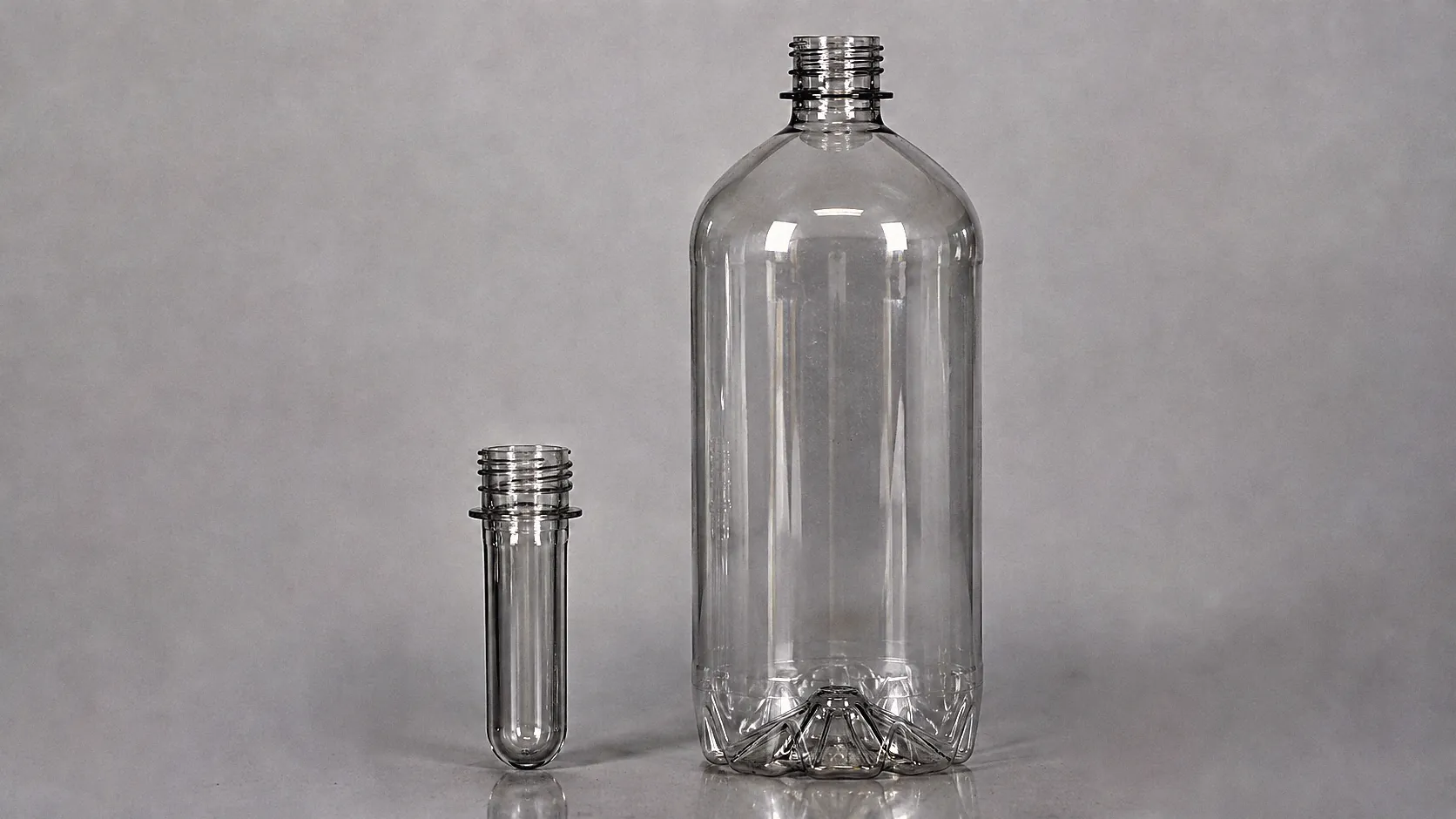
Good preform design for one-step ISBM starts from the finished container and works backward: choose the neck, set the stretch ratios so every part of the wall is stretched enough, then set the wall thickness to reach the target weight within an acceptable cooling time. In one-step molding the preform is made on the same machine, so it can be designed for each container rather than chosen from a catalog.
This guide explains the ratios, the wall, the neck and the base, and how they connect to quality and cycle time.
Why the preform matters more in one-step ISBM
In one-step injection stretch blow molding (also written moulding), the preform is the main tool for controlling the container’s wall. Paul Atkin of Nissei ASB notes that one-step preform design is unconstrained by stock preforms, and that the preform can be designed for wide mouths, injection-molded shoulders and thick bases.[1]
That freedom has a cost: a preform designed poorly cannot be corrected by machine settings alone. Ottmar Brandau lists preforms “not designed for the application” among the causes of uneven walls.[2]
Stretch ratios: the core calculation
Stretch ratios measure how far each part of the preform is stretched to become the container. Stretching orients the polymer chains, which OpenLearn links to better mechanical properties, clarity and barrier.[3]
| Ratio | Commonly calculated as | Working minimum (PET) |
|---|---|---|
| Axial | Container length below the neck ÷ preform length below the neck | About 2:1 |
| Hoop | Container maximum diameter ÷ preform diameter | About 4:1 |
| Overall (blow-up) | Axial × hoop | Follows from the two |
The minimums are Brandau’s working values for even walls.[2] Below them, cooler zones stretch too little and stay thick, and orientation is low. Brandau links drop-impact failures to too little orientation, which he finds most often in custom bottles with small stretch ratios.[4]
Conventions differ: some designers use the preform’s inside diameter for the hoop ratio, others the mean wall diameter. Agree the convention with your mold supplier so ratios on different drawings can be compared.
Oval and flat containers
On an oval or flat container the long sides stretch further than the short sides, so a round preform with an even wall produces a thin long side and a thick short side. The answer is a preform with a varying wall, a conditioning station that heats the long sides more, or both. Atkin notes that the conditioning station on four-station machines can apply partial or spot heating and cooling and even reshape the preform.[1] See our guide on three or four stations.
Wall thickness, weight and cycle time
Wall thickness links three things buyers care about: container weight, wall distribution and cycle time.
- Weight. The preform weight is the container weight. Thicker walls add material to every container.
- Cooling. In one-step molding the cycle is usually set by preform cooling at injection, and cooling time rises steeply with wall thickness.
- Crystallization. Atkin notes that thick PET preforms can crystallize and turn hazy, which has traditionally pushed processors toward costlier copolymers.[1]
Design the thinnest wall that still delivers the stretch ratios and the container’s strength targets. Our guide to estimating ISBM output shows how a few seconds of cooling change annual output.
Neck and shoulder
The neck is molded to its final dimensions and is not stretched, so its design is purely an injection-molding question: thread form, tamper band, wall thickness and any undercuts. One-step molding allows necks that two-step production struggles with, including thin necks and necks with tabs, gears or holes, because the neck is never reheated.[1]
Leave a short transition between the neck and the stretched body. A sudden change from thick neck to thin body concentrates stress and can mark the shoulder.
Base and gate
The base is the hardest area to control, because it sits next to the injection gate and cools last. Three details help:
- Center the gate. Brandau’s rule is that “wall thickness will go where the gate goes,” so the gate must stay centered in the blow mold.[2]
- Pin the gate. He recommends setting the stretch rod so its gap to the mold bottom is 0.040 in. (about 1 mm) less than the preform gate wall thickness, and adding a small well in the blow-mold bottom for the gate vestige.[2]
- Control base heat. A base that is still too hot after molding shrinks and forms a rocker bottom.[4]
Validate before the full mold set
Preform design is confirmed by trial, not by calculation alone. A practical sequence:
- Agree the container drawing, target weight, neck finish and resin grade.
- Calculate axial and hoop ratios for every container that will share the preform.
- Review the preform and blow-mold drawings together, including the base and gate.
- Run a trial with the actual resin and measure wall thickness at fixed heights and positions.
- Adjust the preform before cutting the remaining cavities.
Our guide on what to check before ordering a mold and the mold components overview cover the remaining design points.
How SanSong can help
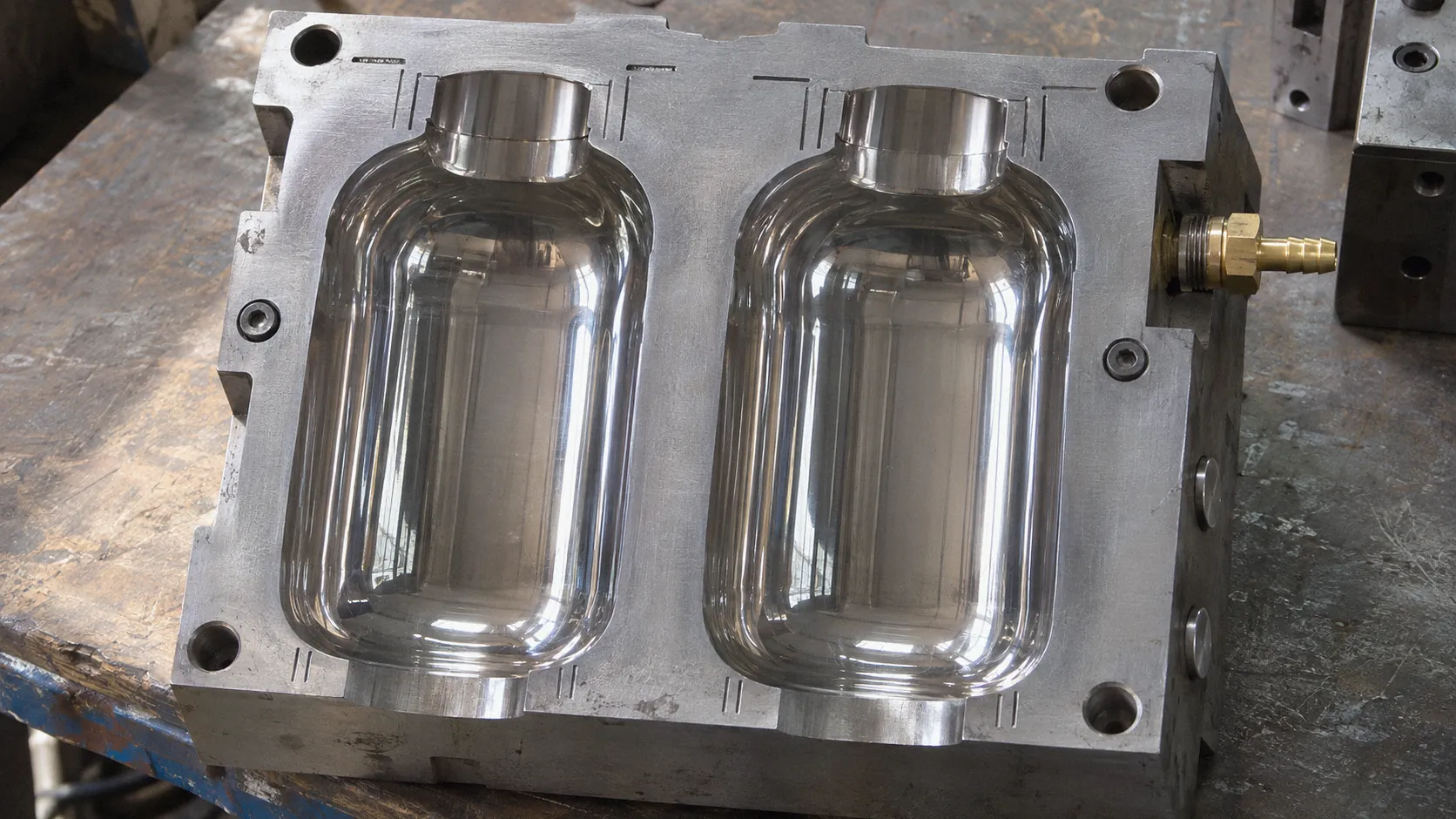
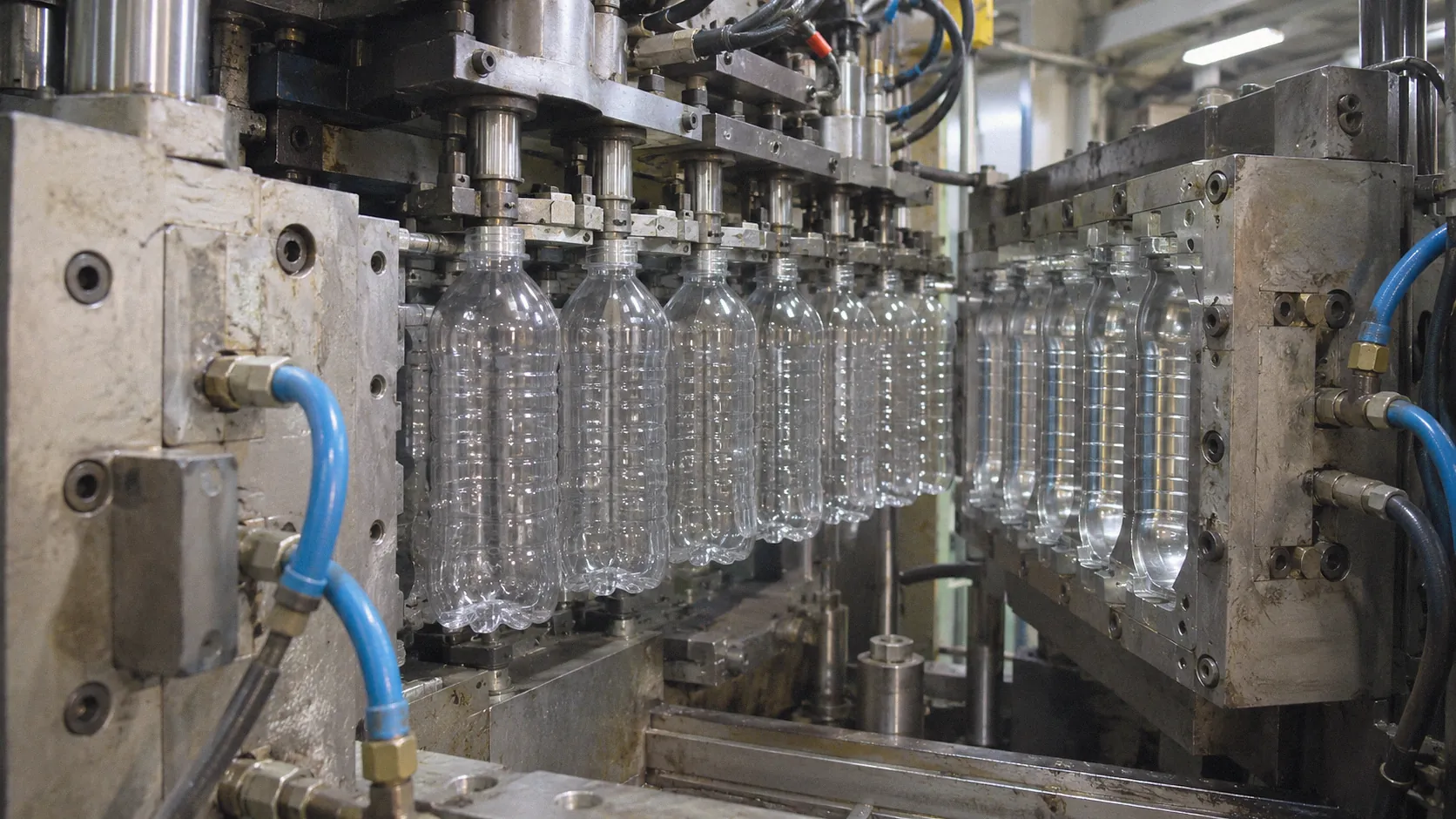
SanSong designs the preform, the mold set and the station layout together for each container. Its one-step machines are the SS-400-60-03-01 three-station machine (containers up to 4.6 L, 1 to 12 cavities), the SS-400-60-03-02 two-color machine, and the SS-400-110-04-02 four-station double-row machine with a conditioning station.
To have a preform reviewed, send us the container drawing, target weight and resin grade, or see the bottle molds.
Frequently asked questions
What is a good stretch ratio for an ISBM preform?
As a working rule for PET, Ottmar Brandau gives minimums of about 2:1 axially and 4:1 in the hoop direction for even walls. The right values depend on the resin grade and the container shape, so confirm them with the resin supplier and a trial.
Can I use a stock preform on a one-step machine?
One-step machines make their own preforms, so the preform is designed for each container. That freedom is one of the main reasons to choose one-step ISBM.
Why is my preform wall so thick compared with a two-step preform?
Wide-mouth jars, short containers and some resins need thicker preforms to reach the target weight within the available stretch. Thicker walls cost cooling time, so the design balances weight, stretch and cycle.
Should every container in a product family have its own preform?
Not necessarily. Containers with the same neck and similar weight can share a preform with different blow molds, as long as each container’s stretch ratios stay within the resin’s window.
Sources
- Update on one step injection stretch blow molding, PETnology (Paul Atkin, Nissei ASB), .
- How to Address Uneven Wall Thickness in Stretch Blow Molding, Plastics Technology (Ottmar Brandau).
- Blow moulding, The Open University, OpenLearn.
- Solve Four Common Problems in PET Stretch-Blow Molding, Plastics Technology (Ottmar Brandau).
Editorial note: written from the public sources listed above and SanSong’s published product information, checked on the dates shown. It is general guidance, not legal or compliance advice. Specifications not yet published by SanSong are confirmed during the project review.