

Ready to automate your workflow?
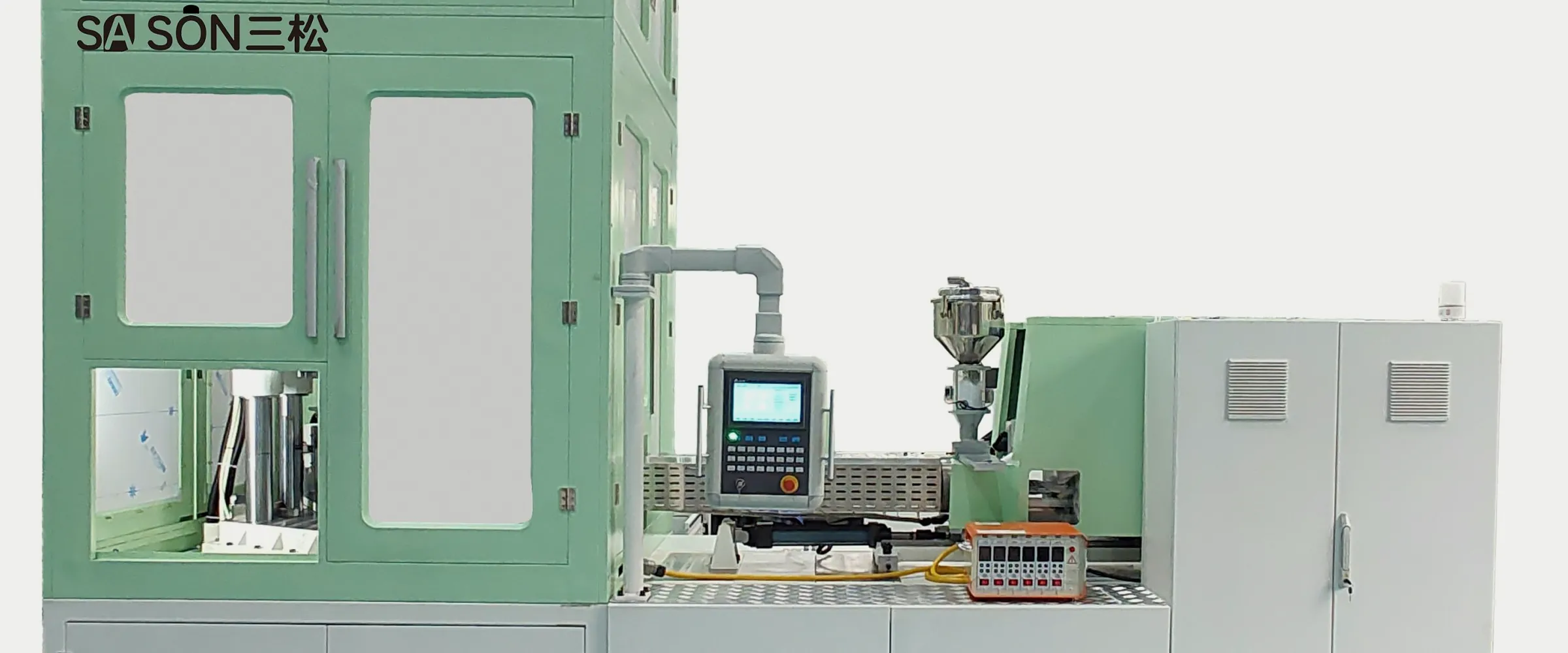
Choose between a three-station and a four-station one-step ISBM machine by looking at whether your preform needs an independent temperature-conditioning stage before blowing. Three-station machines (such as SS-400-60-03-01) blow the preform directly with residual injection heat, while four-station machines (SS-400-60-04-01 single-row and SS-400-110-04-02 double-row) add a conditioning station between injection and stretch blowing.
This buying guide helps prepare a technical discussion. The final equipment configuration and commercial scope are confirmed for each project.
How three stations work (direct hot parison)
On a three-station one-step ISBM machine, the rotary table moves each preform from injection straight to stretch-blowing and then ejection. Keeping residual injection heat shortens the thermal path and suits round or symmetrical containers such as sports bottles, baby bottles, juicer cups and cosmetic bottles.
SanSong offers six three-station models covering standard single-color production (SS-400-60-03-01, 1 to 12 cavities up to 4.6 L), two-color gradient molding (moulding) (SS-400-60-03-02 and SS-400-60-03-06), rapid mold change (SS-400-60-03-03), enlarged shot volume (SS-500-60-03-04) and 80-ton wide-neck clamping (SS-400-80-03-05).
What the fourth conditioning station changes
On a four-station machine, an independent conditioning station sits between preform injection and stretch-blowing. The preform is heated or cooled across targeted zones before stretching so wall thickness remains even across oval, flat, thick-walled or temperature-sensitive containers.
- Provide the container drawing, volume and neck finish.
- Identify the closure and downstream handling requirements.
- State the resin grade, colour and proposed additives.
- Describe the intended use and agreed appearance reference.
SanSong builds two four-station models: the single-row SS-400-60-04-01 (1 to 12 cavities) for medium-output flexible runs and the double-row SS-400-110-04-02 (8 to 24 cavities) for compact high-volume PET containers such as syrup bottles, both offering an optional PET preform tail-cutting device.
A clear application brief connects the product, the equipment and the acceptance criteria.
Compare SanSong three-station and four-station models
Selecting station count also depends on resin window (PET, RPET, PETG, PC, Tritan/PCTG, PPSU, PP, PMMA, HDPE), cavity count, neck finish and whether two-color gradient molding is required. Two-color models use the three-station platform with main and side injection units.
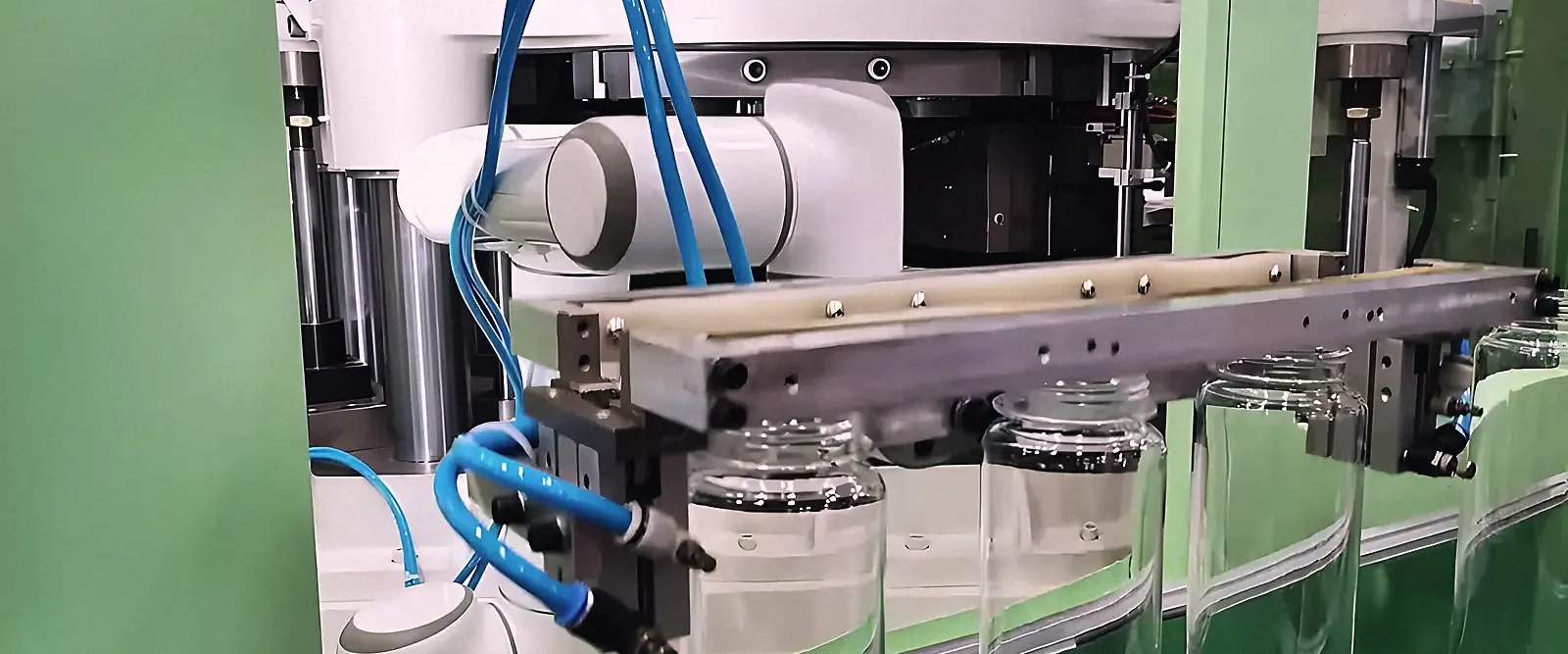
Review the machine, mold layout, utilities (cooling water, compressed air, installed power) and optional downstream take-out robot together. Double-row four-station molds use more cavities per cycle on a compact footprint while requiring matched conditioning tooling.
What to send for a station review
Send the container drawing or sample, target gram weight, neck finish, exact resin grade and annual output target so the engineering team can compare three-station and four-station configurations objectively. Confirm that cycle time, cavity count, auxiliary equipment and sample acceptance criteria apply to the specified container and operating conditions recorded in the written quotation.
Review the preparation checklist
Use the checklist to identify missing inputs, then assign an owner and a review date to each open question.
Confirm scope and responsibilities
Keep approved requirements and open decisions separate. Review revisions with the people responsible for operation, maintenance and acceptance.
Start your project discussion
Prepare container drawing, sample, neck finish and wall-thickness expectations. Explore the related equipment or request an engineering quotation.
Business-scope source: SanSong published product documentation (Liuzhou Sansong Automation Technology Co., Ltd.). The preparation advice above is editorial guidance. Final configuration, performance, scope and acceptance criteria are confirmed in the project quotation.





