

Ready to automate your workflow?
Robotic welding, spot-welding and handling production lines
The application
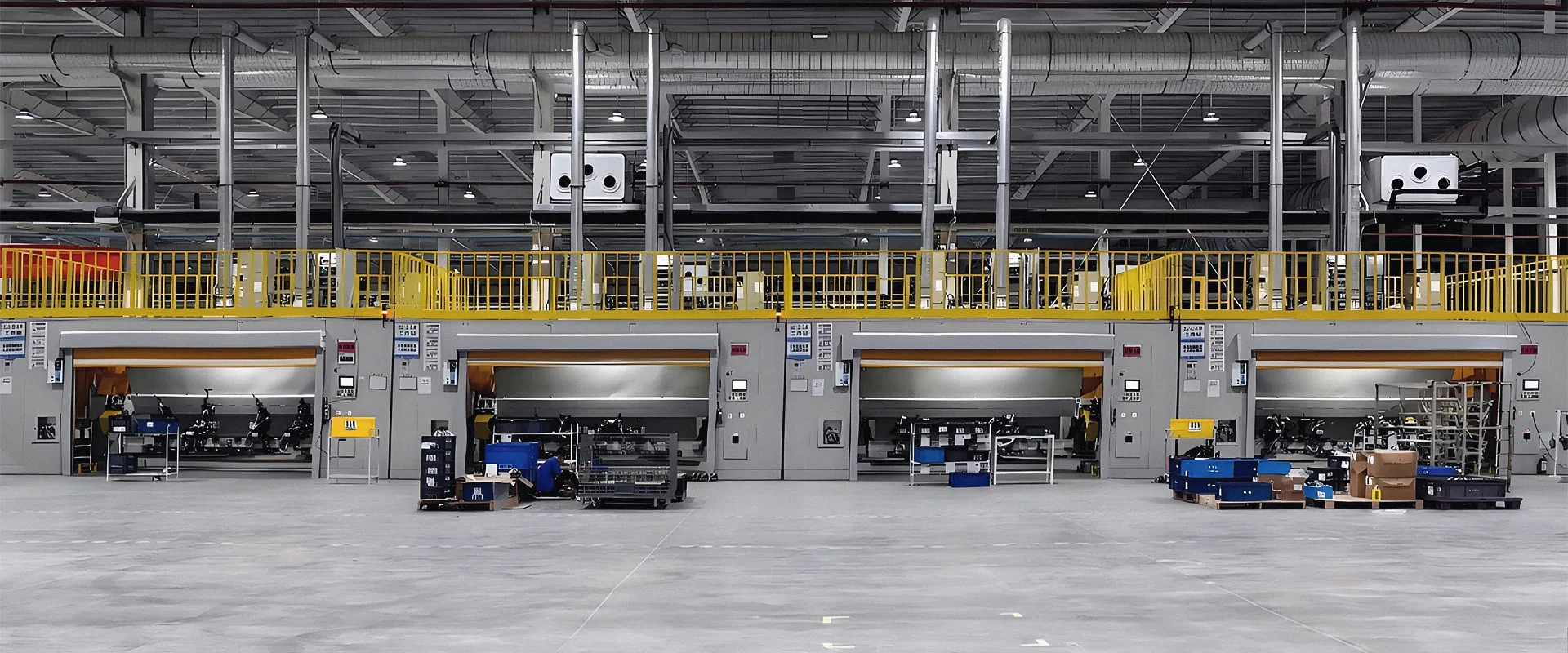
Automation starts with the route the part takes through production. Welding, transfer, inspection and loading must be considered as one sequence.
SanSong lists non-standard welding and handling lines, together with fixtures, positioners and robot travelling axes.
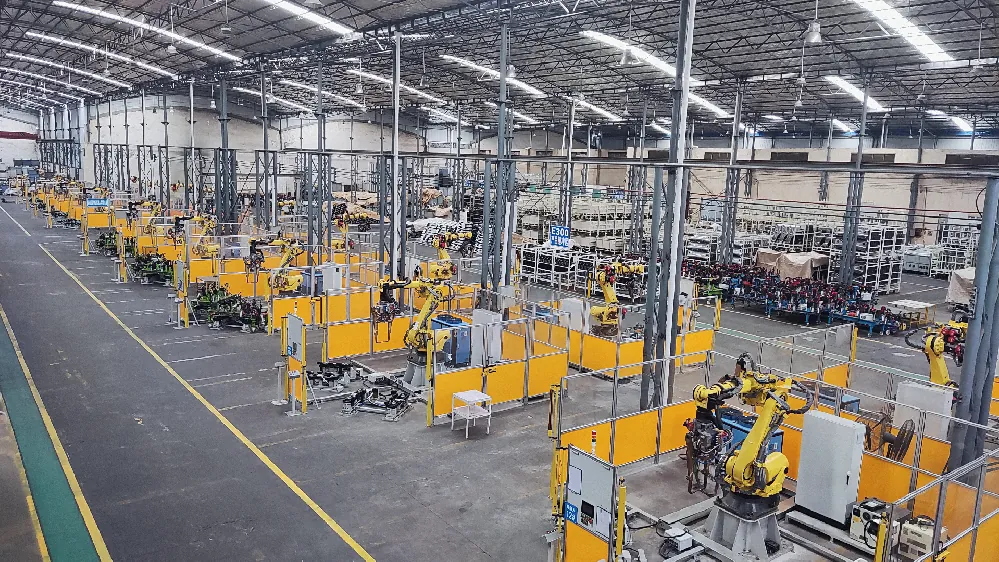
Published applications include spot-welding lines and battery-frame welding. These examples guide discussion; each new project needs its own technical scope.
Develop the right specification
A useful brief is the first step
Map the existing sequence, production demand and operations that require an operator. Identify the slowest or most variable stage.
Share part families, changeover needs, plant drawings and the equipment already in use.
Review how the proposed system will connect to other stations and which interfaces are included in the quotation.
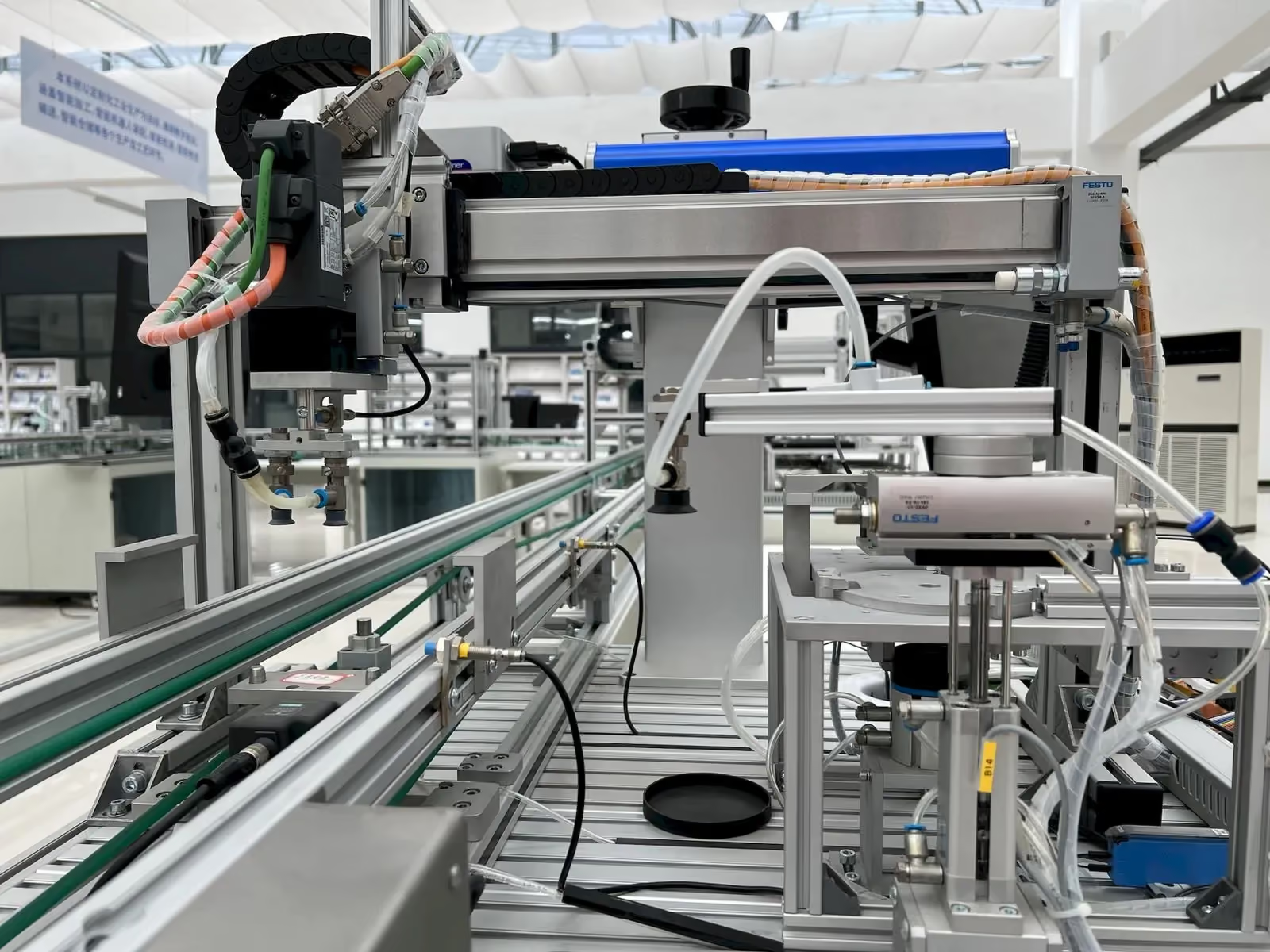
Build the project scope
Five points for the technical discussion
[01] Process brief
Components, operations and desired production flow.
[02] Layout study
Stations, loading areas and space for access.
[03] Equipment scope
Robots, fixtures, tracks and related systems as agreed.
[04] Controls interfaces
Connections to the existing line and supporting equipment.
[05] Acceptance plan
Parts, checks and responsibilities defined for the project.
From proposal to delivery
Agree what the project needs to demonstrate
A production-line proposal should explain the sequence, equipment scope and dependencies on the customer site.
Performance and acceptance commitments are written for the agreed parts and operating conditions.
Commissioning and maintenance requirements form part of the project discussion with SanSong.
PUBLISHED LINE ARCHITECTURE
From single welding cells to six-station automated lines.
Published SanSong non-standard line & station types
- Exhaust and muffler robotic welding stations
- New-energy aluminum battery-frame flexible welding lines
- Double-slide commercial truck-floor welding lines
- Robotic spot-welding stations and quick-change spot-welding lines
- Vehicle-frame automatic riveting stations
- Engineering-machinery 6-station dual-gantry mast automatic production lines
- Custom automotive and engineering-machinery welding fixtures
Related engineering insights
FAQ
Frequently asked questions
Useful details for a focused engineering enquiry.
What information starts an automation enquiry?

Can existing robots be part of the project?
How is a positioner or track selected?
Are technical drawings available?
What installation services does SanSong offer?
What lead time and warranty should we expect?